

1. Long-shaft structure accommodates varying installation depths
Vertical turbine fire pumps are designed for vertical installation. The lengths of the drive shafts and column pipes can be configured based on the actual depth of the water source, allowing the submerged pump unit to be positioned at the optimal depth for water extraction. These long-shaft assemblies are available in various specifications to suit different well depths and on-site installation requirements.
2. Drive shafts ensure stable power transmission
The primary function of the long-shaft assembly is to transmit power from the surface-mounted drive unit to the submerged impeller. The drive shafts are engineered based on factors such as pump rotational speed, shaft length, and load, ensuring structural stability during power transmission and meeting the operational requirements of the equipment.
3. Modular, segmented design facilitates production and transport
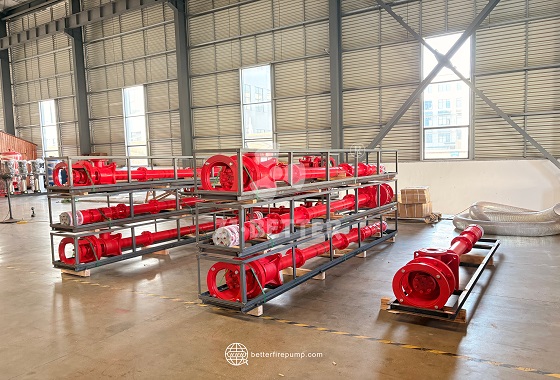
Column pipes and drive shafts are typically designed in segments, which are assembled on-site using specialized connectors. This modular approach allows for the adjustment of the number of components based on the required depth, while also simplifying manufacturing, packaging, transportation, and on-site assembly—thereby reducing the challenges associated with handling and transporting long, oversized components.
4. Column pipes provide both connection and structural support
Column pipes are a vital component of long-shaft pumps; they form the primary structural framework of the pump unit while providing the necessary space and support for the internal drive shafts. Properly sized column pipes and robust connection methods ensure the overall structural stability of the pump unit across various installation depths.
5. Bearing supports enhance operational stability
The long-shaft transmission system incorporates bearings or guide bearings that provide essential radial support to the drive shaft, minimizing unwanted oscillation or vibration during operation. Bearing arrangements, lubrication methods, and maintenance requirements should be determined based on the specific pump model and equipment configuration.
6. Multi-stage impeller configuration to meet varying head requirements
Vertical turbine fire pumps typically employ a multi-stage impeller design, where energy is transferred to the water flow incrementally through successive stages of impellers to increase pressure. The hydraulic component configuration can be adjusted to align with the specific flow rate and head requirements of a given fire protection system.
7. Intake components adapted to water source conditions
The bottom of the pump assembly is generally equipped with an intake component and a suction bowl (or guide casing) to direct water from the source into the impeller area. Depending on local water quality and intake conditions, appropriate inlet structures and filtration components can be selected to minimize the risk of large debris entering the pump.
8. Diverse specifications for customized engineering selection
Fire protection projects vary in terms of water source depth, available installation space, flow rate, and head requirements. The length of the long shaft, the dimensions of the column pipes, the design of the drive shaft, and the number of impeller stages can all be tailored to specific project parameters, enhancing the equipment's adaptability to various operational conditions.
9. Pump head design facilitates drive and piping connections
The pump head is typically positioned above ground, serving as the interface for the drive unit, providing structural support for the pump assembly, and housing the discharge connection. An optimized pump head design simplifies equipment positioning, power transmission, and the installation of discharge piping, while also streamlining future inspections and maintenance.
10. Rigorous assembly and maintenance to ensure reliable operation
The machining tolerances, connection precision, shaft alignment, and overall assembly quality of the long-shaft components directly influence the operational performance of the pump. During service, bearings, connections, fasteners, and the drive system should be inspected regularly, with operational testing and maintenance performed in accordance with specified requirements.
Through the strategic integration of drive shafts, column pipes, bearing supports, and submerged pump components, the long-shaft assembly of a vertical turbine fire pump enables the transmission of power from an above-ground drive unit to the submerged impellers. This design allows for flexible installation configurations tailored to different water source depths. Its modular, segmented structure facilitates manufacturing, transportation, and on-site assembly, while the multi-stage impeller design effectively meets diverse head requirements for fire-fighting water supply. By selecting equipment based on a professional assessment of the project’s water source conditions, installation depth, and hydraulic parameters, it is possible to provide reliable equipment configuration solutions for deep-well water extraction and fire-suppression water supply systems in large-scale projects.
 WhatsApp me