
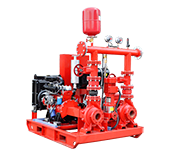
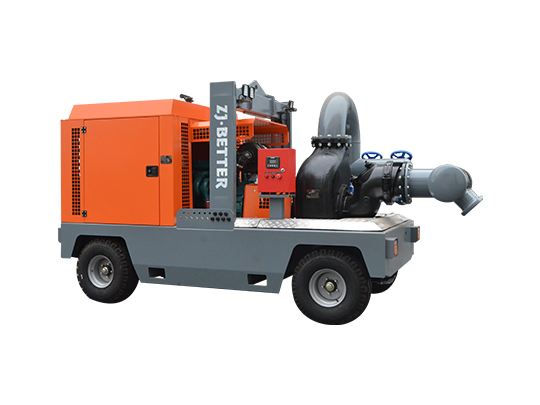
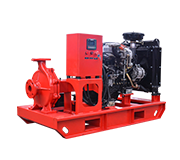
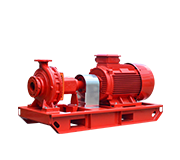

1. Compact Vertical Structure Saves Installation Space
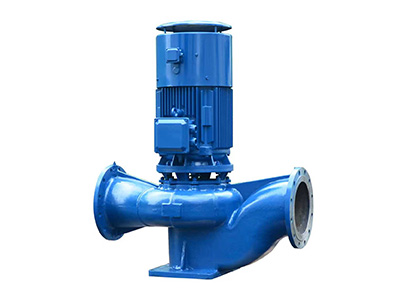
One of the biggest advantages of vertical pipeline fire pumps is their small footprint. The equipment adopts a vertical installation method, with the inlet and outlet located on the same straight line, allowing direct installation in the fire-fighting pipe network without occupying a large equipment foundation space. This makes it ideal for underground fire pump rooms, equipment rooms in high-rise buildings, and projects with limited space. 1. **A Reasonable Overall Structural Layout:** This design reduces complex piping connections, improves installation efficiency, and lowers construction costs, enabling rapid deployment and meeting the demands of modern buildings for compact fire-fighting equipment.
2. High-Efficiency Hydraulic Design Enhances Water Supply Performance:
The equipment employs an advanced hydraulic model design. The impeller undergoes precision machining and balancing, resulting in smoother flow channels, effectively reducing hydraulic losses and improving water delivery efficiency. After the fire-fighting system is activated, it can quickly establish stable pressure, achieving high-flow, high-lift water supply to ensure sufficient water for fire hydrants and automatic sprinkler systems during a fire. Whether in single-story or high-rise buildings, it can be rationally configured according to different head and flow requirements to ensure stable pressure throughout the fire-fighting network.
The equipment employs an advanced hydraulic model design. The impeller undergoes precision machining and balancing, resulting in smoother flow channels, effectively reducing hydraulic losses and improving water delivery efficiency. After the fire-fighting system is activated, it can quickly establish stable pressure, achieving high-flow, high-lift water supply to ensure sufficient water for fire hydrants and automatic sprinkler systems during a fire. Whether in single-story or high-rise buildings, it can be rationally configured according to different head and flow requirements to ensure stable pressure throughout the fire-fighting network.
3. Rapid Start-up Ensures Fast Fire Response:
One of the most important performance characteristics of fire-fighting equipment is its rapid response capability. The vertical pipeline fire pump unit can be linked with the fire alarm system. When the system detects a pressure drop or receives a fire signal, the equipment can automatically start immediately, rapidly establishing fire-fighting water supply pressure and significantly shortening the water supply response time. Stable and reliable start-up performance ensures timely water supply in the early stages of a fire, providing a continuous and stable water source for sprinkler and fire hydrant systems, thus improving overall fire rescue efficiency.
One of the most important performance characteristics of fire-fighting equipment is its rapid response capability. The vertical pipeline fire pump unit can be linked with the fire alarm system. When the system detects a pressure drop or receives a fire signal, the equipment can automatically start immediately, rapidly establishing fire-fighting water supply pressure and significantly shortening the water supply response time. Stable and reliable start-up performance ensures timely water supply in the early stages of a fire, providing a continuous and stable water source for sprinkler and fire hydrant systems, thus improving overall fire rescue efficiency.
4. Intelligent Control Enables Automated Operation
The unit is equipped with an intelligent fire control cabinet, enabling automatic start-up, automatic stop, manual control, automatic inspection, fault alarm, operational status monitoring, and historical data recording. The control system can monitor key parameters such as pressure, current, voltage, and motor operating status in real time and automatically adjust the operating mode according to system pressure. In case of overload, phase loss, overvoltage, or undervoltage, the system can promptly alarm and take protective measures, improving equipment safety and reducing human error.
5. Stable Operation Meets Long-Term Fire Protection Needs
To ensure long-term stable operation, the unit uses a high-efficiency motor and a high-quality bearing system, resulting in low vibration, low noise, and high efficiency during operation. The pump shaft is manufactured with high-precision machining, and the mechanical seal has excellent wear resistance and sealing performance, effectively preventing leakage. Even during long-term continuous operation, it maintains stable flow and pressure output, significantly improving equipment reliability, reducing maintenance frequency, and meeting the year-round fire protection needs of large buildings.
6. Corrosion-resistant materials extend equipment lifespan
Fire water supply equipment operates in humid environments, requiring high corrosion resistance. The pump body, impeller, and key components are made of high-strength, corrosion-resistant materials, effectively resisting water corrosion and long-term wear, thus extending the overall lifespan of the equipment. The external steel structure base is rust-proofed, and the control cabinet features a high-protection-level enclosure design, suitable for underground pump rooms, high-humidity environments, and complex industrial sites, ensuring long-term stable operation.
7. Convenient maintenance reduces operating costs
The equipment adopts a modular design concept, with a compact layout of major components and ample maintenance space, making daily inspections, lubrication, mechanical seal replacement, and electrical maintenance more convenient. Standardized parts improve versatility, shorten maintenance time, and reduce spare parts inventory pressure. Due to high operating efficiency, low energy consumption, and reduced maintenance workload, it effectively reduces the total life-cycle operating cost of the entire fire protection system, improving the return on investment.
8. Multiple Configurations to Meet Diverse Engineering Needs
Vertical pipeline fire pumps can be configured with different flow rates, heads, motor power, and control methods to suit various fire protection projects. They can be used independently or combined into main pump, standby pump, and pressure-stabilizing pump systems to form a complete fire water supply solution with fire water tanks, automatic sprinkler systems, and fire control centers. The products can meet the fire water supply needs of various application scenarios, including residential buildings, commercial centers, industrial plants, schools, hospitals, airports, warehousing and logistics centers, and municipal engineering projects.
9. In line with modern fire protection system development trends
Modern fire protection engineering increasingly emphasizes intelligent equipment, energy efficiency, and system integration capabilities. Vertical pipeline fire pump units can be equipped with remote communication interfaces to achieve data interconnection with building automation systems, fire control platforms, and remote monitoring centers. This allows operation and management personnel to monitor equipment status in real time, improving the intelligent management level of the fire protection system. At the same time, the high-efficiency operation mode reduces energy consumption, better meeting the development requirements of green building and energy-saving projects.
10. Widespread Applications Enhance Building Fire Safety
With its compact structure, efficient water supply, intelligent control, stable operation, and convenient maintenance, vertical inline fire pump units have been widely used in commercial complexes, high-rise residential buildings, hotels, hospitals, schools, rail transit, industrial parks, municipal engineering projects, and large public buildings. The equipment can quickly establish stable water pressure during a fire, continuously providing a reliable water source for automatic sprinkler systems, indoor and outdoor fire hydrant systems, and fire protection networks, comprehensively enhancing the building's fire safety level and providing a solid guarantee for the safety of people and property.
Compact vertical inline fire pump units for fire protection systems, with their comprehensive advantages of small footprint, convenient installation, efficient water supply, intelligent control, stable operation, energy saving and environmental protection, and low maintenance costs, have become an important component of modern fixed fire water supply systems. They can adapt to various building and industrial fire protection scenarios, providing continuous and reliable pressure and flow support for fire protection systems, improving fire emergency response efficiency, reducing system operating costs, and providing a more efficient, safe, and intelligent fire water supply solution for modern building fire protection engineering.
 WhatsApp me