

1. Stainless Steel Pump Construction
These pumps feature a stainless steel exterior, offering excellent corrosion resistance and making them suitable for groundwater extraction environments that meet specific material requirements. The exact grade of material and the required level of corrosion resistance should be determined based on the water’s chemical composition and actual operating conditions.
2. Slender, Elongated Design
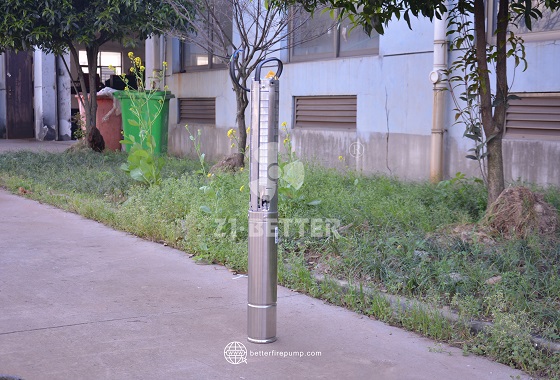
The pump body is designed as a slender cylinder with a compact structure, ideal for installation in tubular wells or other downhole environments where space is restricted. When selecting a model, it is essential to verify the well’s inner diameter, the pump’s outer diameter, and the available installation clearance to ensure the equipment can be lowered into the well and operated successfully.
3. Downhole Extraction Method
Designed for downhole installation, the pump is submerged below the water level. An integrated motor drives the unit to extract and lift groundwater, making it an ideal solution for scenarios where surface space is limited or where water must be drawn directly from a well.
4. Groundwater Transport
These pumps are primarily designed for lifting and transporting groundwater, moving water from the well to surface storage facilities, water supply pipelines, or downstream water-use systems. The actual transport capacity depends on the well’s yield characteristics and the design of the piping system.
5. Multi-Stage Pumping Configuration
Submersible well pumps can be configured with varying numbers of stages to meet specific requirements for delivery height (head) and pressure. A multi-stage design utilizes multiple impellers to incrementally increase water pressure; the specific number of stages is determined by the required head, flow rate, and the specific equipment model.
6. Integrated Motor and Pump Operation
The motor provides power to the pump, driving the internal impellers to rotate, which facilitates the intake and upward transport of water. The motor power, operating voltage, and cooling conditions must align with the pump’s performance specifications and comply with on-site power supply and installation requirements.
7. Suitable for Various Water Supply Projects
Depending on water quality, well depth, and equipment selection criteria, these pumps can be used for agricultural irrigation, industrial water supply, groundwater recharge, and other applications requiring the extraction of water from wells. For water sources with high sand content or other impurities, the suitability of the equipment should be verified beforehand.
8. Optimized for Downhole Space
The slender, elongated design minimizes the horizontal footprint, making it ideal for installation in vertical wells. The connection and lifting points at the top of the unit facilitate installation; specific lifting procedures and load-bearing requirements must adhere to the product’s structural design and relevant installation standards.
9. Consideration of Water Quality and Operating Conditions
Minerals, chloride ions, sediment, and other components present in groundwater can affect the service life of the pump and its internal flow-path components. Before procurement, it is advisable to provide details regarding water quality, temperature, sand content, and the operating environment to ensure the selection of appropriate materials and structural configurations.
10. Selection Based on Project Parameters
Each project presents unique requirements, including well depth, dynamic water level, required flow rate, transport distance, and terminal pressure. When selecting a pump, one must calculate the total dynamic head and pipeline friction losses, while also verifying the well diameter, motor power, power supply conditions, and installation depth to ensure the equipment’s operating point aligns with the project’s specific needs.
Stainless steel submersible well pumps, characterized by their slender, metallic construction, are well-suited for a wide range of groundwater extraction and transport applications. By carefully selecting the pump dimensions, number of stages, motor power, and material specifications, the equipment can be effectively tailored to the specific requirements of various wells and water supply projects. For agricultural irrigation, industrial use, and groundwater supply initiatives, an accurate assessment of water source conditions and precise technical selection are essential for ensuring stable, long-term equipment operation.
 WhatsApp me