
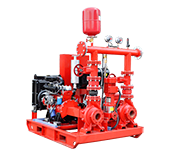
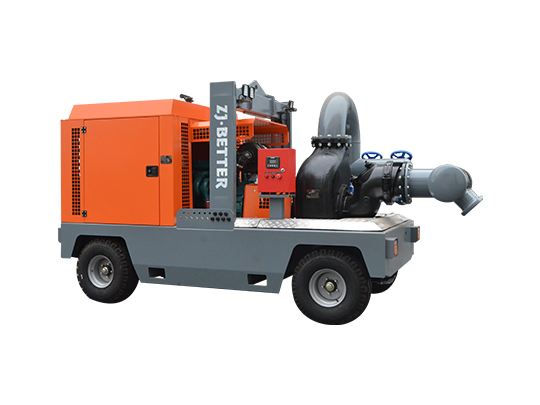
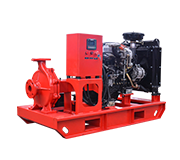
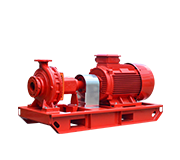

1. Skid-mounted Integrated Structure
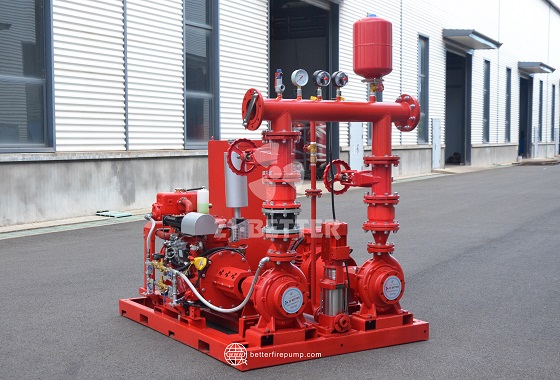
The equipment uses a common base for modular installation, centrally arranging fire pumps, drive equipment, control cabinets, valves, and connecting pipes, forming a complete fire-fighting water supply module. Compared to decentralized on-site installation, the integrated structure reduces redundant positioning and piping connections between equipment, improving overall installation efficiency.
2. Multi-equipment Coordinated Water Supply
According to the fire protection system design requirements, electric fire pumps, diesel fire pumps, and pressure-stabilizing pumps can be used in combination. The main pump supplies fire-fighting water, the diesel pump serves as backup power, and the pressure-stabilizing pump maintains network pressure. Multiple devices work together to enhance the integrity of the fire-fighting water supply system.
3. Flexible Pump Configuration
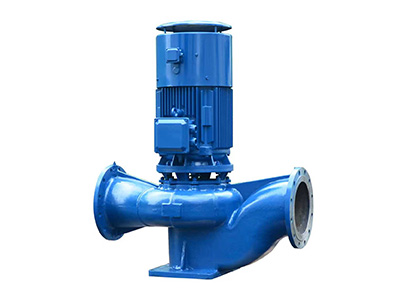
This type of skid-mounted equipment is not limited to a single pump type. Depending on flow rate, head, and installation conditions, it can be configured with different structures such as end-suction pumps, horizontal double-suction pumps, vertical split pumps, vertical pipeline pumps, or vertical turbine pumps, providing flexible product combinations for different fire protection projects.
4. Integrated Control System
The control cabinet is a crucial component of the entire system. It automatically controls the electric pumps, diesel pumps, and pressure-stabilizing pumps, and integrates overload and overcurrent protection functions for operational management. Centralized control reduces the number of independent control devices on-site, making fire pump unit operation more intuitive.
5. Complete Fire Piping Configuration
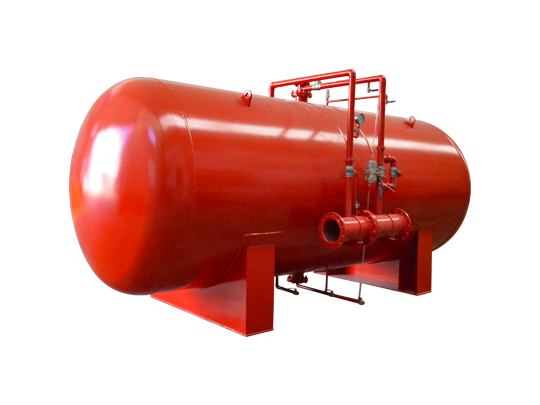
The equipment can integrate accessories such as check valves, gate valves, pressure gauges, pressure sensors, pressure vessels, flexible joints, flanges, and common inlet and outlet water pipes. By pre-planning the piping layout, the various functional components of the pump unit can form a complete water supply channel, reducing the complexity of on-site piping.
6. Saves On-Site Installation Space
The skid-mounted structure concentrates multiple devices on a single base, reducing the installation area required for traditional distributed equipment. For projects with limited fire pump room space or requiring optimized equipment layout, the compact design improves space utilization and facilitates overall planning of inlet and outlet piping.
7. Multiple Flow Rate and Head Options
According to the official website, the overall flow rate range of this fire water supply system covers approximately 30–9000 GPM, and the head range is approximately 3–20 bar. It supports combinations of electric pumps, diesel pumps, and pressure-stabilizing pumps of different power ratings. Actual selection should be determined based on the fire network calculation results.
8. Suitable for Various Firefighting Scenarios
Skid-mounted fire water supply equipment can be applied to industrial plants, warehouses, commercial buildings, petrochemical facilities, airports, docks, and other large-scale fire protection projects. Application cases on the official website also show that complete fire pump systems have been used in industrial and infrastructure fire protection projects in various regions.
9. Facilitates Transportation and On-Site Layout
The equipment is arranged as a complete skid-mounted module, reducing on-site equipment assembly work compared to transporting and positioning multiple independent units separately. Upon arrival at the project site, foundation positioning, inlet and outlet piping, and related connections are completed according to design requirements, improving construction efficiency.
10. Facilitates Post-Construction Maintenance and Management
With all major equipment centrally installed on the same skid-mounted base, the locations of pumps, control cabinets, valves, and pressure monitoring components are clearly defined, facilitating routine inspections. The modular layout also facilitates future maintenance, component replacement, and system upgrades, improving the long-term management convenience of fire-fighting equipment.
Skid-mounted fire-fighting water supply equipment integrates traditional decentralized fire-fighting equipment into a compact water supply module through an integrated base, centralized control, complete piping, and multi-pump combinations. Its core advantages lie not only in saving installation space but also in the flexible combination of electric fire pumps, diesel fire pumps, and pressure-stabilizing pumps according to project needs, and systematic management through centralized control. This type of equipment has high application value for projects that prioritize installation efficiency, equipment integration, space utilization, and fire-fighting water supply reliability.
 WhatsApp me