

1. The main fire pump undertakes the core water supply task
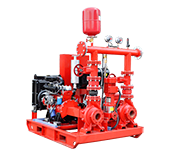
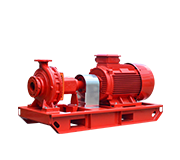
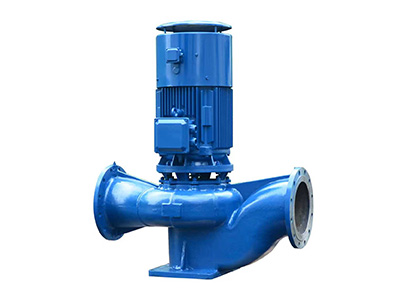
The electric main pump in the complete fire pump set is primarily responsible for normal fire water supply and is the core power equipment for high-flow operation. Depending on the project's flow rate and head requirements, different structures such as single-stage pumps, end-suction pumps, horizontal double-suction pumps, or multi-stage pumps can be configured to match the fire water supply needs of different buildings and industries.
2. The diesel standby pump provides independent power
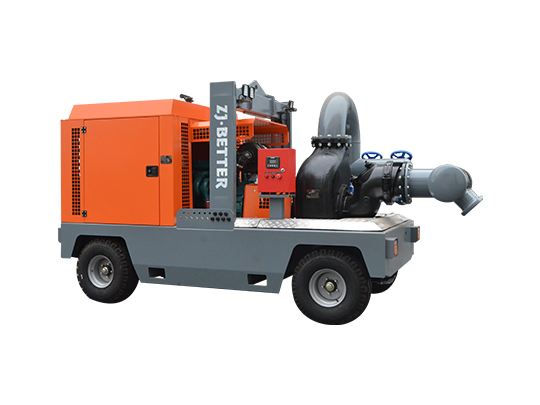
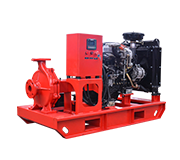
The diesel fire pump is an important backup power source for the complete system. When the on-site power supply fails or the electric main pump malfunctions, the diesel pump can take over the fire-fighting water supply task. The diesel engine, equipped with a fuel system, cooling system, starting device, and control components, provides the system with a standby water supply capacity independent of the power grid.
3. Pressure Stabilizing Pumps Maintain Pipeline Pressure
Pressure stabilizing pumps are mainly used to maintain the daily pressure of the fire-fighting pipeline network. Their flow rate is usually less than that of the main fire pump, but their head needs to meet the system's pressure stabilization requirements. When there is a slight pressure drop in the pipeline network, the pressure stabilizing pump can promptly replenish the pressure, reducing the frequent starting of the main fire pump due to minor pressure changes, and helping to maintain a stable standby pressure state for the fire-fighting system.
4. Multiple Pumps Working Together to Form a Complete Water Supply System
The main pump, standby pump, and pressure stabilizing pump are not simply superimposed, but rather perform different tasks according to different operating conditions. Normal fire-fighting needs are met by the electric main pump; in case of power failure, the diesel pump provides backup power; and daily pressure changes are regulated by the pressure stabilizing pump. These three types of equipment complement each other, giving the fire-fighting water supply system a more complete operating logic.
5. Automated Management of the Control Cabinet
The control cabinet is a crucial control unit in a complete fire pump set. It provides unified management of electric pumps, diesel pumps, and pressure-stabilizing pumps, and executes corresponding controls based on system pressure and operating status. Equipment documentation indicates that the control system can be configured with overload and overcurrent protection functions, supporting automatic or manual operation modes, facilitating centralized operation of the fire protection system.
6. Stable Operation of the Pressure Tank Auxiliary System
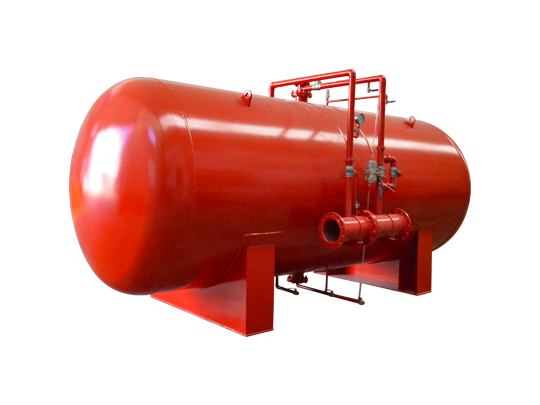
The pressure tank stores fire-fighting water at a certain pressure and provides a buffer against changes in pipeline pressure. When used in conjunction with the pressure-stabilizing pump, it reduces unnecessary starts of the main pump under low flow demand, maintaining a relatively stable pressure state in the fire pipeline network. The pressure tank volume and pressure rating should be selected in conjunction with the fire pump head and system design parameters.
7. Systematized Connection of Piping Accessories
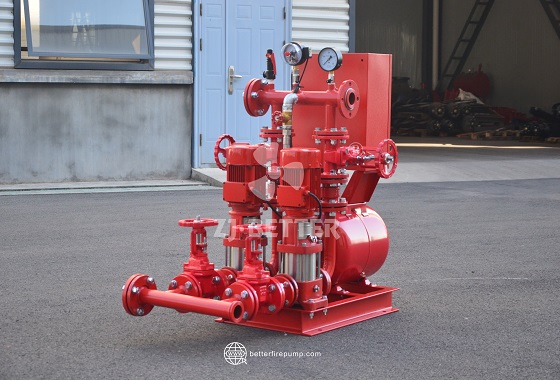
A complete fire pump set not only includes the pump and power equipment but can also integrate accessories such as check valves, gate valves, pressure gauges, pressure sensors, flexible joints, flanges, and common suction and discharge pipelines. After being integrated into a single configuration, the number of components can be reduced through independent on-site selection and connection work, allowing the pump set to form a more complete fire-fighting water supply unit.
8. Compact Structure Facilitates Fire Pump Room Layout
Concentrating multiple core devices in a unified base or integrated structure effectively optimizes the internal space of the fire pump room. With a rational layout of pumps, control equipment, pressure tanks, and piping accessories, equipment connections are more intuitive, facilitating installation, commissioning, and routine inspections, making it suitable for fire protection projects with high equipment integration requirements.
9. Multiple Flow and Head Specifications Available
Complete fire pump sets can be configured with parameters according to actual fire-fighting water supply needs. Related product data shows that the system covers a wide range of flow rates and heads, and appropriate combinations of electric pumps, diesel pumps, and pressure-stabilizing pumps can be selected for different projects. Actual selection should be determined comprehensively based on building height, fire-fighting water consumption, pipeline resistance, and design pressure.
10. Applicable to Multiple Fire Water Supply Scenarios
Complete fire pump sets can be applied to warehouses, docks, airports, petrochemical facilities, power plants, liquefied gas facilities, textile mills, ships, and other locations requiring fire water supply. Through the combination of an electric main pump, a diesel standby pump, and a pressure-stabilizing pump, corresponding water supply capacity can be provided for different operating conditions.
The core advantage of complete fire pump sets lies in the systematic combination of the main pump, standby pump, pressure-stabilizing pump, and control accessories. The electric main pump is responsible for the main fire water supply, the diesel pump provides independent backup power, the pressure-stabilizing pump maintains the daily pipeline pressure, and the pressure tank and control cabinet further improve system operation and pressure management. Integrated configuration reduces on-site installation work and provides a more complete fire water supply equipment solution for warehouses, industrial plants, docks, and large facilities. Specific configurations should still be determined based on the project's flow rate, head, pipeline network, and local fire protection design requirements.
 WhatsApp me