

1. Independent Power System Ensures Emergency Operation Capability
The biggest advantage of diesel engine fire pumps is their independence from external power systems. In industrial environments, power systems are easily affected or even completely interrupted in the event of a fire, and the ability of fire-fighting equipment to operate normally directly affects the effectiveness of fire suppression. Diesel engine-driven fire pumps can start quickly in the absence of power, ensuring a continuous water supply. This independence makes them irreplaceable in critical moments, particularly suitable for locations with unstable power supplies or high emergency requirements.
2. High Flow Output Meets Large-Scale Fire Suppression Needs
Industrial fires typically involve large areas and high combustion intensity, requiring a massive amount of fire-fighting water. Diesel engine fire pumps, through optimized design, can provide high-flow-rate output, supplying sufficient water to fire protection systems in a short time. Their efficient impeller and flow channel design ensures smoother water flow and reduces energy loss, maintaining stable water supply capacity even under high load conditions, significantly improving fire extinguishing efficiency.
3. High Head Capacity for Complex Piping Systems
In large industrial projects, fire water supply systems often cover a wide area with complex piping structures, requiring high head capacity. Diesel engine fire pumps, through reasonable hydraulic design, can provide stable high-head output, ensuring water can be delivered to long-distance or high-level areas. This characteristic makes them excellent in high-rise factories, large tank farms, and long-distance water transmission systems.
4. Skid-Mounted Integrated Design Improves Installation Efficiency
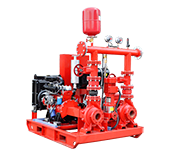
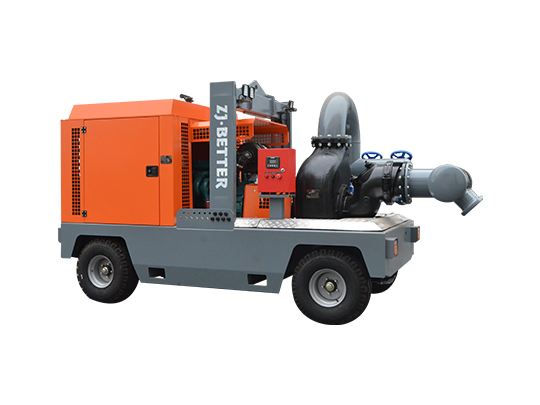
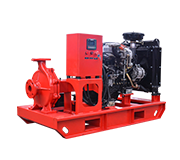
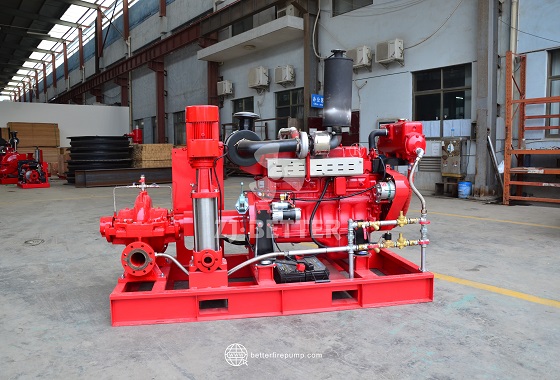
Modern diesel engine fire pumps mostly adopt a skid-mounted integrated structure, integrating the diesel engine, pump, control system, and piping components onto a single base. Overall commissioning is completed before delivery, requiring only simple on-site connection for immediate use. This design not only significantly reduces construction difficulty but also significantly shortens the installation cycle, making it particularly suitable for projects with tight schedules. Meanwhile, the integrated structure also improves the overall coordination and stability of the system.
5. Intelligent Control System Enhances Operational Safety
Diesel engine fire pumps are typically equipped with advanced control systems that enable automatic start/stop, operational status monitoring, and fault alarms. When the system detects pressure changes or fire signals, it can automatically start the equipment and enter working condition. The control system can display key operating parameters in real time, allowing operators to promptly grasp the equipment status and improve the safety and reliability of system operation.
6. Continuous Operation Capability Meets Long-Term Working Needs
Industrial fires often last for extended periods, placing high demands on the continuous operation capability of equipment. Diesel engine fire pumps, through their efficient cooling systems and stable fuel supply design, can maintain stable performance during long-term operation. Even under high load conditions, they can continuously output stable water pressure and flow, providing reliable support for firefighting operations.
7. Strong Environmental Adaptability to Harsh Working Conditions
Industrial environments are complex and variable, requiring equipment with excellent adaptability. Diesel engine fire pumps employ a high-strength structure and anti-corrosion treatment, enabling stable operation in high-temperature, high-humidity, dusty, or corrosive environments. Meanwhile, its excellent seismic performance ensures stable operation even under complex working conditions, extending equipment lifespan.
8. Convenient Maintenance Reduces Operating Costs
The equipment is designed with maintenance needs in mind, featuring a rational layout of key components for easy daily inspection and maintenance. Routine maintenance is simple, requiring no complex disassembly procedures, effectively reducing maintenance costs. Furthermore, standardized design facilitates spare parts replacement, reducing downtime and improving system operating efficiency.
9. Widely Used in Multiple Industries
Diesel engine fire pumps are widely used in petrochemical, power, mining, port terminals, and large-scale infrastructure projects. Their high reliability and strong adaptability enable them to meet fire protection needs in various scales and environments. They play a vital role in diverse and complex application scenarios, becoming an indispensable part of industrial fire protection systems.
10. Enhances the Reliability and Safety Level of the Overall Fire Protection System
As a crucial component of fire water supply systems, diesel engine fire pumps not only enhance the system's water supply capacity but also strengthen the overall system's emergency response capabilities. By coordinating with other fire-fighting equipment, a more comprehensive fire protection system can be built, enabling rapid response and efficient control during a fire and minimizing losses.
Diesel engine fire pumps, with their independent power, high flow output, and strong environmental adaptability, play a crucial role in industrial fire protection systems. The combination of skid-mounted integrated design and intelligent control technology not only improves installation efficiency but also enhances the overall reliability of the system. As industrial safety requirements continue to rise, diesel engine fire pumps will continue to play a key role in future fire protection projects, providing robust protection for various complex application scenarios.
 WhatsApp me