

1. Intelligent Control Technology Improves Sprinkler System Response Efficiency
One of the biggest features of intelligent fire water supply systems is the adoption of advanced automatic control technology. The system can monitor the pressure and flow changes of the fire sprinkler network and the operating status of equipment in real time. When the sprinkler system experiences a pressure drop due to fire activation, the equipment can automatically start and establish a stable water supply pressure in a very short time. Compared with the traditional manual control mode, the intelligent control system can significantly shorten the fire response time and improve the efficiency of initial fire suppression. Simultaneously, the system also has functions such as automatic switching, fault alarms, and operational data recording, which can effectively improve the automation capability of the entire fire protection system. For large high-rise buildings, a rapid and stable fire response can buy valuable time for personnel evacuation and fire control, thereby improving the overall fire safety level.
2. High-efficiency water supply performance meets the fire protection needs of high-rise buildings
High-rise building sprinkler systems are typically characterized by long water supply distances, complex pipe networks, and high pressure losses; therefore, fire protection equipment must have a powerful water supply capacity. The intelligent fire water supply system adopts high-efficiency centrifugal pump technology and optimized hydraulic model design, improving water delivery efficiency and reducing energy loss through high-performance impellers and low-resistance flow channel structures. The system can quickly establish a stable fire pressure in a short time and continuously provide sufficient water to the sprinkler and fire hydrant systems. Even in complex fire protection environments such as high-rise buildings or large commercial complexes, a stable water pressure is maintained, ensuring that all areas of the sprinkler system receive sufficient water for fire suppression. This high-efficiency water supply capability effectively improves the overall operational reliability of modern building fire protection systems.
3. Constant Pressure Water Supply Technology Ensures Stable Operation of the Sprinkler System
In large high-rise buildings, fluctuations in fire protection network pressure can easily lead to unstable water supply to the sprinkler system, thus affecting fire suppression effectiveness. The intelligent fire protection water supply system employs advanced constant pressure control technology, which automatically adjusts the operating power of equipment according to actual water demand, ensuring that the fire protection network maintains a stable pressure. The system can automatically adjust the pump speed according to changes in network pressure, thereby avoiding the pressure fluctuation problems common in traditional water supply methods. This constant pressure operation mode not only improves the fire suppression efficiency of the sprinkler system but also reduces network impact and equipment wear, extending the overall service life of the system. For modern large buildings, stable water supply pressure is a crucial foundation for ensuring the long-term reliable operation of the fire protection system.
4. Modular Structure Design Improves Installation and Maintenance Efficiency
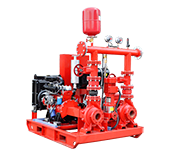
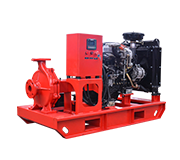
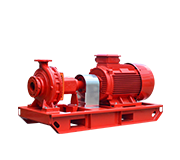
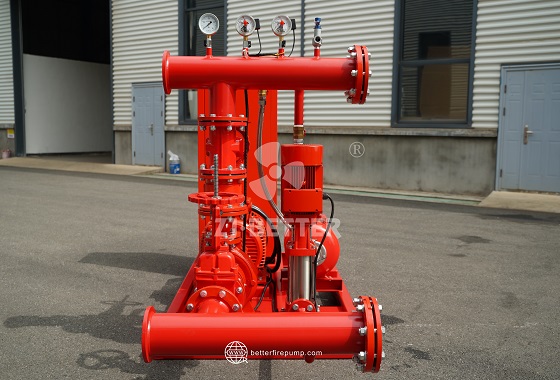
The intelligent fire-fighting water supply system adopts a modular integrated structure design, centrally installing fire pumps, motors, control cabinets, pressure stabilization systems, and piping components on a unified platform. This design effectively reduces on-site construction workload and piping connection complexity, improving overall installation efficiency. The equipment undergoes system commissioning and performance testing before leaving the factory, so only basic connections need to be completed on-site for immediate use, significantly shortening the project construction cycle. Simultaneously, the modular structure facilitates later maintenance and repair, allowing maintenance personnel to quickly complete equipment inspections and troubleshooting, thereby reducing downtime and maintenance costs. This highly efficient installation and maintenance model is particularly suitable for modern large-scale fire protection projects.
5. Energy-Saving Operation Mode Reduces Long-Term Operating Costs
With the increasing popularity of green building concepts, modern fire-fighting equipment faces higher requirements for energy efficiency. The intelligent fire-fighting water supply system uses high-efficiency energy-saving motors and intelligent frequency conversion control technology, automatically adjusting operating power according to the actual system load. When the system is in standby or low-load operation, the equipment automatically reduces energy consumption, thereby reducing energy waste and lowering long-term operating costs. Compared to traditional constant-speed fire-fighting equipment, this system boasts higher energy efficiency while reducing heat generation and mechanical wear. This energy-saving operation mode not only helps users reduce electricity consumption but also aligns better with modern green building and low-carbon engineering requirements.
6. Remote Monitoring System Enhances Fire Management Capabilities
Modern smart fire management increasingly emphasizes equipment networking and remote monitoring capabilities. Intelligent fire-fighting water supply systems are equipped with advanced remote monitoring platforms that record real-time equipment operating data, including parameters such as pressure, flow rate, current, voltage, and operating status. Managers can view system operation status anytime via computer or mobile terminal and promptly identify potential faults. The system also features automatic fault alarms and remote maintenance functions, issuing timely warnings in case of abnormalities, thereby reducing the operational risks of the fire protection system. This intelligent management mode effectively reduces the frequency of manual inspections, improving fire management efficiency and system safety.
7. Low-Vibration, Low-Noise Operation Optimizes the Building Environment
Traditional fire-fighting equipment is prone to generating significant vibration and noise during operation, affecting not only the surrounding environment but also potentially causing long-term impacts on building structures and piping systems. The intelligent fire-fighting water supply system employs a vibration-damping base, flexible couplings, and optimized dynamic balance design to effectively reduce mechanical vibration and noise generated during equipment operation. This results in smoother operation, reducing mechanical fatigue and pipeline losses, and improving overall system stability. This low-noise operation characteristic is particularly suitable for locations with high environmental requirements, such as hospitals, schools, hotels, high-rise residential buildings, and commercial complexes.
8. High-Reliability Design Adapts to Complex Firefighting Conditions
Modern high-rise building fire protection systems typically require equipment with all-weather stable operation capabilities; therefore, system reliability is paramount. The intelligent fire-fighting water supply system adopts an industrial-grade high-strength structural design. Core components, including the pump body, motor, pump shaft, and mechanical seals, are all manufactured using wear-resistant and corrosion-resistant materials and have undergone rigorous durability testing. The equipment can operate stably for extended periods in high-temperature, high-humidity, and complex industrial environments, maintaining stable water supply performance even under high-load conditions. This high-reliability design effectively improves the overall safety of the fire protection system and reduces the frequency of subsequent maintenance failures.
9. Widely Applicable to Various Modern Fire Protection Engineering Scenarios
Intelligent fire water supply systems are widely used in fire protection engineering projects such as high-rise buildings, commercial complexes, industrial plants, warehousing and logistics centers, hospitals, airports, and underground spaces. In different application scenarios, the system can be flexibly configured according to actual fire protection needs, including customized design of flow rate, head, and control modes. This flexible adaptability can meet the needs of stable water supply systems for fire protection projects of different scales and types, and provide more efficient and reliable fire protection for modern complex building environments.
10. Smart Fire Protection Development Drives Comprehensive System Upgrades
With the continuous development of IoT, big data, and artificial intelligence technologies, intelligent fire water supply systems will further upgrade towards digitalization and intelligence in the future. Future systems will not only be able to achieve remote monitoring and automatic fault diagnosis, but also optimize operating strategies through intelligent data analysis, achieving more precise energy management and equipment maintenance. Combined with smart city and smart building platforms, fire water supply systems will become an important part of the modern digital fire management system, providing more intelligent, safe, and efficient solutions for future fire protection engineering.
Overall, intelligent fire-fighting water supply systems, with their high-efficiency water supply performance, intelligent automatic control, constant pressure operation technology, and remote monitoring capabilities, have become a crucial core component of modern high-rise building fire protection systems. They not only effectively improve the operational efficiency of sprinkler systems and fire response speed but also reduce long-term operating costs and enhance overall fire safety levels. As modern buildings continue to expand in scale and smart fire protection technologies continue to develop, intelligent fire-fighting water supply systems will play an even more vital role in future fire protection engineering construction, providing more stable, efficient, and intelligent fire-fighting water supply guarantees for industrial, commercial, and public buildings.
 WhatsApp me