

1. Modular Structural Design Improves Installation Efficiency
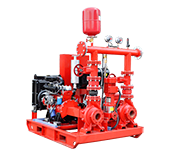
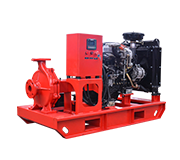
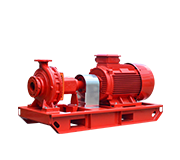
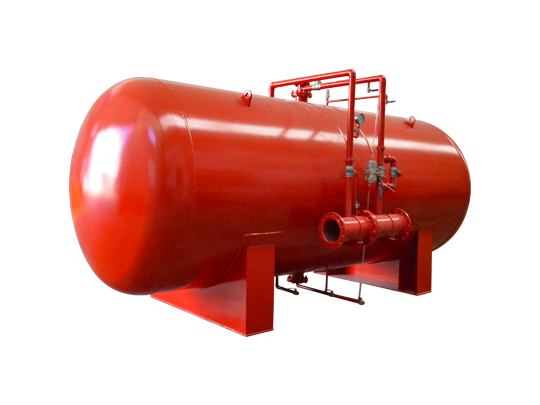
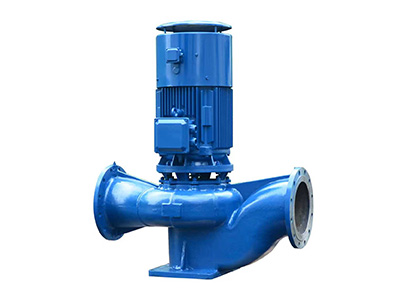
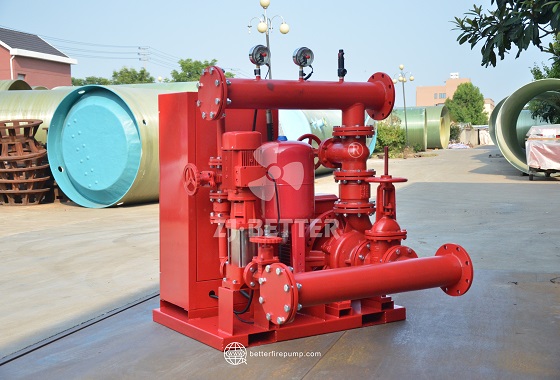
One of the biggest advantages of modular fire pump equipment is its highly integrated structural design. Traditional fire protection systems often require extensive on-site piping welding, electrical connections, and equipment debugging, resulting in long construction cycles and susceptibility to on-site construction errors that could affect the overall system stability. Modular fire pump equipment has completed most of its assembly and system debugging before leaving the factory, requiring only basic connections on-site for immediate use, significantly shortening construction time. The equipment uses a unified base structure, rationally arranging the fire pump, motor, valves, control cabinet, and auxiliary piping, improving installation efficiency and reducing on-site labor costs and construction risks. This modular installation mode is particularly suitable for large commercial projects and industrial fire protection engineering with tight schedules.
2. Compact Layout Optimizes Fire Pump Room Space Utilization
Modern buildings face increasingly limited space for equipment, especially in underground pump rooms, equipment floors of high-rise buildings, and commercial complexes. How to rationally utilize limited space has become a crucial issue in fire protection system design. Modular fire pump equipment adopts a compact structural layout, optimizing equipment arrangement and piping routing to effectively reduce floor space while ensuring high-performance operation. Compared to traditional decentralized fire protection equipment, it significantly improves space utilization, reserving more installation area for other electromechanical equipment. The clean structure and rational layout also enhance the overall aesthetics of the pump room and facilitate future maintenance. This high space utilization design is particularly suitable for the fire protection system construction needs of modern intelligent buildings and large-scale complexes.
3. High-Efficiency Water Supply Performance Meets Complex Firefighting Needs
3. High-Efficiency Water Supply Performance Meets Complex Firefighting Needs
While modular fire pump equipment prioritizes ease of installation and structural optimization, its water supply performance is equally outstanding. The equipment employs advanced centrifugal pump technology and optimized hydraulic model design, utilizing a high-efficiency impeller and low-resistance flow channel structure to improve overall water delivery efficiency and reduce energy loss. The system can quickly establish stable fire-fighting pressure and continuously provide a large and stable water supply to sprinkler systems, fire hydrant systems, and fire monitor systems. Even in large industrial parks, high-rise buildings, or long-distance fire hydrant networks, it can maintain stable pressure output. This high-efficiency water supply capability effectively improves initial fire suppression efficiency and provides reliable water supply for modern fire protection engineering.
4. Intelligent Automatic Control System Enhances Fire Response Speed
Modular fire pump equipment is generally equipped with an advanced intelligent control system that can monitor fire hydrant network pressure, equipment operating status, and flow rate changes in real time. When the fire protection system detects a pressure drop or a fire alarm signal, the equipment can automatically and quickly start and enter a stable water supply state, completing the fire response task without manual intervention. The intelligent control system also features automatic inspection, fault alarm, and operational data recording functions, enabling timely detection of equipment anomalies and early warning processing, thereby improving the overall safety and stability of the fire protection system. Some high-end equipment also supports remote network monitoring and mobile terminal management, allowing managers to view equipment operation status and remotely control it at any time, significantly improving the management efficiency of modern intelligent fire protection systems.
5. Standardized Production Improves Equipment Stability and Reliability
Modular fire pump equipment adopts a standardized design and industrialized production model. All core components undergo rigorous quality testing and performance testing, effectively reducing errors that may occur during traditional on-site installation. Core components, including the pump body, motor, control system, and piping components, are manufactured using high-quality materials and have undergone long-term durability testing, ensuring stable operation under high load conditions. This standardized production method not only improves the overall reliability of the equipment but also ensures consistency in equipment performance across different projects, providing a more stable and reliable water supply guarantee for large-scale fire protection projects.
6. Convenient Maintenance Design Reduces Subsequent Operating Costs
Traditional fire protection systems often require time-consuming and labor-intensive maintenance due to their dispersed equipment layout and complex piping. Modular fire pump equipment adopts an integrated structural design with a clear and rational layout of components and sufficient maintenance space, enabling maintenance personnel to quickly complete equipment inspection, maintenance, and troubleshooting. Key internal components utilize modular connections, allowing for rapid disassembly and assembly when parts need replacement, thereby reducing downtime and improving maintenance efficiency. This convenient maintenance mode not only reduces subsequent labor maintenance costs but also improves the long-term operational stability of the fire protection system, which is particularly important for large-scale fire protection projects requiring continuous long-term operation.
7. Energy-Saving Operation Mode Reduces Long-Term Energy Consumption
With the increasing popularity of green building and energy-saving engineering concepts, the energy-saving performance of fire protection equipment is receiving more and more attention. Modular fire pump equipment uses high-efficiency energy-saving motors and intelligent frequency conversion control technology, which can automatically adjust the operating power according to the actual load of the fire protection system. When the system is in a low-load standby state, the equipment can automatically reduce energy consumption, thereby reducing energy waste and lowering long-term operating costs. Compared with traditional constant-speed operating fire protection equipment, it can significantly improve energy utilization efficiency and reduce equipment heat generation and mechanical wear. This energy-saving operation mode not only meets the requirements of modern environmentally friendly buildings but also helps users reduce the overall operating costs of the fire protection system.
8. Low Vibration and Low Noise Operation Improves the Operating Environment
Modular fire pump equipment is designed with operational comfort and environmental adaptability in mind. The equipment employs a vibration-damping base, flexible coupling, and optimized dynamic balance structure design, effectively reducing mechanical vibration and noise during operation. Compared to traditional fire-fighting equipment, its operation is smoother, reducing impact on building structures and fire protection piping networks, and extending equipment lifespan. This low-noise operation characteristic is particularly suitable for hospitals, schools, high-rise residential buildings, and commercial complexes—places with high environmental requirements—contributing to improved overall building comfort.
9. Widely Applicable to Various Modern Fire Protection Engineering Scenarios
Modular fire pump equipment, with its flexible configuration and high adaptability, is widely used in fire protection engineering projects such as high-rise buildings, commercial complexes, industrial parks, warehousing and logistics centers, data centers, airports, and underground spaces. In different application scenarios, the equipment can be customized according to actual fire protection needs, including flexible adjustments to flow rate, head, control mode, and power configuration. This highly adaptable design can meet the water supply system requirements of different scales and types of fire protection projects, providing more efficient and reliable fire protection for modern complex building environments.
10. Smart Firefighting Development Drives Modular Equipment Upgrades
With the continuous development of smart cities and digital fire protection systems, modular fire pump equipment will further integrate with IoT, big data, and AI technologies to achieve more intelligent and automated operation and management. The equipment will not only be able to achieve real-time data collection and fault early warning through remote monitoring, but also optimize operating strategies through intelligent analysis, improving system efficiency and energy saving. In the future, modular fire protection equipment will gradually develop towards digitalization, intelligence, and networking, providing more comprehensive, efficient, and intelligent water supply solutions for modern building fire protection systems.
Overall, modular fire pump equipment, with its highly integrated structure, rapid installation capabilities, high-efficiency water supply performance, and intelligent automatic control advantages, has become a crucial core device in modern fire protection engineering. It not only significantly improves construction efficiency and reduces subsequent maintenance costs, but also optimizes the spatial layout of fire pump rooms and enhances the overall operational stability of the system. With the continuous expansion of modern building scale and the ongoing development of smart fire protection technologies, modular fire pump equipment will play an even more important role in the future fire protection market, providing more efficient, safe, and reliable water supply guarantees for industrial, commercial, and public building fire protection systems.
 WhatsApp me