

1. Horizontal cylindrical structure, adaptable to installation layouts
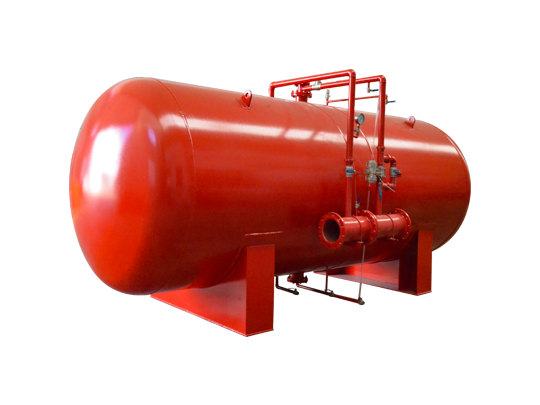
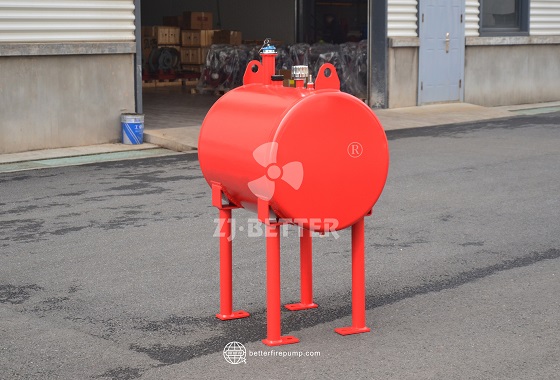
Designed as a horizontal cylinder, this pressure tank features a compact structure with support legs at the base. This horizontal configuration facilitates installation planning within the constraints of a fire pump room and allows for convenient connection to the on-site piping network.
2. Pressure storage function, providing auxiliary water supply support
Fire-fighting pressure tanks store water under pressure, offering auxiliary pressure support when the fire-fighting piping network is in standby mode or experiencing low-flow demand. If the network pressure drops, the stored energy within the tank pushes water into the piping system.
3. Buffering pressure fluctuations, improving network pressure management
During routine operation, fire-fighting piping networks may experience minor pressure variations. The pressure tank acts as a buffer—utilizing its internal pressure and water storage space—to mitigate the impact of these fluctuations on the network and associated equipment, ensuring more stable system pressure.
4. Working in tandem with pressure-maintenance pumps to reduce frequent, unnecessary cycling
These pressure tanks can be used in conjunction with fire-fighting pressure-maintenance pumps (jockey pumps). When a slight drop in network pressure occurs, the tank provides initial pressure compensation; this, combined with the pressure-maintenance pump, helps sustain the required system pressure, thereby preventing the main fire pumps from starting up too frequently due to minor pressure changes.
5. Steel tank construction, meeting pressure storage requirements
The unit features a cylindrical steel shell that provides the necessary structural support for the internal pressurized storage space. During manufacturing, the choice of materials, wall thickness, and pressure-bearing design are determined based on the rated operating pressure, water storage capacity, and specific technical requirements of the project.
6. Internal Pressure-Storage Structure for Pressure Buffering
6. Internal Pressure-Storage Structure for Pressure Buffering
Depending on the specific model, the pressure tank may feature a diaphragm-type design, utilizing a rubber diaphragm to separate the water chamber from the air chamber. As water enters the tank, it compresses the gas, storing potential energy in the form of pressure. When the pressure in the piping network drops, the compressed gas expands, pushing the stored water back into the system. The precise internal configuration varies by model.
7. Flexible Specifications to Match System Parameters
Fire protection projects have varying requirements for water storage capacity, operating pressure, and connection dimensions. When selecting a unit, factors such as the pressure of the fire-fighting piping network, the parameters of the pressure-maintenance (jockey) pump, water volume requirements, and the system’s design operating conditions must be considered to determine the appropriate tank specifications and pressure rating.
8. Optimized Connection Interfaces for Seamless System Integration
Pressure tanks must be equipped with suitable water inlet/outlet ports, valves, and pressure-monitoring components, as dictated by the system design. Proper planning of connection points and piping layout facilitates the integration of the tank with fire-fighting pumps, pressure-maintenance pumps, and control systems.
9. Suitable for Diverse Fire-Fighting Water Supply Scenarios
Horizontal fire-fighting pressure tanks can be deployed in various settings—such as industrial facilities, warehouses, commercial buildings, and public infrastructure—as part of their fire-fighting water supply systems. For projects requiring the maintenance of standby pressure within the piping network, these tanks can be integrated with fire-fighting pumps and pressure-maintenance equipment.
10. Supporting System Operation for Enhanced Pressure Management
By storing pressure, providing a buffer, and assisting with water replenishment, these tanks offer additional support for managing pressure within fire-fighting piping networks. When effectively coordinated with fire-fighting pumps, pressure-maintenance pumps, and pressure-control equipment, they improve pressure management during standby periods and reduce unnecessary equipment activation.
Horizontal fire-fighting pressure tanks serve as essential auxiliary pressure-storage components in fire-fighting water supply systems. Their cylindrical steel design and support-leg structure simplify installation and layout, enabling functions such as pressure storage, pressure buffering, and auxiliary water replenishment in accordance with system design. By carefully determining the tank volume, operating pressure, connection methods, and auxiliary equipment, the pressure tank can be optimally integrated into the fire-fighting water supply system, providing reliable support for network pressure management. In practice, the appropriate pressure tank should be selected based on the project’s technical specifications and the specific product model to ensure that the equipment configuration aligns with the system design requirements.
 WhatsApp me