
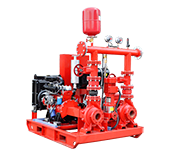
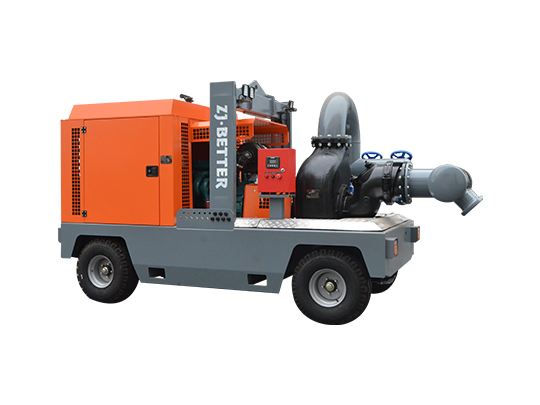
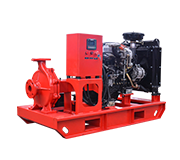
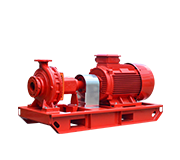

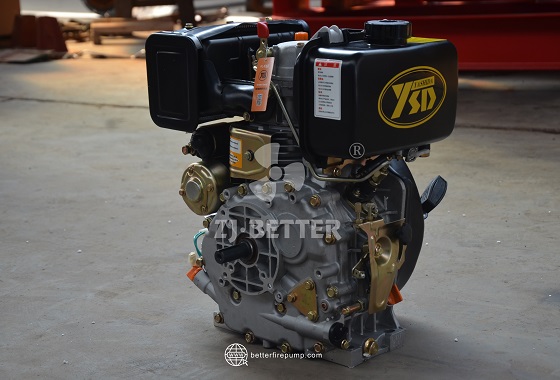
1. Compact Structural Design Enhances Equipment Adaptability The high-performance single-cylinder diesel fire engine adopts a compact, integrated design, with a small overall size and limited space occupation, thus enabling flexible adaptation to various mobile fire pump equipment and portable fire-fighting water supply systems. In practical applications, fire-fighting equipment often needs to be installed on trailers, mobile platforms, or small fire-fighting units. This engine, through optimized structural layout, effectively reduces the overall weight of the equipment while improving installation flexibility. Compared to large power systems, it is not only easier to transport and deploy on-site, but also allows for rapid installation in confined spaces, thus meeting the demands of modern mobile firefighting systems for lightweight design and high mobility.
2. Powerful Power Output Ensures Stable Water Supply
As a crucial power source for firefighting equipment, this diesel engine boasts excellent power output performance, providing a continuous and stable driving force for fire pumps. Even under prolonged high-load operation, the engine maintains stable speed and efficient output, ensuring a continuous and stable water supply from the fire pumps. During emergency firefighting, the fire water supply system must maintain stable pressure and flow, and the engine's powerful and reliable performance effectively prevents water supply interruptions, improving overall firefighting efficiency.
3. Low Fuel Consumption Reduces Long-Term Operating Costs
The engine employs optimized combustion technology and a high-efficiency fuel system, effectively reducing fuel consumption while ensuring strong power output. Compared to traditional high-fuel-consumption power equipment, it can complete long-term operation tasks with lower fuel costs, thereby reducing overall operating expenses. For firefighting systems requiring long-term standby or frequent use, the low fuel consumption advantage not only reduces operating costs but also improves equipment economy and market competitiveness.
4. Rapid Start-up Performance Enhances Emergency Response Efficiency
In fire rescue operations, the ability of equipment to start quickly often determines firefighting efficiency. This single-cylinder diesel fire engine employs a high-efficiency starting structure design, enabling it to rapidly reach a stable operating state within a short time, maintaining excellent starting performance even in low temperatures or complex environments. When a sudden fire occurs, the equipment can be deployed immediately, quickly establishing water supply capacity for the firefighting system, thereby effectively controlling the spread of fire.
5. Durable Structure Adapts to Complex Operating Environments
To meet the long-term usage requirements of industrial firefighting, forest firefighting, and field emergency scenarios, key engine components are manufactured using high-strength, wear-resistant materials, including a reinforced cylinder block, a highly wear-resistant crankshaft, and a high-performance sealing system. This durable structure not only improves the equipment's impact resistance but also effectively adapts to complex environments such as high temperatures, dust, and humidity, ensuring stable engine performance even under harsh conditions.
6. High-Efficiency Cooling System Ensures Long-Term Continuous Operation
Firefighting equipment often requires continuous operation for extended periods, making engine heat dissipation performance particularly important. This diesel engine is equipped with a high-efficiency cooling system and optimized heat dissipation structure, effectively reducing operating temperature and maintaining stable power system operation. Even in high-temperature environments or during prolonged firefighting operations, the equipment maintains stable power output, preventing performance degradation or shutdown due to overheating, thus improving the overall reliability of the fire protection system.
7. Low Vibration and Low Noise Enhance Operational Stability
The engine employs an optimized balanced structure and vibration-damping design, effectively reducing mechanical vibration and noise generated during operation. Low vibration performance not only improves the overall stability of the equipment but also reduces mechanical fatigue caused by long-term operation to the fire pump and other components, thereby extending the overall service life of the equipment. Simultaneously, low-noise operation improves the on-site working environment and enhances operator comfort.
8. Convenient Maintenance Reduces Equipment Downtime
The engine adopts a modular structural design with a rational layout of key components, allowing maintenance personnel to quickly complete equipment inspection, lubrication, maintenance, and parts replacement. Compared to complex large power systems, its later maintenance is simpler and faster, effectively reducing equipment downtime and improving operational efficiency. For emergency firefighting equipment, rapid maintenance capabilities ensure that the equipment is always in good standby condition.
9. Multi-Scenario Applications Meet Modern Firefighting Needs
High-performance single-cylinder diesel fire engines are widely applicable to various scenarios, including mobile fire pumps, portable fire water supply equipment, forest fire fighting systems, rural fire fighting equipment, and industrial emergency drainage systems. In these environments, equipment not only needs stable power output but also must be able to adapt to complex environments and maintain long-term reliable operation. This engine, with its compact structure, high-efficiency output, and excellent durability, fully meets the high standards of modern firefighting systems for power equipment.
10. Intelligent Control Enhances Operational Safety
As the level of intelligence in firefighting equipment continues to improve, modern diesel engines are gradually incorporating intelligent control technology. This engine can be equipped with an intelligent monitoring system that displays key parameters such as speed, oil pressure, operating temperature, and working status in real time. When equipment malfunctions, the system can automatically alarm and activate protection procedures, thereby preventing equipment damage and improving overall operational safety. Intelligent control not only improves equipment reliability but also helps operators manage firefighting systems more efficiently.
Overall, the high-performance single-cylinder diesel fire engine, through its compact structural design, strong and stable power output, and low-fuel-consumption, high-efficiency operation technology, meets the high standards of mobile firefighting equipment for its power system. It excels in rapid start-up, adaptability to complex environments, long-term stable operation, and low maintenance costs. It not only meets the stringent requirements of modern emergency fire-fighting water supply systems for reliable power equipment, but also provides more efficient, safe, and stable power solutions for mobile fire fighting, industrial rescue, and field fire suppression.
 WhatsApp me