

1. Vertical Structural Design
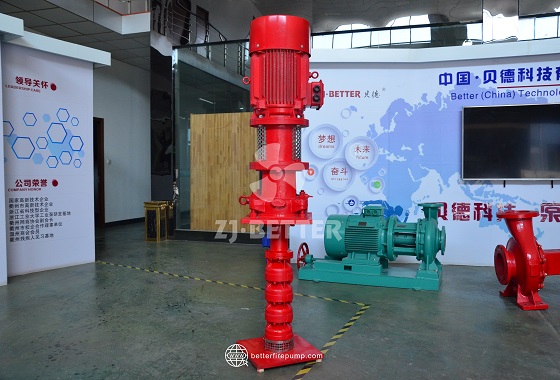
The equipment utilizes a vertical pump layout, allowing for the efficient use of vertical space within the pump room. The pump body, impellers, and shaft assembly are arranged vertically, making the unit adaptable to various water sources and installation environments—particularly for projects with specific requirements regarding lift height and water intake conditions.
2. Multi-Stage Impeller Pressurization
The product employs a multi-stage impeller configuration in series; as water flows through successive stages, it continuously gains energy, thereby achieving high-head water delivery. Compared to single-stage designs, the multi-stage configuration is better suited for fire water supply systems requiring continuous pressure boosting and high-lift delivery.
3. Meeting High-Head Supply Requirements
Systems serving high-rise buildings, large industrial facilities, or extensive fire-fighting piping networks often need to overcome significant elevation differences and pipeline resistance. The appropriate model of high-head vertical fire pump can be selected based on the design head requirements to ensure the necessary water pressure at the system's discharge points.
4. Flexible Flow and Head Ranges
This series of vertical fire pumps covers a wide range of flow rates and heads. Published specifications indicate flow capacities of approximately 5–1800 m³/h and heads of approximately 20–234 m; specific models should be selected based on the fire protection system design requirements.
5. Adaptability to Various Water Sources
The vertical structure allows the pump body and shaft length to be configured according to the depth of the water source, making it suitable for deep wells, fire water reservoirs, and certain rivers or lakes. For projects where the installation of standard horizontal pumps is constrained, the vertical structure offers a more flexible configuration for water intake.
6. Shafting and Drive Structure
6. Shafting and Drive Structure
The vertical fire pump connects the drive unit to the lower hydraulic components via the pump shaft, transmitting power to the impeller. The shafting system, along with components such as guide bearings, provides rotational support and power transmission, forming the structural foundation for continuous equipment operation; the specific configuration is determined based on pump length and installation conditions.
7. Multiple Drive Options
Depending on project requirements, the vertical turbine fire pump can be driven by a vertical hollow-shaft motor or connected to horizontal motors, diesel engines, or other power units via belts or gearboxes, offering flexible drive solutions for various fire protection projects.
8. Optimized Hydraulic Component Configuration
The impeller, pump casing, pump shaft, guide bearings, and column pipes collectively form a complete hydraulic system. Materials and structural designs can be selected based on the medium, flow rate, head, and operational requirements for different working conditions, ensuring the equipment's performance aligns with the specific fire protection system.
9. Suitable for Large-Scale Fire Protection Projects
The product is suitable for industrial plants, warehousing facilities, energy infrastructure, large-scale buildings, and other fixed fire water supply projects. For projects requiring high head or water extraction from deep sources, equipment configuration can be tailored to the design parameters of the fire piping network.
10. Model Selection Based on Project Parameters
High-head vertical fire pumps are not limited to a single specification; model selection requires a comprehensive assessment of factors such as design flow rate, required head, water source depth, static water level, pipeline resistance, installation space, and drive method. The pump model, number of stages, shaft length, and power configuration are determined through optimal matching of these parameters.
Characterized by a vertical structure, multi-stage impeller pressurization, and flexible drive configurations, high-head vertical fire pumps can be tailored to the flow, head, and water source conditions of diverse fire protection projects. Their design is particularly well-suited for large-scale fire water supply systems requiring high-head delivery, deep-water extraction, or optimized vertical space usage. In practical application, parameters such as flow rate, head, number of impeller stages, pump shaft length, and drive power should be determined based on fire protection design calculations to ensure the equipment's performance effectively meets the requirements of the fire piping network.
 WhatsApp me