

1. Stably Maintaining Fire Protection Pipe Network Pressure, Improving Sprinkler System Reliability
The most crucial function of high-efficiency fire-fighting pressure-stabilizing pump units is to maintain stable fire protection pipe network pressure over the long term, ensuring that the sprinkler system remains in a normal standby state. In large building fire protection systems, minor pressure losses may occur within the fire protection pipe network due to factors such as pipe interfaces, valves, and changes in ambient temperature. Without timely pressure stabilization, a drop in system pressure can prevent sprinkler systems from starting immediately. This pressure-stabilizing pump unit, through a highly sensitive pressure detection device, can monitor changes in pipeline pressure in real time and automatically activate to replenish pressure when it drops, thus ensuring the entire fire protection system remains in a stable operating state. A stable pressure environment not only improves the response speed of the sprinkler system but also effectively reduces fire safety hazards caused by insufficient pressure.
2. High-Efficiency Hydraulic Structure Reduces Energy Loss
To improve overall water supply efficiency, the fire-fighting pressure-stabilizing pump unit adopts an advanced centrifugal pump hydraulic structure design. By optimizing the impeller flow channel, pump body structure, and internal balancing system, the water flow within the equipment is smoother and more stable. This high-efficiency design effectively reduces hydraulic losses and increases water supply capacity per unit of energy consumption. During long-term operation, the equipment can maintain stable pressure in the fire protection pipeline network with lower energy consumption, thereby reducing overall operating costs. For large commercial buildings or industrial parks, fire protection systems often need to operate continuously throughout the year; therefore, high-efficiency water supply performance is of great significance for energy management and long-term economic benefits.
3. Intelligent Automatic Control Enables Unattended Operation
Modern fire-fighting pressure-stabilizing pump units generally adopt intelligent automatic control systems, enabling automatic monitoring, automatic start/stop, and fault alarms. The equipment control system can collect pipeline pressure data in real time and automatically adjust the equipment's operating status according to pressure changes. When the pressure is lower than the set value, the pressure-stabilizing pump automatically starts to replenish pressure; when the pressure returns to normal, the equipment automatically stops operating, thus avoiding unnecessary energy waste. Simultaneously, the system also has water shortage protection, overload protection, and abnormal alarm functions, effectively improving equipment operational safety. Intelligent operation not only reduces manual management workload but also ensures the long-term stable and reliable operation of the fire protection system.
4. Low Vibration Operation Enhances Equipment Stability and Lifespan
Traditional fire-fighting water supply equipment is prone to significant vibration during long-term operation. Vibration not only affects equipment operational stability but can also lead to problems such as bearing wear, pipe loosening, and structural fatigue. High-efficiency fire-fighting pressure-stabilizing pump units employ precision dynamic balancing technology and a low-vibration structural design. By optimizing the pump shaft concentricity and coupling connection method, mechanical vibration is effectively reduced. Some units are also equipped with vibration-damping bases and flexible interfaces to further reduce the transmission of vibration to pipelines and building structures. Low-vibration operation not only improves equipment stability but also extends the overall system lifespan and reduces the frequency of subsequent maintenance.
5. Compact Structural Design Saves Installation Space
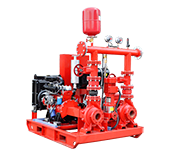
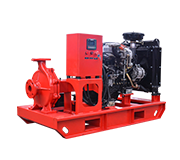
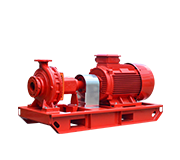
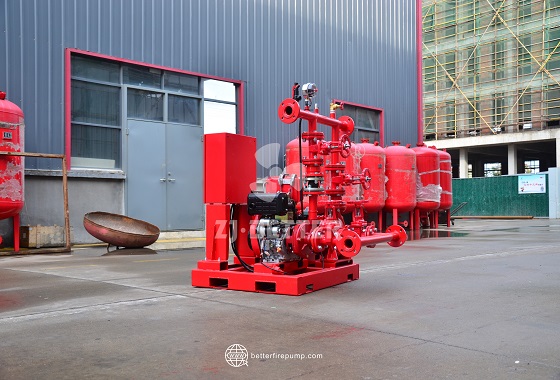
In modern building fire pump rooms, space utilization is increasingly important. High-efficiency fire pressure-stabilizing pump units adopt a compact, integrated structural design, rationally integrating the motor, fire pump, control system, and piping components onto a unified base. This not only reduces the equipment's footprint but also facilitates on-site transportation and installation. For underground fire pump rooms, equipment floors in high-rise buildings, and industrial projects with limited space, the compact structure effectively improves space utilization efficiency while reducing construction difficulty. Modular design also shortens the installation cycle and improves the overall project construction efficiency.
6. Corrosion-Resistant Materials Enhance Adaptability to Complex Environments
Fire pressure-stabilizing pump units are in constant contact with water; therefore, the equipment's corrosion resistance directly affects its service life and operational stability. Key components of this equipment are manufactured using high-strength, corrosion-resistant materials, including a stainless steel impeller, a high-strength pump shaft, and a high-performance mechanical seal structure, effectively resisting corrosion and wear during long-term operation. Even in humid, high-temperature, or complex water quality environments, the equipment maintains stable performance. This corrosion-resistant design not only improves equipment reliability but also reduces subsequent maintenance and parts replacement costs.
7. Low Energy Consumption Reduces Long-Term Maintenance Costs
Since the pressure-stabilizing pump unit is in a standby state for extended periods, its energy consumption directly impacts the overall operating cost of the fire protection system. The high-efficiency fire pressure-stabilizing pump, through optimized power matching and intelligent control technology, achieves on-demand operation, effectively reducing energy waste while meeting the pressure stabilization requirements of the pipeline network. Compared to traditional high-energy-consuming water supply equipment, its long-term power consumption is significantly reduced. Simultaneously, due to the more stable overall operation and reduced wear on mechanical parts, maintenance cycles are longer, and maintenance costs are correspondingly lower. This offers significant economic advantages for large commercial buildings, industrial parks, and public facilities.
8. Rapid Response Capability Ensures Efficient Water Supply in the Initial Stages of a Fire
In the initial stages of a fire, the ability of the fire protection system to quickly establish a stable water supply is crucial. High-efficiency fire-fighting pressure-stabilizing pump units maintain stable pipeline pressure before the main fire pump starts, ensuring the immediate normal operation of sprinkler and fire hydrant systems. When the system detects a fire causing a rapid pressure drop, the equipment can quickly respond and assist in establishing a stable water supply environment, improving overall fire-fighting efficiency. This rapid response capability is particularly important for high-rise buildings, underground shopping malls, and densely populated areas, effectively reducing the risk of fire spread.
9. Applicable to various fire protection engineering applications
High-efficiency fire-fighting pressure-stabilizing pump units are widely used in high-rise buildings, commercial complexes, industrial parks, hospitals, schools, warehousing and logistics centers, and municipal fire protection engineering. In these scenarios, fire protection systems have extremely high requirements for stable water supply and long-term reliable operation. The pressure-stabilizing pump unit, with its high-efficiency water supply, intelligent control, and low-energy consumption, can fully meet the needs of modern fire protection engineering for high-standard fire protection equipment. Whether it's a large sprinkler system or a complex fire pipeline network, this equipment can provide continuous and stable pressure support.
10. Intelligent Development Enhances Modern Fire Protection System Management
As the fire protection industry continues to move towards intelligent development, modern fire-fighting pressure-stabilizing pump units are gradually incorporating remote monitoring and data management technologies. The equipment can upload operational data in real time through an intelligent control system, including pressure changes, operating status, fault information, and energy consumption data, facilitating remote monitoring of the fire protection system's operation by management personnel. When system anomalies occur, early warnings and handling can be initiated immediately, thereby improving overall fire management efficiency. Intelligent development not only improves equipment operational reliability but also drives modern fire protection engineering towards greater efficiency, safety, and automation.
Overall, high-efficiency fire-fighting pressure-stabilizing pump units, through their high-efficiency water supply structure, intelligent automatic control technology, and low-vibration, low-energy-consumption operation advantages, meet the high standards of stable water supply required by modern fire sprinkler systems. They excel in pressure stability, energy-saving operation, rapid response, and long-term reliability, not only improving the overall operational efficiency of the fire protection system but also reducing long-term maintenance and operating costs. With the continuous improvement of modern building fire protection standards, high-efficiency fire pressure stabilizing pump units will play an increasingly important role in future fire protection engineering construction, providing safer, more efficient and stable fire water supply for various buildings and industrial projects.
 WhatsApp me