
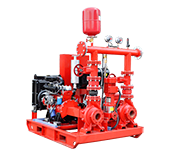
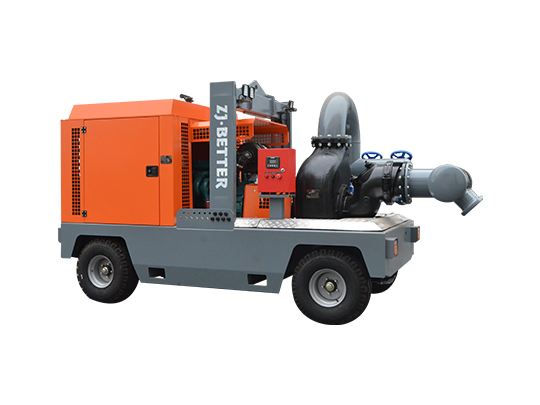
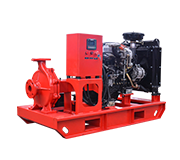
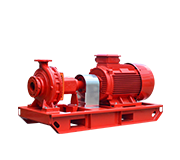

1. The Core Role of Stabilizing Fire Water Supply Network Pressure The primary function of compact pressure-stabilizing pump units is to maintain a constant pressure in the fire water supply network. When pressure fluctuations occur in the network due to minor valve leaks, temperature changes, or routine testing, the pressure-stabilizing pump can automatically start to replenish water and increase pressure, quickly restoring the system pressure to the set range. Compared to relying on frequent start-stop operations of the main fire pump, the pressure-stabilizing pump can handle daily pressure replenishment tasks in a low-flow, high-frequency operating mode, avoiding unnecessary operation of the main pump. This not only ensures that sprinkler heads and fire hydrants reach their design pressure in the early stages of a fire, but also guarantees the system's long-term stable operation, gaining valuable time for initial fire control.
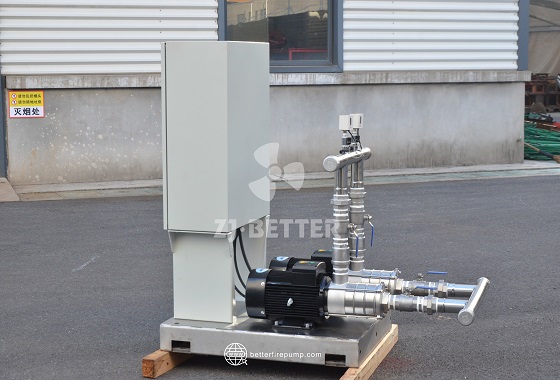
2. Space Advantages of Compact Design The compact pressure-stabilizing pump unit emphasizes integration and modularity in its structural design, concentrating the pump, motor, control system, and necessary valve components on an integrated base or frame. Compared to traditional distributed layouts, it occupies less space, facilitating installation and use in underground pump rooms, equipment rooms, or confined machine rooms. The compact structure not only reduces civil engineering space requirements but also makes installation and commissioning more efficient. This space-saving design is particularly important for commercial complexes, high-rise buildings, or renovation projects, reducing machine room renovation costs and improving the overall system layout's rationality.
3. Effective Protection for the Main Fire Pump In systems without a pressure-stabilizing pump, a drop in pipeline pressure often triggers the direct activation of the main fire pump for pressure replenishment, leading to frequent start-stop cycles. Over time, this can cause problems such as excessive motor temperature rise, mechanical seal wear, and bearing fatigue. By undertaking routine minor pressure replenishment tasks, pressure-stabilizing pump units significantly reduce the number of main pump starts, allowing the main fire pump to operate primarily under fire conditions, thus significantly extending its service life. This clearly defined operational mode makes the entire fire water supply system more efficient and reduces the cost of later maintenance and main pump replacement.
4. Automated Control Enhances System Reliability
Compact pressure-stabilizing pump units are typically equipped with dedicated control cabinets and pressure detection devices, enabling automatic start/stop, pressure limit control, and fault alarms. When the system pressure falls below the set value, the control system automatically starts the pressure-stabilizing pump to replenish water; when the pressure recovers, the equipment automatically shuts down. This closed-loop control method reduces the need for manual intervention and improves operational reliability and stability. Simultaneously, through electrical protection and signal feedback design, the unit can promptly alarm and take protective measures in case of abnormalities, preventing equipment damage and system failure, thereby ensuring the long-term safe operation of the fire protection system.
5. Outstanding Advantages in Energy Saving and Operating Economy
Pressure-stabilizing pump units typically use low-power, high-efficiency pumps, specifically designed for minor water replenishment conditions. Compared to the frequent starting of high-power main fire pumps, its energy consumption is significantly reduced. By rationally matching flow rate and head, the pressure-stabilizing pump can complete the pressure maintenance task under low energy consumption conditions, thereby effectively reducing the operating cost of the overall building fire protection system. For fire protection systems that need to be on standby for extended periods, this energy-saving effect will generate significant economic benefits over many years of operation, and it also aligns with the development direction of modern building energy conservation and emission reduction.
6. Adaptability to Various Fire Protection System Types
Compact pressure-stabilizing pump units can be widely used in indoor fire hydrant systems, automatic sprinkler systems, and combined fire water supply systems. Whether in high-rise buildings, industrial plants, or large public facilities, as long as long-term maintenance of pipeline pressure is required, the pressure-stabilizing pump unit can play a role. Its parameter configuration can be adjusted according to the system scale and design pressure, possessing good versatility and adaptability. Through coordinated work with the main fire pump, pressure tank, and control system, the pressure-stabilizing pump unit can be integrated into different types of fire water supply schemes, meeting diverse engineering needs.
7. Positive Impact on Fire Response Speed
In the initial stage of a fire, the most important aspect of the fire protection system is to quickly establish stable water pressure. Because pressure-stabilizing pump units maintain the pipeline pressure within a reasonable range over a long period, when a fire signal is triggered, the system does not need to build up water pressure from zero; instead, it rapidly supplies water directly from the existing base pressure. This significantly shortens the response time of sprinkler heads and fire hydrants, helping to suppress the spread of fire in its early stages. Therefore, pressure-stabilizing pump units are not only auxiliary equipment but also a crucial component ensuring a rapid response in fire protection systems.
8. Ease of Installation and Maintenance Compact pressure-stabilizing pump units are typically designed with engineering installation and subsequent maintenance needs in mind. Their standardized piping interfaces facilitate connection to existing fire protection networks; the centralized control system facilitates electrical wiring and parameter settings. Routine maintenance only requires routine checks of the pumps, motors, and control components. Compared to systems with complex structures and dispersed components, compact units are more convenient for maintenance personnel to manage and repair, reducing labor costs and maintenance difficulty during operation.
9. Enhanced Overall Engineering Quality of the Fire Protection System From an engineering perspective, the configuration of pressure-stabilizing pump units makes the fire protection system structure more complete. It forms a primary and secondary function with the main fire pump, enabling the system to possess both strong emergency water supply capabilities and a stable daily pressure maintenance mechanism. This configuration aligns with the modern fire protection engineering design philosophy of "safety, stability, and economy." Through scientific selection and rational layout, the pressure-stabilizing pump unit can significantly enhance the professionalism and reliability of the entire fire water supply system, resulting in higher quality performance during both acceptance and actual operation.
10. Comprehensive Value in Modern Building Fire Protection
As building scale continues to expand and functions become increasingly complex, the requirements for the stability and reliability of fire protection systems are also constantly increasing. Compact pressure-stabilizing pump units, with their advantages of stable pressure, energy-saving operation, automatic control, and ease of maintenance, have gradually become an important component of modern building fire protection systems. They not only solve the problem of pipeline pressure fluctuations but also play a crucial role in ensuring the lifespan of the main fire pump, improving response speed, and reducing operating costs. From an overall engineering perspective, the application of pressure-stabilizing pump units helps to build a more complete and efficient fire water supply system.
Compact pressure-stabilizing pump units, as fire water supply pressure maintenance equipment, play an irreplaceable role in modern fire protection engineering. By continuously compensating for pipeline pressure, it effectively avoids frequent start-stop cycles of the main fire pump, extending equipment life and reducing energy consumption. Its compact structure and automated control design also facilitate engineering installation and operation management. More importantly, the pressure-stabilizing pump unit can improve the response speed and stability of the fire protection system, creating favorable conditions for effective control in the early stages of a fire. From an engineering perspective, this type of equipment is not only an important component of the fire protection system but also a crucial guarantee for achieving safe, efficient, and economical operation.
 WhatsApp me