
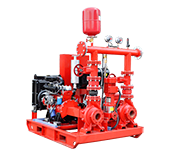
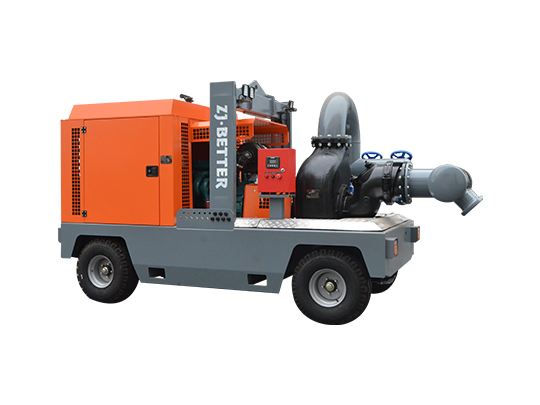
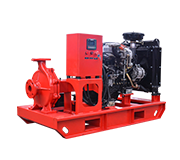
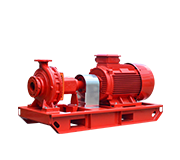

1. Independent Power Structure Ensures Reliable Start-up in Critical Moments
The greatest technical advantage of diesel-driven fire pump systems lies in their complete independence from the municipal power system. Power outages are a common risk factor during fires, but this system, relying on a diesel engine as its core power source, can quickly resume operation even in the absence of electricity via battery or mechanical starting. The engine and pump body employ a mature and reliable direct-drive or flexible coupling structure, resulting in high power transmission efficiency, fewer potential failure points, and the ability to achieve stable speed output in a very short time. This independent power structure provides a true "last resort" for fire-fighting water supply, making it particularly suitable for critical locations with extremely high requirements for continuous water supply.
2. High Flow and High Head Design Meets Diverse Firefighting Needs The diesel-driven fire pump system offers exceptional flexibility in hydraulic performance design to accommodate differences in building height, pipe network layout, and fire extinguishing methods. By rationally matching the pump body impeller structure with the engine output characteristics, various configurations can be achieved, including high flow, high head, or stable medium flow output, meeting the diverse needs of indoor fire hydrant systems, sprinkler systems, and foam extinguishing systems. The pump body is typically made of high-strength cast iron or alloy materials, and the internal flow channels are optimized to reduce hydraulic losses while ensuring efficient water delivery, allowing the system to maintain stable water supply capacity even during extended operation.
3. Heavy-Duty Structural Design Adapts to Continuous Operation Conditions In practical applications, fire pump systems not only require "start-up capability" but also the ability to maintain stable operation for extended periods during a fire. Diesel-driven fire pump systems are typically designed for heavy-duty operation. Key components such as the pump shaft, bearings, sealing assemblies, and cooling systems are configured to high specifications to withstand high temperatures, high loads, and continuous operation. The engine cooling system works in conjunction with the pump body's heat dissipation structure to effectively control the overall operating temperature, preventing performance degradation or shutdown risks due to overheating, and structurally improving the reliability of the entire system under extreme conditions.
4. Intelligent Control System Enhances Overall Operational Safety Modern diesel-driven fire pump systems are generally equipped with dedicated control cabinets for centralized management of start-up, operation, monitoring, and alarm functions. The control system automatically monitors engine speed, oil pressure, water pressure, and cooling status, and promptly issues audible and visual alarms when parameters are abnormal, alerting maintenance personnel to take action. In automatic mode, the system can automatically start and stop based on changes in pipeline pressure, reducing manual intervention and improving response efficiency. Simultaneously, the retention of manual control functions ensures that the equipment can still be started manually in special circumstances, enhancing the system's safety redundancy level.
5. Rapid Response Ensures High Initial Firefighting Efficiency
The initial stage of a fire is crucial for controlling its spread, and the startup speed of the water supply system directly impacts firefighting effectiveness. Diesel-driven fire pump systems, through optimized startup logic and power matching, can rapidly reach rated speed upon receiving a startup signal and output stable water pressure and flow within a very short time. This rapid response capability allows the fire protection system to provide sufficient water supply in the early stages of a fire, buying valuable time for fire-fighting facilities and personnel, thereby effectively reducing fire-related losses.
6. Wide Adaptability to Complex Installation and Application Environments
Diesel-driven fire pump systems are designed with different installation conditions and operating environments in mind. Whether in indoor pump rooms, independent equipment rooms, or semi-open or high-temperature/high-humidity environments, the system can achieve stable operation through structural optimization and protective design. The engine and control components are typically equipped with shockproof, dustproof, and moisture-proof measures to ensure long-term use in complex environments. This excellent environmental adaptability makes it widely used in factories, warehouses, infrastructure projects, and special industrial sites.
7. Convenient Maintenance Reduces Long-Term Operating Costs
In fire protection projects, the total life-cycle cost of equipment is also an important factor for purchasers. Diesel-driven fire pump systems prioritize ease of maintenance in their structural layout, with key components arranged rationally, making daily inspection and maintenance simple and intuitive. Routine maintenance focuses primarily on the fuel, lubrication, and cooling systems, with clearly defined maintenance cycles and mature technical requirements, thus reducing long-term operating and maintenance costs. Furthermore, the application of standardized components enhances the feasibility of future replacement and repair.
8. High Compatibility with Multiple Fire Protection Systems
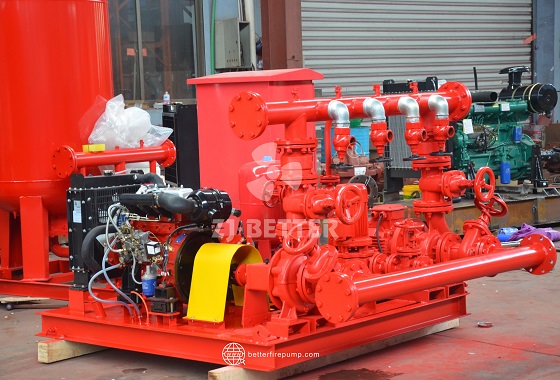
Diesel-driven fire pump systems are highly compatible with various fire water supply systems, including fire hydrant systems, automatic sprinkler systems, and foam extinguishing systems. Through reasonable system configuration and pipeline design, single or multiple pump sets can form a main/standby combination operation mode, further improving the reliability of the water supply system. In large-scale projects, the system can also work in conjunction with pressure-stabilizing pumps and water replenishment devices to ensure that the pipeline pressure remains within a reasonable range, providing stable hydraulic support for the entire fire protection system.
9. Meets the Core Reliability Requirements of Fire Protection Engineering
The primary attribute of fire protection equipment is reliability. The design and manufacturing of diesel-driven fire pump systems consistently revolve around this core objective, with long-term stable operation as the guiding principle from material selection and structural design to performance testing. The system can withstand frequent starts and long periods of standby in practical applications, maintaining high efficiency when truly needed. This highly reliable performance makes it the preferred configuration for many fire protection projects.
10. Providing Solid Protection for Critical Assets and Personnel Safety
In modern buildings and industrial facilities, fire protection systems are not only a regulatory requirement but also a crucial component of the safety management system. As the core equipment for fire water supply, the stable operation of the diesel-driven fire pump system directly affects the effectiveness of the entire fire protection system. Through continuous and reliable emergency water supply capabilities, the system provides a solid foundation for personnel evacuation, fire protection facility operation, and professional firefighting operations, playing an irreplaceable role in critical moments and building a reliable defense for critical assets and personnel safety.
In summary, the diesel-driven fire pump system, with its independent power, high reliability, and excellent environmental adaptability, has become an important component of various high-requirement fire protection projects. Its ability to operate stably even during power outages gives it an irreplaceable advantage in the field of emergency water supply. With its scientific structural design, mature control system, and excellent maintenance convenience, this system not only meets the stringent requirements of current fire protection engineering, but also provides a solid guarantee for long-term safe operation, making it an important choice for building a highly reliable fire water supply system.
 WhatsApp me