

1. Determining Fire Water Supply Capacity Based on Flow Rate Parameters
Flow rate is a crucial parameter in fire pump set design, directly affecting the water supply capacity of fire hydrants, sprinklers, and other fire-fighting equipment. Products cover a flow rate range of 30–9000 GPM, and appropriate pump set specifications can be selected based on building size, fire system design requirements, and actual water demand to provide matched water supply capacity for different projects.
2. Meeting Pipeline Pressure Requirements Based on Head
Head determines the pressure loss and height difference that a fire pump can overcome when delivering water to the system. This series of fire pump sets has a head range of approximately 3–20 bar, which can be selected based on pipeline length, building height, pipe diameter, and terminal pressure requirements. Appropriate head matching helps ensure a stable delivery of fire water to the required locations within the system.
3. Flexible Configuration of Multiple Main Pump Structures
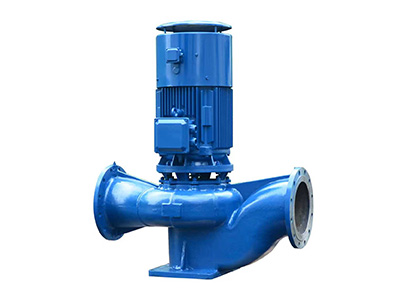
Complete fire pump sets can be configured with end-suction pumps, horizontal double-suction pumps, vertical split pumps, vertical pipeline pumps, or vertical turbine pumps, depending on flow rate, head, and installation conditions. Different pump types have different hydraulic characteristics and installation methods, allowing selection based on the space and performance requirements of specific fire protection projects.
4. Stable Drive Provided by Electric Pumps
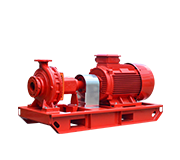
Electric fire pumps can be single-stage pumps, horizontal double-suction pumps, end-suction pumps, or multi-stage pumps, and can be configured with materials such as cast iron and stainless steel depending on the medium and operating conditions. As one of the main fire water supply equipment, electric pumps can continuously provide the required flow rate and head for the project.
5. Diesel Pumps Enhance Backup Water Supply Capacity
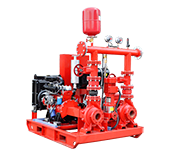
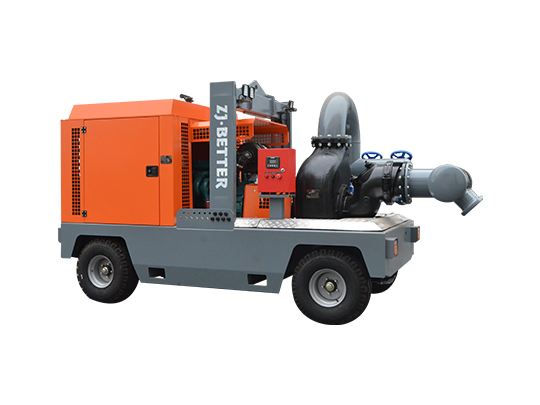
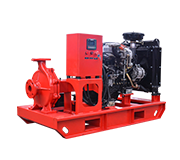
For fire pump sets equipped with both electric and diesel pumps, the flow rate and head of the diesel pump can be matched to the main water supply pump, and it is equipped with a fuel tank, water tank, fan, and control components. When the fire protection system requires backup power, the diesel drive mode can provide an independent power source for the pump set, enhancing the system's emergency water supply configuration.
6. Pressure Stabilizing Pumps Maintain Pipeline Pressure
Pressure stabilizing pumps are designed with low flow rates and high heads to compensate for small pressure changes in the fire protection pipeline network. When the system pressure drops slightly, the pressure stabilizing pump can compensate for the pressure, reducing unnecessary starts of the main fire pump and helping to maintain the normal pressure state of the fire protection pipeline network.
7. Efficient Piping System Connection
Fire pump sets can integrate shared suction and discharge pipelines and are equipped with accessories such as check valves, gate valves, flexible joints, and flanges. Through a reasonable pipeline layout, the pumps can be connected to the fire protection pipeline network, facilitating valve operation, pressure monitoring, and subsequent maintenance.
8. Real-time Pressure Monitoring
The equipment can be equipped with pressure gauges and sensors to monitor the pressure status during pump operation. Operators can understand the working status of the fire water supply system through pressure data and manage its operation in conjunction with the control system, providing basic data for automatic control and engineering commissioning of the pump set.
9. Centralized Management via Control Cabinet
The complete fire pump set can be equipped with a control cabinet for centralized control of electric pumps, diesel pumps, and pressure-stabilizing pumps, featuring automatic control and overload/overcurrent protection functions. Centralizing the control functions of multiple devices into a unified system makes the pump set's operating status more intuitive and facilitates on-site project management.
10. Shared Base for Optimized Overall Installation Structure
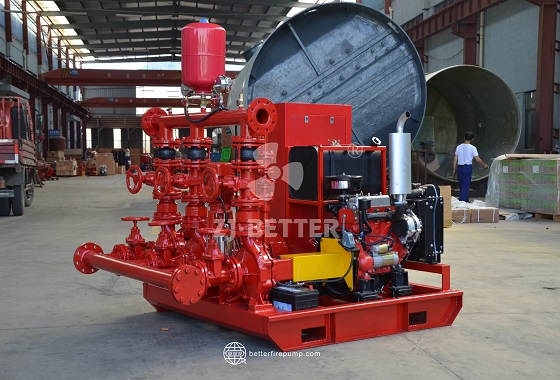
Fire pumps, power equipment, pressure-stabilizing pumps, and related piping accessories can be installed on a common base, forming a complete set of equipment. This integrated layout reduces the coordination work between independent equipment on-site and allows for a more centralized layout of piping and control components, suitable for fire water supply projects in warehouses, docks, airports, petrochemical plants, power plants, and ships.
A fire pump system is not simply a combination of multiple pumps, but rather a systematic design encompassing flow rate, head, power, pressure, piping, and control. By rationally configuring the main fire pump, diesel pump, pressure-stabilizing pump, control cabinet, pressure gauges, and piping accessories, a fire water supply system tailored to the project's specific conditions can be formed. For fire protection projects of varying scales and application environments, scientific parameter selection and engineered configuration are crucial for ensuring the normal operation of the pump system.
 WhatsApp me