

1. Independent Diesel Power
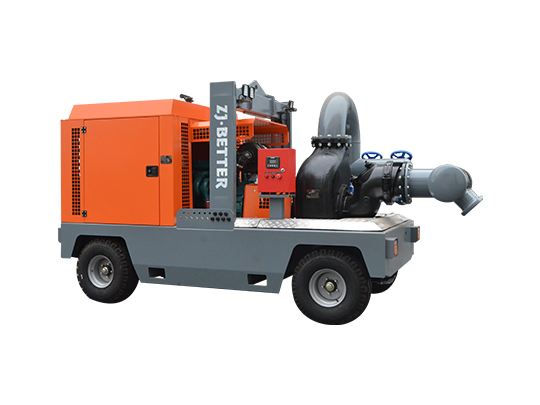
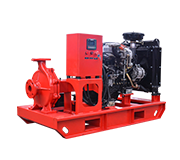
The equipment uses a diesel engine as the driving power for the fire pump, providing independent power support even when the fixed power supply is abnormal. The diesel engine has good power output capability and can be matched to the required flow rate and head of the fire pump, providing a reliable power source for emergency fire water supply.
2. Automatic Control Operation
The control cabinet provides centralized management of the diesel fire pumps and related equipment, enabling automatic or manual control based on system configuration. When the pressure in the fire pipeline changes, the pressure detection device feeds back the relevant signals to the control system, which then executes the corresponding start-up operation, improving the response efficiency of the fire equipment.
3. Real-time Pressure Detection
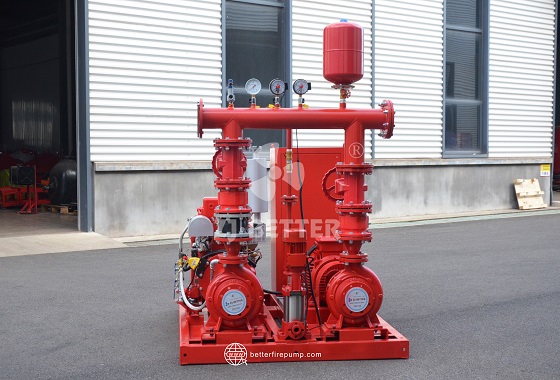
The equipment is equipped with pressure gauges and pressure sensors to detect the operating pressure of the fire pipeline and pump sets. Continuously monitoring system pressure changes provides data for automatic start-up and shutdown and operational management, ensuring that the fire water supply equipment operates according to preset parameters.
4. Multiple Protection Functions
The control system provides overcurrent, overload, and diesel engine-related operational protection based on specific configurations, and can also provide timely alerts for abnormal conditions using fault alarm functions. Official documentation also lists monitoring and protection functions for oil pressure, coolant temperature, engine overspeed, and battery status, contributing to improved equipment operational safety.
5. High-Efficiency Water Delivery by Fire Pumps
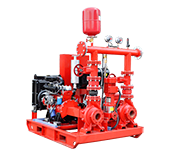
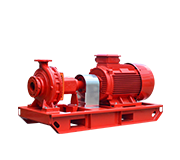
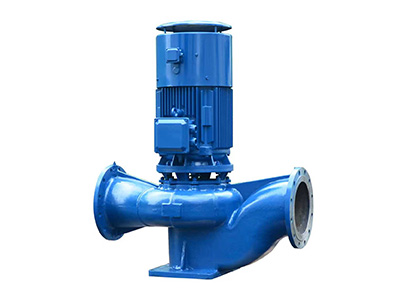
The main fire pump undertakes the primary water supply task of the system, pressurizing and delivering water to the fire pipeline network through impeller rotation. The equipment can be configured with different structures, such as end-suction pumps, horizontal double-suction pumps, and multi-stage pumps, according to project requirements, and can be tailored to flow rate and head requirements to meet the hydraulic needs of different fire protection systems.
6. Pressure Stabilization Management
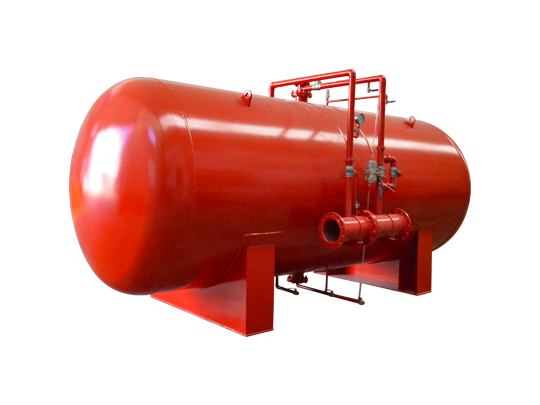
The complete set of equipment can be equipped with a pressure-stabilizing pump and a pressure tank to compensate for minor daily pressure changes in the fire protection piping network. The pressure-stabilizing pump handles pressure compensation for smaller flow rates, while the pressure tank provides pressure storage and buffering, helping to reduce frequent starts of the main fire pump due to slight pressure changes.
7. Integrated Structural Design
The diesel engine, fire pump, control cabinet, pressure detection components, and auxiliary piping are centrally mounted on a common base, forming a complete set of equipment. The integrated structure reduces the connection work between independent equipment on-site, and facilitates transportation, installation, commissioning, and subsequent inspection, making it suitable for standardized fire protection engineering projects.
8. Flexible Product Configuration
Different fire protection projects have different requirements for flow rate, head, pressure, and installation space; therefore, the equipment can be selected according to project parameters. According to official website information, diesel fire pump sets can cover different flow and pressure ranges and support various pump types, diesel engines, and pressure-stabilizing pump combinations, which can be configured for specific fire protection systems.
9. Adaptable to Diverse Engineering Environments
This type of complete diesel fire-fighting equipment can be applied to fire protection scenarios in warehouses, industrial plants, docks, airports, petrochemical plants, power plants, liquefied gas plants, textile mills, ships, and oil tankers. For different projects, the pump set configuration can be adjusted according to site space, water source conditions, and fire protection system design parameters to improve the compatibility between the equipment and the engineering system.
10. Convenient Operation and Maintenance
The equipment centrally arranges the main functional components, and the control cabinet allows for unified management of the operating status. Pressure gauges and detection devices facilitate the viewing of system parameters by personnel. Regular inspections of the diesel engine, fire pump, control cabinet, battery, fuel system, pressure components, and pipeline connections can maintain the equipment in good standby and operating condition.
Complete diesel-powered fire-fighting equipment forms a complete fire water supply system combination through independent diesel power, efficient water delivery by fire pumps, pressure detection, automatic control, and multiple protections. Its integrated structure allows for centralized configuration of the power system, pumping system, control system, and pressure management components, and can be flexibly selected according to the flow rate, head, pressure, and installation conditions of different projects. For industrial plants, warehouses, airports, docks, petrochemical plants, and other important fire protection projects, this equipment can provide stable emergency power and fire water supply support, while improving the convenience of system operation and management through pressure monitoring and automatic control.
 WhatsApp me