

1. High-efficiency hydraulic structure achieves stable flow output
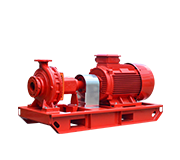
This equipment adopts an optimized centrifugal pump structure. Through precise calculation of the impeller curve and flow channel layout, water flows smoothly within the pump body, reducing turbulence and energy loss, thus maintaining a stable flow output under various operating conditions. Whether under long-distance water transport or high-load operation, it ensures continuous water supply, providing reliable water source support for the fire protection system.
2. Precise Pressure Control Ensures Stable System Operation
By rationally matching pump parameters and the power system, this equipment can continuously provide stable pressure output during operation, avoiding system instability caused by pressure fluctuations. Simultaneously, the control system enables pressure regulation and operational optimization, ensuring the equipment maintains ideal working conditions in various application scenarios.
3. Mobile Structure Enhances On-Site Adaptability
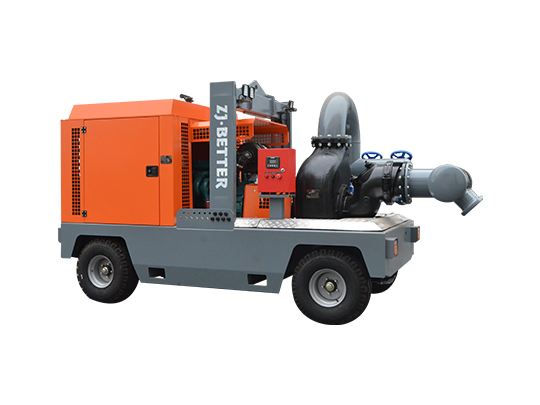
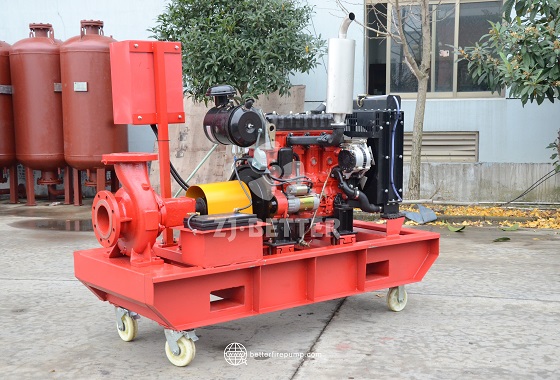
The equipment adopts a mobile base design, equipped with casters or a sliding structure, allowing for flexible movement and rapid positioning on-site. This is particularly suitable for working environments with limited space or requiring frequent repositioning, significantly improving the equipment's flexibility and efficiency.
4. Diesel Power System Ensures Independent Operation
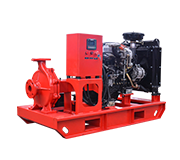
The unit is powered by a diesel engine, eliminating reliance on external power supplies. It can operate stably even in power outages or environments without electricity, a significant advantage in emergency rescue and field firefighting scenarios.
5. Compact Design Optimizes Space Utilization
Through a rational layout of the pump body and power system, the equipment achieves a compact structure while maintaining performance, reducing its footprint, facilitating transportation and on-site deployment, and improving overall energy transfer efficiency.
6. Rapid Response Mechanism Enhances Emergency Efficiency
The equipment features rapid start-up capability, quickly entering working state and establishing system pressure upon receiving a start command. This allows for rapid water supply support in the early stages of a fire, effectively controlling its spread.
7. Durable Materials Extend Equipment Lifespan
Key components are manufactured using high-strength, wear-resistant materials, ensuring stable performance during long-term operation, reducing wear and malfunctions, thus extending service life and lowering maintenance costs.
8. Intelligent Control System Enhances Operational Ease
The equipment is equipped with a control unit that monitors operating status in real time and automatically adjusts, making operation simpler and more efficient. It also features alarm and protection functions, taking timely measures in abnormal situations to ensure safe operation.
9. Versatile Application Meets Diverse Needs
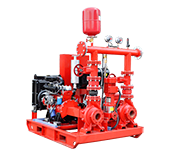
This mobile fire pump equipment is suitable for various scenarios such as industrial plants, municipal engineering projects, construction sites, and field rescues. It provides stable and reliable water supply support in these environments, meeting diverse application requirements.
10. Energy-Saving Operation Reduces Overall Operating Costs
By optimizing the power system and hydraulic structure, the equipment reduces fuel consumption while providing high-performance output, achieving energy-saving operation and effectively reducing operating costs over long-term use.
In summary, the high-efficiency mobile fire pump equipment, through its efficient hydraulic design, stable pressure output, and flexible mobility, achieves a perfect combination of performance and practicality. It not only meets the fire water supply needs in complex environments but also excels in emergency response and economy, making it a highly valuable equipment choice for modern fire protection systems.
 WhatsApp me