
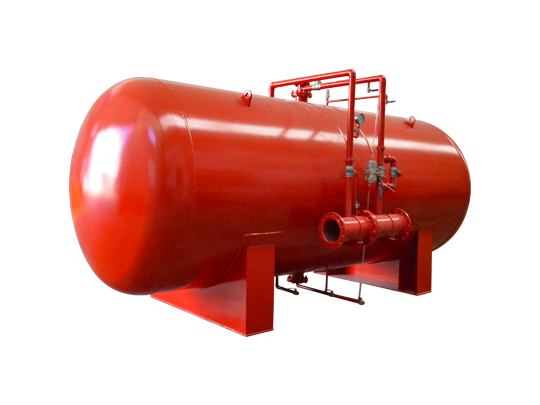
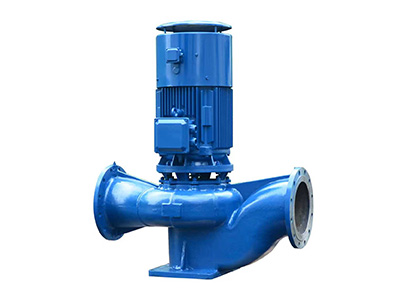

1. Independent Diesel Power
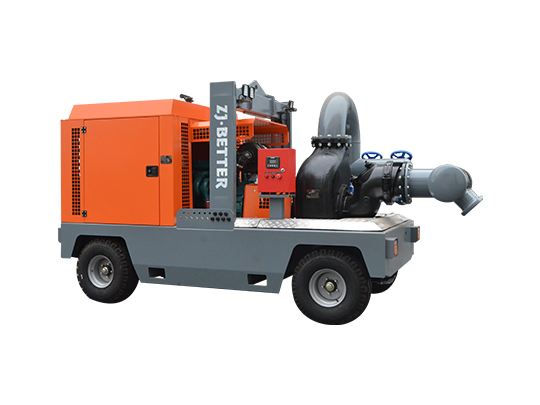
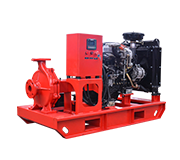
The equipment uses a diesel engine to drive the fire pump, reducing reliance on a single electric drive source in fire protection systems that require independent backup power. Engine power is matched to the pump's flow rate, head, and operating conditions to provide the necessary mechanical power.
2. Optimized Power Matching
The actual power requirement of a fire pump depends on parameters such as flow rate, head, efficiency, and rotational speed; therefore, the diesel engine must be selected in accordance with engineering design requirements. Proper power matching ensures the engine output aligns with the pump's operational needs, preventing mismatches between power specifications and pump performance.
3. Diverse Pump Types
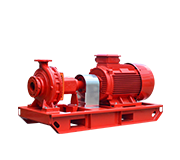
Depending on the hydraulic parameters of the specific fire protection project, the unit can be configured with various pump structures, such as single-stage, end-suction, horizontal split-case (double-suction), or multi-stage pumps. Each pump type offers distinct flow, head, and installation characteristics, allowing for selection based on factors like piping network resistance, water source conditions, and design requirements.
4. Flexible Flow Rate Range
Fire water requirements vary significantly across different buildings and industrial facilities; consequently, the unit's specifications must be selected based on the design flow rate. These diesel fire pump sets cover a wide flow range, allowing for parameter configuration suitable for everything from small fire protection systems to large-scale engineering projects, with specific output determined by the actual model.
5. Adaptable Head Configuration
Fire water systems must overcome factors such as building height, piping resistance, and terminal pressure requirements; therefore, the pump head is a critical parameter in equipment selection. Diesel fire pumps can be configured according to required pressure and piping network conditions, matching the pump unit's output to the system's design head and providing the necessary pressure support for the fire-fighting network.
6. Stable Pumping Structure
The fire pump converts mechanical energy from the diesel engine into water pressure via impeller rotation, enabling the pressurized delivery of fire-fighting water. Appropriate centrifugal pump configurations can be selected based on specific project requirements, ensuring the equipment delivers water within the specified flow rate and head ranges.
7. Automatic Control System
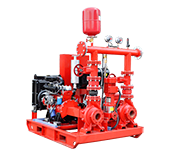
The control cabinet provides centralized control for the diesel fire pump and the pressure-maintenance pump, enabling automatic or manual operation based on system configuration and initiating startup in response to pressure detection signals. Protection functions—such as overcurrent and overload protection—can also be configured to enhance the convenience of equipment operation and management.
8. Pressure Detection and Management
The unit can be equipped with monitoring components such as pressure gauges and sensors to track fire-fighting network pressure and pump unit operating status. When system pressure changes, signals are transmitted to the control system, providing the data necessary for automatic control and operational management.
9. Integrated Installation Design
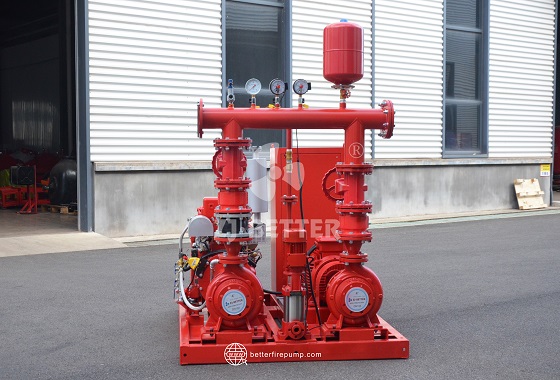
The diesel engine, fire pump, control cabinet, valves, pressure detection devices, and associated piping can be mounted on a common base frame to form a complete, integrated fire pump unit. This centralized configuration minimizes on-site interconnection work and facilitates transportation, positioning, installation, and subsequent maintenance.
10. Diverse Engineering Applications
Diesel-powered fire pump units are suitable for fire-fighting water supply in various settings, including warehouses, terminals, airports, petrochemical facilities, power plants, liquefied gas installations, textile plants, shipyards, and oil tankers. Equipment selection for specific projects should be based on design flow rate, head, pressure, water source, and installation environment to ensure the configuration matches actual operating conditions.
Diesel-powered fire pump units achieve independent power drive and stable water delivery through the optimal matching of engine and pump power, while various pump types can be selected to meet specific flow and head requirements. When combined with a control cabinet, pressure sensors, pressure gauges, valves, and piping, they form a complete fire-fighting water supply system. The product does not come in a single, fixed specification; instead, it requires a tailored configuration based on the fire protection system's design flow rate, system head, pipeline network pressure, and on-site conditions to ensure an optimal match between engine power, fire pump performance, and the requirements of the fire protection piping network.
 WhatsApp me