

1. Flow rate parameters to accommodate diverse fire water supply needs
Diesel fire pump sets can be selected with flow rate specifications tailored to the water supply requirements of a specific fire protection system, with a product range spanning 30–9000 GPM. Since projects vary in terms of building area, fire water demand, sprinkler system requirements, and the number of fire hydrants, there is no "one-size-fits-all" flow configuration. Instead, the pump set is selected based on specific design parameters to ensure that the pump’s supply capacity aligns with the system's requirements.
2. Flexible head configurations to facilitate engineering selection
The "head" (pressure) of a pump directly determines the height to which water can be delivered and the pressure available at the end of the piping network. This series of diesel fire pump sets offers a head range of 3–20 bar, allowing for the selection of appropriate specifications based on water supply distance, elevation differences, and pipeline resistance. Properly determining the required head prevents issues such as insufficient supply pressure (caused by selecting an undersized pump) while avoiding the unnecessary costs and inefficiencies of over-specifying equipment.
3. Targeted configuration of flow rate and head
Product selection does not involve considering flow rate or head in isolation; rather, both core hydraulic parameters must be evaluated together. For instance, some projects may require a high flow rate, whereas high-rise buildings or systems involving long-distance water transport may place a greater emphasis on pressure (head) requirements. By utilizing various combinations of flow rates and heads, an appropriate diesel-driven fire pump set can be selected to meet the specific design requirements of a fire protection piping network, ensuring an optimal match between the equipment and the actual operational conditions for fire-fighting water supply.
4. Diverse Pump Configurations Available
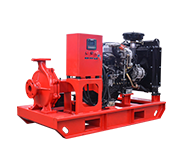
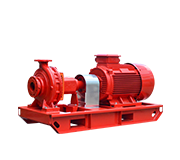
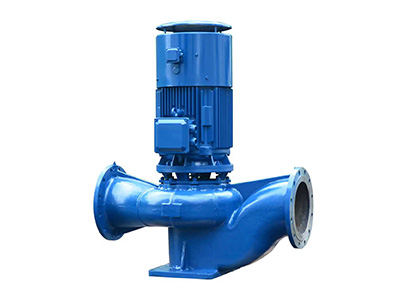
Depending on project-specific conditions, diesel-driven fire pump sets can be configured using various pump types, such as end-suction pumps, horizontal split-case pumps, vertical split-case pumps, vertical in-line (pipeline) pumps, or vertical turbine pumps. Each type offers distinct characteristics regarding installation methods, flow capacity, space requirements, and water source compatibility. Consequently, the ideal pump type can be selected based on factors such as the fire water reservoir, available space in the pump room, piping layout, and the project’s hydraulic parameters.
5. Diesel Engine as an Independent Power Source
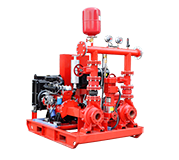
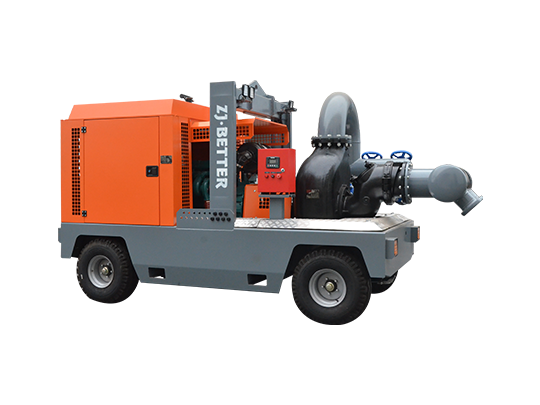
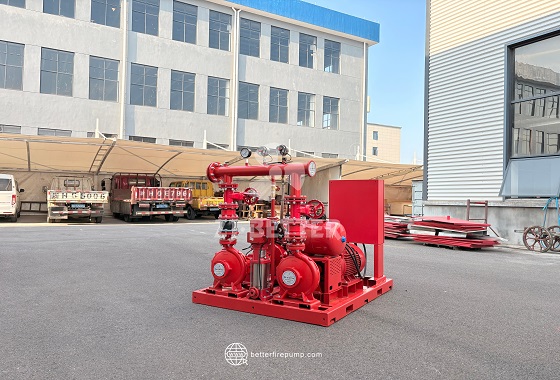
These systems utilize a diesel engine to drive the fire pump. The pump set assembly can include essential components such as a fuel tank, radiator (water tank), cooling fan, and control panel. This combination creates a self-contained, independent power unit, making it suitable for projects that require diesel-powered fire-fighting water supply equipment. The engine power must be appropriately specified based on the fire pump’s required flow rate, head, and operational conditions.
6. Jockey Pumps for Maintaining Network Pressure
Some diesel-driven fire pump configurations incorporate a main fire pump alongside a jockey pump (pressure-maintenance pump). Typically characterized by a low flow rate and a relatively high head, the jockey pump compensates for minor pressure fluctuations within the fire protection piping network, thereby reducing the frequency with which the main fire pump is triggered. Depending on project requirements, the jockey pump may be of a horizontal or vertical design, selected in accordance with the system's specific pressure requirements.
7. Integrated Control Systems for Simplified Equipment Management
Diesel-driven fire pump sets can be equipped with a control cabinet to manage the fire pump and any associated jockey pumps. These cabinets often include protective features such as overload and overcurrent protection. An integrated control system centralizes the operation of the equipment, facilitating daily management and the monitoring of operational status following installation. The specific control functions and configuration should be determined based on the project's control requirements and local fire safety regulations. 8. Piping and Pressure Components for a Complete Equipment Configuration
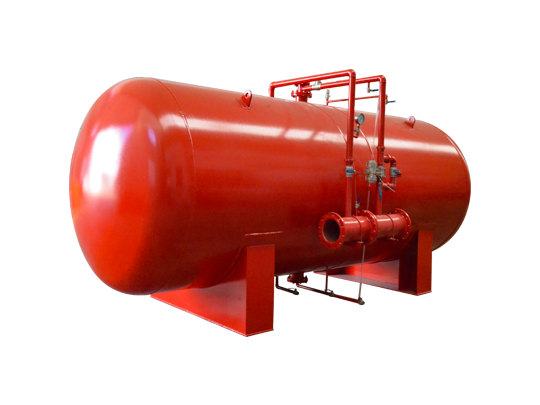
In addition to the diesel engine and fire pump, the pump unit can be configured—based on specific project requirements—with components such as check valves, gate valves, pressure vessels, pressure gauges, pressure sensors, common inlet/outlet piping, flexible connectors, and flanges. Integrating these components according to system specifications reduces the need for separate procurement and on-site installation, while also facilitating the connection between the pump unit and the fire-fighting piping network.
9. Diverse Material Options to Suit Various Operating Conditions
Diesel fire pump units can be constructed from a variety of materials, depending on the specific pump model and operational requirements. Available options include, but are not limited to, HT200 (cast iron), SS304 (stainless steel), and bronze. Since different materials offer distinct mechanical properties and resistance to specific media, the selection of materials for components such as the pump casing, shaft, and impeller should be determined based on the pumped medium, water quality, environmental conditions, and operational requirements.
10. Integrated Base Frame for Simplified Installation
In terms of structural design, diesel fire pump units feature the primary power source and pumping equipment mounted on an integrated base frame, combined with control systems and piping components to form a complete, self-contained unit. This configuration streamlines transportation, on-site positioning, and piping connections, while also allowing for flexible equipment layout within the available project space. For fire-water supply applications—such as those in warehouses, docks, airports, petrochemical facilities, power plants, or aboard ships—the equipment can be specifically configured to meet actual operational parameters.
The core value of a diesel fire pump unit lies in its ability to provide a tailored combination of flow rate, head, pump type, diesel engine power, jockey (pressure-maintenance) pumps, and auxiliary components, all based on the specific needs of a fire-protection project. These units cover a broad range of flow rates and heads, support various pump structures and material options, and are adaptable to the diverse equipment requirements of different fire-water supply systems. During the procurement and design phases, it is essential to conduct a comprehensive assessment—based on the fire-protection system’s design parameters—of the required flow rate, head, power, and installation conditions to ensure the selection of a diesel fire pump unit best suited to the project's specific operating environment.
 WhatsApp me