

1. Main and Standby Pump Configuration: Enhancing System Integrity
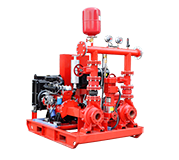
Configuring a system with both main and standby pumps is a key design approach for fire-fighting pump assemblies. The main pump handles the primary water supply requirements, while the standby pump provides an additional layer of operational assurance. The configuration of these pumps is determined based on the project’s fire-fighting load, available power sources, and applicable standards, ensuring the equipment meets the required water supply specifications under design conditions.
2. Electric Main Pump: Meeting Primary Fire-Fighting Water Demands
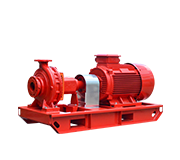
An electric fire pump typically serves as the system’s main pump. Depending on the required flow rate and head, options may include end-suction pumps, split-case pumps, or other suitable pump types. Proper hydraulic design ensures the system aligns with the pressure requirements of the fire-fighting piping network, delivering the necessary water flow to buildings and industrial facilities.
3. Diesel Standby Pump: Providing an Independent Drive Solution
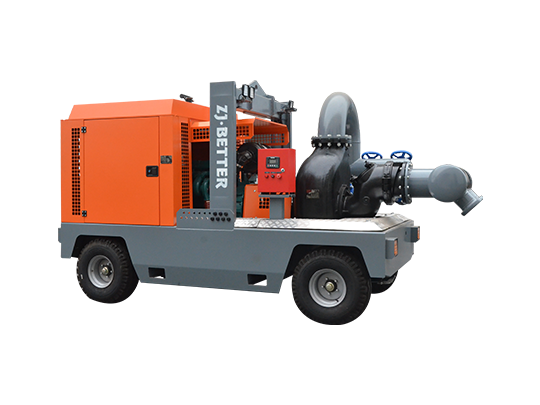
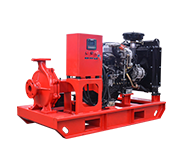
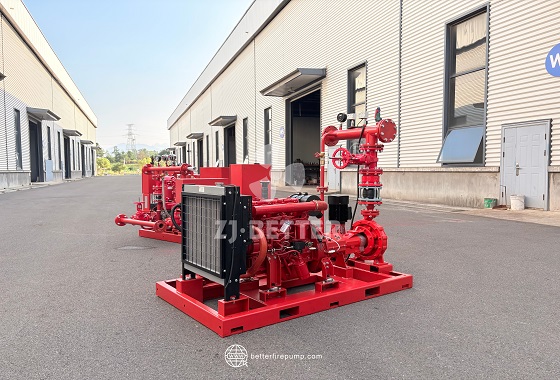
A diesel engine-driven fire pump serves as a standby power configuration, offering an alternative pumping method should the main power source become unavailable. Equipment selection must account for engine power, starting systems, fuel supply, cooling methods, and maintenance requirements to ensure the entire assembly complies with the project’s operational specifications.
4. Jockey Pump (Pressure-Maintenance Pump): Maintaining Network Pressure
Some fire-fighting pump systems incorporate a jockey pump to compensate for minor pressure losses within the piping network, helping to maintain the system’s standby pressure. The flow rate of a jockey pump is typically lower than that of the main fire pump; its head and pressure settings are determined by the system design, helping to prevent the main pump from starting frequently due to minor pressure fluctuations.
5. Centralized Control Cabinet: Coordinating Equipment Operation
The control cabinet is used to manage the operation of the fire pump assembly and monitor its status. Depending on the specific configuration, features such as start/stop control, operational status indication, and fault alarms can be provided. The control logic governing the interaction between the main pump, standby pump, and jockey (pressure-maintenance) pump must be configured and tested in accordance with the fire protection system design and applicable standards.
6. Integrated Piping and Valves for a Complete Water Supply Path
The complete equipment package can integrate suction and discharge piping, check valves, gate valves, flanges, and other connecting components. A well-planned piping layout facilitates both equipment installation and system integration. Pipe diameters, pressure ratings, and valve specifications should be determined based on design flow rates, operating pressures, and site-specific conditions.
7. Pressure Monitoring Components for Operational Oversight
Pressure gauges, pressure sensors, and related monitoring components are used to track pipeline network pressure and equipment operating status. When integrated with an appropriate control system, these components provide essential data for operational management and troubleshooting. Monitoring ranges, alarm thresholds, and signal interfaces should align with the specific requirements of the project.
8. Skid-Mounted Base for Optimized Installation
A fire pump assembly mounted on a common base consolidates key equipment, simplifying transportation, positioning, and on-site installation planning. The design should account for foundation load-bearing capacity, equipment anchoring, vibration control, piping support, and maintenance access, ensuring that the layout balances installation efficiency with long-term maintenance needs.
9. Flexible Selection of Flow Rate, Head, and Pump Type
Fire water supply requirements vary by project. Fire pump assemblies can be selected based on factors such as water source conditions, pipeline network resistance, building height, and the required design fire-fighting flow rate. While the equipment listed on this website encompasses a wide range of pump types and configurations, the final model selection must be verified through hydraulic calculations, performance curves, and project-specific technical requirements.
10. Suitable for a Wide Range of Critical Facilities
Fire pump assemblies—featuring coordinated main and standby pumps—can be configured for use in various settings, including industrial plants, logistics and warehousing facilities, ports, airports, power infrastructure, and petrochemical sites. Selection should take into account site space, environmental conditions, power supply, redundancy strategies, and local fire safety regulations. Furthermore, prior to commissioning, the system must undergo thorough installation inspections, functional testing, and all necessary formal acceptance procedures.
Fire pump systems featuring primary and standby units—comprising a main fire pump, a backup fire pump, a control cabinet, and auxiliary piping—provide a systematic fire-water supply solution for critical facilities. The integration of electric and diesel-driven power sources addresses diverse project requirements, while pressure-maintenance and monitoring components enhance overall system management. Through rigorous equipment selection, standardized installation, and regular testing, these systems effectively meet project demands for fire-water supply capacity and operational readiness.
Fire pump systems featuring primary and standby units—comprising a main fire pump, a backup fire pump, a control cabinet, and auxiliary piping—provide a systematic fire-water supply solution for critical facilities. The integration of electric and diesel-driven power sources addresses diverse project requirements, while pressure-maintenance and monitoring components enhance overall system management. Through rigorous equipment selection, standardized installation, and regular testing, these systems effectively meet project demands for fire-water supply capacity and operational readiness.
 WhatsApp me