
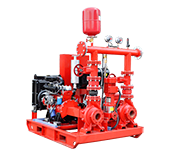
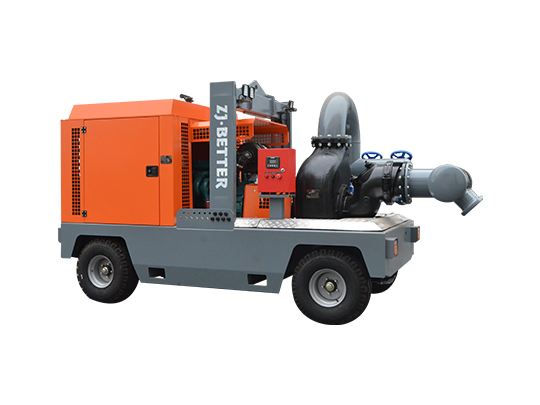
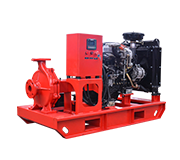
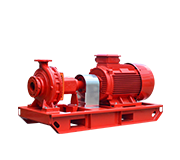

1. Power Independence Design Specifically Developed for Engineering Projects Construction sites and industrial facilities often experience unstable power supplies, high-load operation, or temporary power supply. Ordinary electric fire pumps are prone to system failure due to power outages in such scenarios. Diesel fire pumps, with their independent power drive mode, can operate stably even without external power. In emergencies, even if the entire project's power supply is interrupted, the equipment can still quickly start and provide the required fire-fighting water volume. Its power system employs high-pressure common rail fuel injection technology, resulting in higher diesel engine torque and more complete combustion, maintaining reliable performance even in harsh environments. For complex operating conditions, this independent design not only enhances the overall fire protection system's resilience but also ensures sufficient water pressure is delivered immediately in emergencies, preventing further losses due to water supply delays.
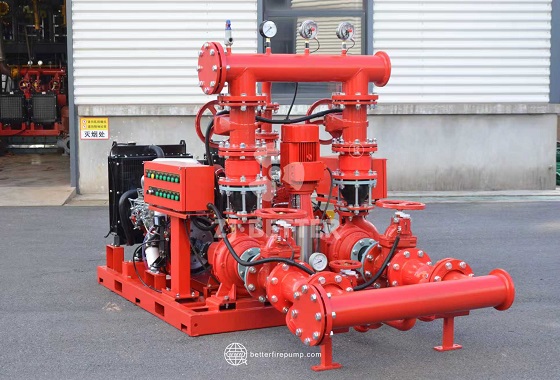
2. Integrated structure facilitates transportation and installation, adapting to various engineering environments. Engineering projects span vast geographical areas and involve complex construction environments, with diverse conditions for equipment transportation, hoisting, and installation. To address this need, the diesel fire pump equipment adopts a skid-mounted integrated structure, integrating the diesel engine, water pump, control cabinet, fuel system, and piping onto a single base. This well-organized layout not only reduces installation difficulty but also significantly shortens commissioning time. Whether used in newly constructed projects or temporarily deployed in confined construction sites, the equipment can be quickly put into use. Furthermore, the integrated base boasts high seismic resistance and stability, maintaining stable operation even under strong vibrations in construction sites or industrial environments. This type of structure is particularly suitable for projects with tight schedules and limited space, providing on-site construction teams with a highly flexible deployment method.
3. Precise Matching of High-Efficiency Pumps and Diesel Engines Enhances Overall Performance
The core performance of diesel fire pump equipment depends on the synergistic efficiency of the power system and the pump. Considering the characteristics of engineering projects that typically require large flow rates, high heads, or long-distance water delivery, the equipment employs a high-efficiency centrifugal pump with precise power matching to the diesel engine. This matching not only achieves optimal energy efficiency ratios but also ensures stable water pressure output during long-term continuous operation. Whether supplying pressure to fire-fighting pipe networks within building complexes or providing long-distance water delivery in chemical plants, the equipment can operate efficiently according to real-time demands. The pump body uses high-strength casting materials and anti-corrosion treatment, making it durable and reliable even in high-temperature, high-humidity, or corrosive industrial environments. The powerful output of the power system and the efficient structure of the pump effectively complement each other, providing long-term stable water supply for engineering projects.
4. Comprehensive Intelligent Control System Enhances Monitoring and Emergency Response Capabilities
Engineering project sites are typically widely distributed and involve complex personnel, placing higher demands on remote monitoring and emergency operation of equipment. The diesel fire pump is equipped with an intelligent control system, including automatic start-up, fault alarms, fuel monitoring, water pressure feedback, and real-time display of multiple parameters. The control system can automatically activate upon receiving a fire signal without manual intervention. It features multiple activation modes, including automatic, manual, and remote activation, ensuring rapid deployment under any circumstances. Furthermore, the control cabinet has a self-test function, allowing for periodic automatic trial runs to prevent equipment malfunctions caused by prolonged inactivity. Multiple protection measures, such as low oil pressure protection, high water temperature protection, and overspeed protection, significantly enhance operational safety, ensuring the equipment remains controllable and reliable even under harsh conditions.
5. Multi-pipeline configuration meets the multi-point water supply needs of complex fire protection systems. In large-scale projects, fire protection systems often need to provide simultaneous water supply to multiple areas. The equipment employs a multi-pipeline, multi-valve configuration, enabling flexible connection to different fire protection networks. Based on engineering design requirements, main pump outlet pipes, bypass pipes, test pipes, and return pipes can be installed, facilitating system commissioning and daily testing. A rational pipe layout reduces flow resistance and improves water delivery efficiency. Simultaneously, the multi-valve configuration allows operators to quickly switch between different operating conditions, enhancing on-site emergency response capabilities. This type of design is particularly crucial in large-scale projects such as industrial parks, high-rise commercial complexes, oil depots, and airports, ensuring a stable fire water supply to multiple areas simultaneously, thus improving the overall efficiency and safety of the fire protection system.
6. Durable Structural Materials Ensure Long-Term Stability in Complex Environments Engineering projects often face complex geographical and environmental conditions, such as high temperatures, sandstorms, humidity, corrosion, or heavy-load vibration. The main components of the equipment, including the base, pumps, pipes, and cooling system, all utilize corrosion-resistant materials and reinforced structural designs. For example, the pump body is made of high-strength cast iron or ductile iron, possessing excellent pressure resistance and wear resistance; the piping uses anti-corrosion spraying technology to effectively extend its service life; the base structure is reinforced to maintain stability even in areas with frequent operation of mobile equipment and construction machinery. Furthermore, the diesel engine cooling method can be selected from air-cooled or water-cooled systems depending on the environment, ensuring continuous and stable power output even in high-temperature environments. Overall, the durable structure ensures reliable performance of the equipment over many years of operation, reducing maintenance costs and enhancing the safety of the project's lifecycle.
7. Professional Firefighting Solutions Applicable to Multiple Industries and Application Scenarios
Diesel fire pump equipment boasts high adaptability and can be widely applied to various engineering projects. For example, municipal engineering, large commercial complexes, industrial parks, warehousing and logistics bases, chemical plants, power plants, airports, ports, and mining areas all have stringent requirements for stable fire water supply. Especially in the petrochemical industry, the equipment can serve as an emergency firefighting power system, operating independently in areas with explosion risks or limited power. In municipal engineering, it can serve as the core equipment for long-distance water transmission or fire booster. In large building complexes, it can serve as the main firefighting power source in fire pump rooms. Its flexible configuration capabilities and strong environmental adaptability enable it to meet the personalized firefighting needs of different engineering projects.
8. Simple Maintenance, Long Repair Cycle, Suitable for Engineering Project Operation and Maintenance Modes
Engineering projects typically have high equipment maintenance requirements, but on-site maintenance personnel may lack in-depth mechanical repair experience. Therefore, diesel fire pump equipment is designed with ease of maintenance in mind. All key components are located in easily observable and removable positions, and the control system has intelligent diagnostic functions that can provide early warnings of maintenance items, reducing the probability of malfunctions. The diesel engine and water pump sections feature a modular design, facilitating rapid component replacement. The equipment's automatic inspection function allows for periodic checks to identify potential problems, ensuring optimal long-term operation. Furthermore, the extended maintenance cycle effectively reduces downtime caused by frequent maintenance, making it more suitable for long-term project operations.
9. High Emergency Efficiency, Meeting Engineering Safety Regulations and International Standards
The equipment is designed and manufactured in strict accordance with relevant fire safety standards, ensuring compliance with project acceptance requirements. For example, pump performance, diesel engine control strategies, and automatic start-up logic all meet international fire safety standards and industry specifications. The equipment boasts rapid start-up capabilities, typically reaching full-load water pressure output within seconds of receiving a command, meeting the high emergency response speed requirements of major projects. In addition, multiple protection systems ensure safe operation under conditions of pressure fluctuations, insufficient fuel, or environmental overload. For engineering projects, this type of equipment not only provides high efficiency but also meets the stringent audit standards of fire safety regulatory agencies.
10. Supports System Integration, Creating Comprehensive Fire Protection Solutions for Engineering Projects
Diesel fire pump equipment can be integrated with sprinkler systems, fire hydrant systems, foam extinguishing systems, fire alarm systems, and remote monitoring platforms. Through connection to the control system and the fire control center signal interface, a complete automated fire water supply system can be built, enhancing the overall safety level. In large-scale engineering projects, the equipment can serve as the core power source for fire pump rooms, forming a multi-pump联动 (multi-pump linkage) working mode with electric main pumps and pressure-stabilizing pumps to achieve all-time, all-condition fire water supply guarantee. Furthermore, the equipment supports remote monitoring, allowing real-time feedback of operational data to the control center, facilitating unified management of the entire fire protection system by project managers. This systemic advantage provides a higher level of safety assurance and operational efficiency for engineering projects.
Diesel fire pump equipment specifically designed for engineering projects, with its independent power drive, efficient and stable water supply capacity, comprehensive intelligent control, durable structure, and strong system integration advantages, has become a key piece of equipment in fire protection systems for various engineering projects. Whether facing complex working conditions, harsh environments, or high-intensity emergency needs, this equipment can provide continuous and reliable fire power support. Through its integrated, intelligent, and highly adaptable design, it can comprehensively improve the fire safety level of engineering projects and is an ideal choice for achieving high-standard fire water supply guarantee.
 WhatsApp me