

1. Features and Advantages of Dual-Pipeline Water Outlet Structure Design
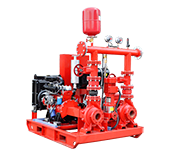
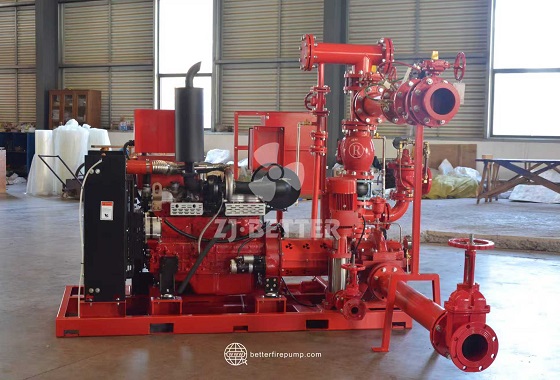
The dual-pipeline water outlet structure is the core highlight of this diesel fire pump. Compared to the traditional single-outlet mode, it uses two independent outlet pipelines, making water flow distribution more flexible and efficient. The dual-pipeline structure allows for independent water supply to different areas; for example, one pipeline can supply the fire hydrant system, and the other the sprinkler system, achieving "one machine for two uses." Furthermore, the dual pipelines can be set with different pressure levels, enabling the equipment to cope with complex scenarios involving multiple areas and diverse needs. This structure not only enhances water supply capacity but also provides greater redundancy for the fire protection system in emergencies, ensuring that if one pipeline malfunctions, the other can continue operating normally, guaranteeing uninterrupted firefighting operations.
2. Independence and Reliability of the Diesel Power System
The diesel engine, as the core drive unit, avoids dependence on municipal power or substation systems, enabling rapid start-up and continuous water supply, especially in the event of a power outage due to a fire. The diesel engine in this equipment features high torque output characteristics, allowing the fire pump to maintain stable operation under high head and high load conditions. Simultaneously, the low-speed, high-power design reduces mechanical wear, further extending service life. An advanced cooling system ensures the diesel engine maintains a stable temperature under prolonged continuous load, avoiding the risk of overheating and shutdown. For large factories, warehousing and logistics centers, and commercial complexes, an independent diesel power system is undoubtedly a key guarantee of safety and reliability.
3. High-Efficiency Pump Design Ensures Stable Flow Output
The pump body of this equipment adopts a high-efficiency hydraulic model design, featuring high head and large flow rate. Precise impeller curves ensure minimal water flow losses, reducing energy waste and thus improving overall pump efficiency. The pump body is typically made of high-strength cast iron or alloy materials, possessing excellent corrosion resistance and pressure resistance, capable of withstanding high-pressure impacts over extended periods. With the aid of a dual-pipeline structure, the pump's flow output is more stable, preventing significant pressure fluctuations even when supplying water to two systems simultaneously. For fire protection systems requiring long-term stable operation, a high-efficiency pump is crucial for ensuring a high success rate in fire suppression.
4. Independent Pipeline Pressure Regulation System Enhances Adaptability Dual-pipeline designs are usually equipped with independent pressure gauges, pressure switches, and regulating valve assemblies, allowing for independent pressure regulation of each line. Different building fire protection systems have significantly different pressure requirements; for example, automatic sprinklers typically require higher pressure, while fire hydrant systems prioritize flow rate. Through independent pressure regulation devices, the equipment can automatically adjust the output pressure according to different needs, ensuring each system operates under optimal conditions. This design greatly enhances the equipment's adaptability to complex projects, making it applicable to various scenarios from industrial parks to high-rise buildings.
5. Intelligent Control System Enables Automation and Safety Management
The equipment is equipped with an advanced intelligent control panel, enabling automatic start-up, shutdown, fault alarms, oil level monitoring, water pressure monitoring, and operation recording. The control system supports linkage with the fire control center; once a system pressure drop or pipeline opening is detected, the diesel fire pump will automatically start without manual intervention, ensuring immediate deployment for firefighting operations. Simultaneously, the control panel has multiple protection functions, such as low oil pressure protection, high temperature protection, and overload protection, automatically taking measures to prevent equipment damage in abnormal situations. Through intelligent management, the entire fire protection system operates more safely and is managed more efficiently.
6. Skid-Mounted Structure Facilitates Transportation and Installation
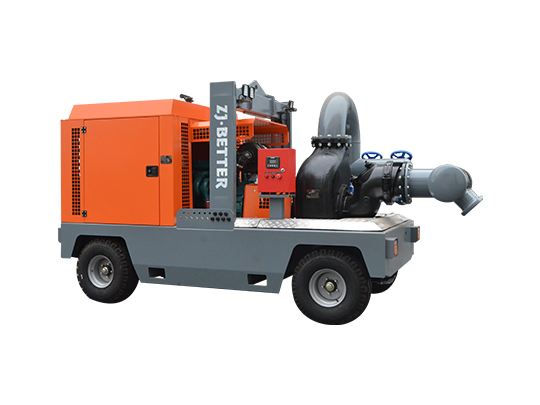
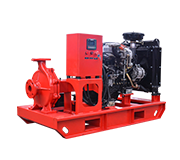
The dual-pipeline diesel fire pump adopts a skid-mounted structure design. All core components, including the pump body, diesel engine, control system, fuel tank, and silencer, are integrated on the same base and have undergone comprehensive commissioning before leaving the factory. Users only need to connect the inlet and outlet water pipes and connect the control line on-site to put it into use, greatly reducing installation time and construction difficulty. The skid-mounted structure facilitates both indoor and outdoor installation, as well as relocation or rearrangement, offering significant advantages for temporary fire-fighting facilities or companies operating multiple projects.
7. Cooling and Exhaust Systems Ensure Long-Term Operational Stability
The equipment is equipped with a high-efficiency radiator and a forced-air cooling fan, maintaining the engine within its optimal temperature range during prolonged high-power operation. Simultaneously, the exhaust system employs a low back pressure design to reduce power loss and ensure diesel engine output efficiency. The muffler effectively reduces exhaust noise, allowing the equipment to maintain better environmental adaptability even when installed in a semi-enclosed space. The reliable heat dissipation and exhaust systems ensure the equipment remains stable in continuous fire-fighting environments, preventing performance degradation due to temperature rise.
8. Multiple Safety Protection Structures Enhance Equipment Reliability
To ensure stable operation of the fire-fighting system in emergencies, the equipment is designed with multiple safety protection measures, such as a vibration-damping base, leak-proof structure, overpressure protection, overload protection, and automatic shutdown protection. A high-precision coupling is used between the pump body and the diesel engine to ensure low vibration and noise during operation and extend the service life of critical components. All control circuits are constructed using high-temperature and fire-resistant materials, ensuring stable operation even in harsh fire environments. Multiple safety measures collectively form a reliable defense system.
9. Wide Applicability, Meeting Firefighting Needs in Multiple Industries: The dual-pipeline diesel fire pump can be applied to various scenarios including industrial plants, logistics warehouses, high-rise buildings, municipal water supply systems, energy stations, chemical industrial parks, and airports. Its flexible water outlet structure allows it to simultaneously supply different fire protection systems, making it ideal for large and complex facilities. For example, in a chemical industrial park, one line can supply a sprinkler system while the other supplies a foam extinguishing system, offering both high efficiency and economy. Its independence and reliability also make it suitable for remote areas and areas without mains power, serving as a main fire pump or emergency backup pump.
10. Combined Advantages of Easy Maintenance and Low Operating Costs: The equipment is designed with future maintenance needs in mind, employing an open structure for easy inspection and maintenance of the pump body, diesel engine, oil lines, and electrical control system. Modular design of key components makes disassembly and assembly easier, reducing maintenance time. Fuel consumption is controlled within a reasonable range, and combined with a high-efficiency pump structure, overall operating costs are lower. Furthermore, the equipment has a host computer recording function, allowing for data tracking and assisting users in developing maintenance plans, extending equipment lifespan, and reducing overall investment costs.
The dual-pipeline diesel fire pump, with its innovative structure, independent power system, high-efficiency pump design, and intelligent control, provides a more reliable and flexible solution for modern fire protection engineering. It demonstrates strong adaptability in complex scenarios, multi-system water supply, power outage environments, and high load demands. With its high stability, ease of installation, and low maintenance costs, this equipment has become one of the core fire protection equipment in many large-scale engineering projects, providing a solid guarantee for fire safety.
 WhatsApp me