

1. Independent Diesel Engine Drive
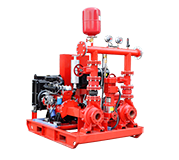
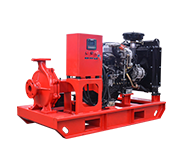
The system employs a diesel engine as the power source for the fire pump, operating independently of any electric drive mechanism. In fire-fighting systems that require backup or autonomous power, the diesel engine provides the necessary mechanical drive to the main fire pump, meeting water supply demands under specific operational scenarios.
2. Main Fire Pump for Water Supply
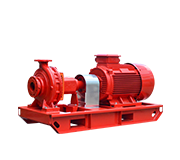
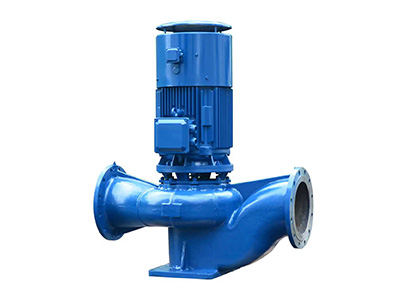
The main fire pump is the core hydraulic component of the assembly, responsible for delivering water from the source to the fire-fighting piping network. Depending on the project's flow and head requirements, various pump types—such as end-suction, horizontal split-case, vertical, or multi-stage pumps—can be selected to suit the specific hydraulic configuration of the fire-fighting installation.
3. Jockey Pump for Pressure Maintenance
The jockey pump is primarily used to maintain pressure within the fire-fighting system during standby mode. When the pressure in the piping network drops, the jockey pump compensates by restoring pressure. This prevents the main fire pump from starting up frequently due to minor pressure fluctuations, thereby ensuring the system remains at the required standby pressure.
4. Pressure Tank for Stored Pressurized Water
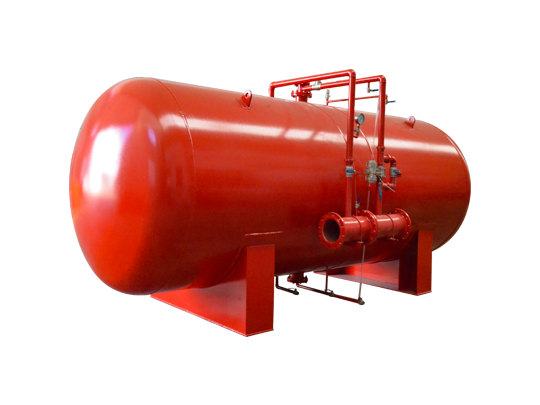
The pressure tank stores a volume of pressurized water, acting as a buffer and providing supplementary pressure when system conditions change. When used in conjunction with a jockey pump, it helps mitigate pressure fluctuations during low-flow periods, ensuring more stable pressure management within the fire-fighting network.
5. Control Cabinet for Centralized Management
The control cabinet serves as the hub for operating and monitoring the diesel fire pump and its associated equipment. It enables functions such as automatic startup, manual operation, performance monitoring, and fault alarming. Furthermore, it integrates with sensors—such as pressure transducers—to facilitate automated system control.
6. Real-time Pressure Monitoring and Feedback
6. Real-time Pressure Monitoring and Feedback
Pressure gauges and pressure sensors are essential components for fire-protection pressure management, used to capture pressure data from fire-fighting piping networks or operating equipment. These signals provide the control system with the necessary information to assess the operational status of the equipment and execute appropriate control actions.
7. Integrated Structure for Simplified Engineering Configuration
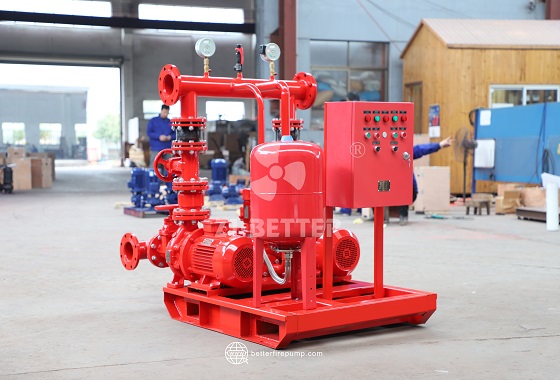
Diesel fire pumps, jockey pumps (pressure-maintenance pumps), pressure tanks, control cabinets, and related accessories can be configured as a complete, integrated unit mounted on a common base. This design facilitates transportation, on-site positioning, piping connections, and overall installation.
8. Optimized Matching of Power and Hydraulic Parameters
The power output of the diesel engine must be appropriately matched with the flow rate, head, and rotational speed of the fire pump. By selecting an engine and pump that align with the specific design requirements of a given project, one can avoid the inefficiencies that arise from considering power or hydraulic parameters in isolation.
9. Suitability for Diverse Engineering Applications
These diesel fire pump systems are suitable for a wide range of settings, including industrial facilities, warehouses, docks, airports, commercial buildings, and other fixed fire-fighting water supply installations. For projects requiring an independent diesel power source and pressure management within the piping network, the equipment can be configured and specified based on site-specific conditions.
10. Flexible Parameter Configuration
Since fire-protection projects vary in their requirements for flow rate, head, pressure, pump type, and power capacity, the equipment can be configured to meet specific design parameters. Selection should take into account factors such as the fire-protection system's design flow rate, operating head, water source conditions, pipeline resistance, available installation space, and control requirements.
By integrating a diesel engine, main fire pump, jockey pump, pressure tank, control cabinet, and pressure-monitoring components, these diesel fire pump systems provide comprehensive functionality—including fire-water supply, network pressure maintenance, and operational control. Their primary advantage lies not merely in the use of diesel power, but in the ability to combine and match various functional components to meet specific project requirements. Through the careful selection of pump types, engine power, pressure tank capacity, and control configurations, these integrated systems can be tailored to diverse fire-fighting scenarios, providing reliable water supply and pressure management for industrial, warehousing, and large-scale building fire-protection systems.
 WhatsApp me