

1. Independent Diesel Power Ensures 24/7 Operation of Firefighting Systems
One of the biggest advantages of diesel engine fire pump units is their independent diesel engine power source, allowing operation without relying on an external power grid. In large industrial projects, power systems are often susceptible to interruptions due to high temperatures, short circuits, or explosions during a fire. If firefighting equipment relies entirely on electricity, the firefighting system may fail to start, delaying fire suppression. Diesel engine fire pump units can quickly and automatically start in the event of a power outage and continuously provide a stable water supply to the firefighting system. This independent power operation mode makes them particularly suitable for locations with extremely high requirements for power supply stability, such as petrochemical plants, mines, power plants, ports, and remote industrial areas. The equipment can maintain continuous operation for extended periods in emergency situations, providing reliable support for fire suppression and significantly improving the overall safety of industrial fire protection systems.
2. High-Flow Water Supply Capacity Meets the Needs of Large Industrial Firefighting
Large industrial fire protection projects typically require high-flow, high-pressure fire water supply, especially in scenarios such as warehousing and logistics centers, chemical industrial parks, and large factories, where fires can spread over a wide area, demanding extremely high fire water supply capacity. The diesel-powered fire pump unit adopts a high-efficiency centrifugal pump design, possessing strong flow output capacity and stable head performance. The equipment can quickly establish fire water supply pressure and continuously deliver a large amount of extinguishing water to sprinkler systems, fire monitors, and fire hydrant systems. In the early stages of a fire, the unit can respond rapidly and establish a stable pressure supply, effectively controlling the spread of fire. This high-flow-rate water supply capacity is crucial for fire protection systems in large industrial projects, significantly improving overall fire extinguishing efficiency and fire safety levels.
3. High-Reliability Operation Ensures Stable Work in Critical Moments
The most important characteristic of fire-fighting equipment is its ability to operate stably and reliably in critical moments. The diesel-powered fire pump unit adopts an industrial-grade power system and a high-strength pump body structure design, capable of adapting to high temperature, high humidity, high dust, and complex industrial environments. Key internal components undergo rigorous durability testing, maintaining good starting performance even in prolonged standby conditions. Once a fire signal or pressure drop command is received, the unit can quickly and automatically start and enter a stable operating state. Meanwhile, the equipment features multiple safety protection functions, including over-temperature protection, low oil pressure protection, overspeed protection, and automatic alarm functions, effectively improving system operational reliability. This high-stability design ensures the fire protection system continues to operate reliably in emergencies.
4. Automated Control System Enhances Fire Response Efficiency
Modern diesel engine fire pump units are typically equipped with intelligent automatic control systems, enabling fully automatic start-up, operation monitoring, and fault alarm functions. When the fire pipeline pressure drops or the fire alarm system issues a start signal, the control system automatically starts the diesel engine and drives the fire pump without manual intervention. During operation, the control system also monitors engine speed, water pressure, oil temperature, battery status, and fuel status in real time, providing real-time feedback on operating data via a display screen. Some high-end systems also support remote monitoring, allowing integration with smart fire protection platforms for remote management and fault diagnosis. This intelligent operation mode not only improves the automation level of the fire protection system but also significantly shortens fire response time.
5. Energy-Saving and Efficient Design Reduces Long-Term Operating Costs
Although diesel engine fire pump units are primarily used for emergency fire water supply, modern equipment is also designed with energy saving and fuel efficiency in mind. The equipment utilizes a high-efficiency diesel engine and an optimized pump body structure design, effectively reducing fuel consumption while ensuring a powerful water supply capacity. The intelligent control system automatically adjusts its operating status according to actual water supply demand, preventing prolonged high-load, ineffective operation. Simultaneously, the high-efficiency impeller design reduces hydraulic losses and improves overall water delivery efficiency. This energy-saving and efficient operating mode not only reduces long-term operating costs but also better meets the development needs of modern green industry and energy-saving fire protection engineering.
6. Modular Structure Design Facilitates Installation and Maintenance
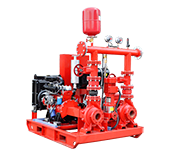
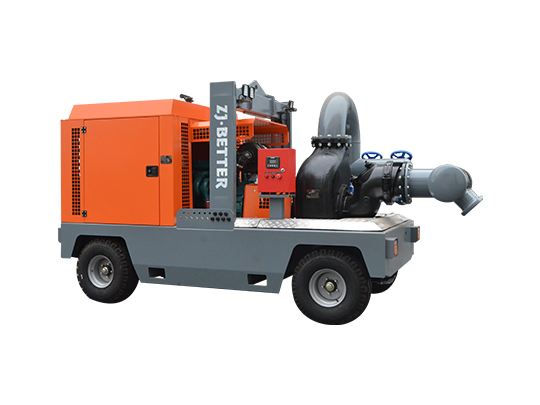
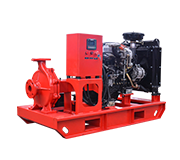
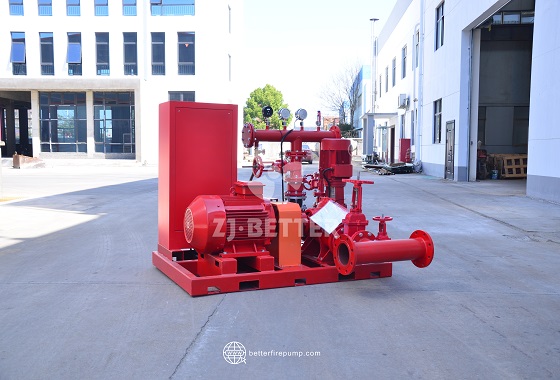
Large-scale industrial fire protection projects have high requirements for equipment installation efficiency and ease of maintenance. The diesel engine fire pump unit adopts a modular structure design, integrating the diesel engine, fire pump, control cabinet, fuel system, and base. The equipment can be fully commissioned before leaving the factory, requiring only simple connections on-site for rapid deployment, significantly reducing the project installation cycle. Furthermore, the unit's internal structure layout is reasonable, with ample maintenance space for key components, facilitating later inspection and maintenance. The equipment can also be flexibly configured with additional structures such as a movable base, rain cover, and soundproof enclosure according to project needs, improving equipment adaptability and installation flexibility.
7. Enhanced System Durability by Adapting to Complex Industrial Environments
Industrial fire protection environments are typically complex, requiring equipment to operate for extended periods in high-temperature, dusty, humid, and even corrosive environments, thus demanding extremely high durability. Diesel engine fire pump units utilize a high-strength steel structure base and corrosion-resistant surface treatment, effectively resisting the erosion of complex industrial environments. The optimized engine cooling system ensures stable operation even at high temperatures. The pump body and piping are constructed from pressure- and wear-resistant materials, capable of withstanding high pressure and long-term continuous water supply demands. This high-durability design effectively reduces equipment failure rates and maintenance frequency, providing long-term reliable protection for industrial fire protection systems.
8. Improved Equipment Environment through Low-Vibration and Low-Noise Operation
Traditional diesel-powered equipment is prone to significant vibration and noise during operation. Modern diesel engine fire pump units, through optimized engine structure and vibration-damping design, effectively reduce operating noise and mechanical vibration. The equipment is typically equipped with a high-performance vibration-damping base and a silent exhaust system, making the unit operate more smoothly. Low-vibration operation not only reduces equipment wear but also minimizes impact on fire protection networks and building structures. For hospitals, commercial complexes, and high-end industrial projects, this low-noise operation effectively improves the equipment environment and enhances the overall project quality.
9. Widely Applicable to Various Large-Scale Firefighting Applications
Diesel engine fire pump units, with their powerful water supply capacity and independent power advantages, are widely used in firefighting projects in petrochemical, power facilities, mines, airports, ports, warehousing and logistics centers, high-rise buildings, and large industrial parks. In different scenarios, the equipment can be flexibly configured according to actual needs, including customized design of flow range, head parameters, and control modes. Especially in large-scale industrial firefighting systems, it can effectively meet the needs of complex pipe networks and long-distance water delivery, providing efficient and reliable water supply solutions for modern industrial firefighting engineering.
10. Smart Firefighting Development Drives Comprehensive Upgrades of Diesel Fire Pumps
With the continuous development of smart firefighting and digital building technologies, diesel engine fire pump units will further upgrade towards intelligence and digitalization in the future. Future equipment will combine the Internet of Things, big data analysis, and remote monitoring technologies to achieve more precise operation management and predictive maintenance. The system can analyze the equipment's operating status in real time and detect potential fault risks in advance, thereby improving overall operational reliability. Meanwhile, integrated with intelligent building fire management platforms, diesel-powered fire pump units will become a crucial component of future intelligent fire water supply systems, providing safer, more efficient, and intelligent fire water supply for modern industrial and commercial buildings.
Overall, diesel-powered fire pump units, with their advantages of independent power, high-flow water supply, high reliability, and intelligent automatic control, have become core water supply equipment in large-scale industrial fire protection systems. They not only maintain continuous and stable operation in emergencies such as power outages but also quickly establish fire pressure, improving initial fire suppression efficiency. As modern industrial projects continue to expand and intelligent fire protection technologies continue to develop, diesel-powered fire pump units will play an even more important role in future fire protection engineering construction, providing more stable, efficient, and safe water supply for industrial, commercial, and public building fire protection systems.
 WhatsApp me