

1. Deep-water intake capacity meets port fire protection needs
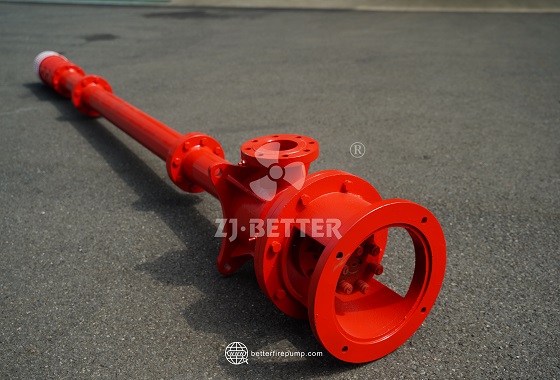
One of the biggest characteristics of port terminal fire protection systems is that the fire water source is far from the fire-fighting area, and the water intake environment is complex. Some ports require direct water intake for firefighting from the sea, rivers, or large reservoirs; therefore, firefighting equipment must possess powerful deep-water intake capabilities. Vertical deep-well fire pumps, with their long-shaft design, allow the pump body to operate deep within the water source, achieving stable and continuous water intake. Compared to ordinary surface fire pumps, they effectively avoid insufficient suction head issues, improving the stability of firefighting water supply. In large port projects, firefighting water sources may be affected by tidal changes, water level fluctuations, and complex aquatic environments. Vertical deep-well fire pumps can still maintain stable operation, providing a continuous and reliable firefighting water supply to the fire protection system. This powerful deep-water intake capability is one of the key reasons for its widespread application in port and dock firefighting engineering.
2. High-Flow Water Supply Capacity Enhances Firefighting Efficiency
Port area fires typically feature large fire spreads, rapid combustion, and high hazard levels, especially in oil terminals, container yards, and hazardous materials storage areas, where the requirements for firefighting water flow are extremely high. Vertical deep-well fire pumps, employing a high-efficiency hydraulic model and optimized impeller structure, can achieve high-flow firefighting water supply in a short time. The equipment can rapidly deliver large quantities of fire-fighting water to sprinkler systems, fire monitors, and fire hydrant systems, buying valuable time for fire suppression. For large port projects, the fire-fighting pipeline network has a wide coverage area, with some areas far from the fire pump station. Vertical deep-well fire pumps can ensure sufficient fire-fighting water supply even in distant areas through stable pressure output. The high-efficiency, high-flow-rate water supply not only improves fire-fighting efficiency but also effectively controls the spread of fire.
3. High-lift design meets long-distance water delivery needs
Port fire-fighting projects typically involve long water supply distances, complex pipeline networks, and large area spans; therefore, fire-fighting equipment must have a stable high-lift output capability. Vertical deep-well fire pumps, through multi-stage impeller structures and optimized flow channel design, can achieve continuous and stable high-lift water supply. Even under long-distance water delivery conditions, the equipment can maintain stable fire-fighting pressure. In large port logistics centers, oil terminals, and marine engineering projects, some fire-fighting areas are hundreds of meters or even further from the fire-fighting water source, making high-lift capability particularly important. A stable high-pressure water supply not only ensures the normal operation of fire-fighting equipment but also improves the overall response efficiency of the fire-fighting system, providing a solid guarantee for the fire safety of large ports.
4. Corrosion Resistance for Marine Environment Operation
Port terminals are constantly exposed to high salt spray, high humidity, and sea breeze corrosion, making ordinary fire-fighting equipment prone to corrosion, rust, and seal aging. Modern vertical deep-well fire pumps typically employ corrosion-resistant materials, anti-corrosion coatings, and stainless steel key components, effectively improving the equipment's corrosion resistance. Some key components also utilize special marine anti-corrosion processes, further extending the equipment's service life. In seawater fire-fighting systems, equipment is in constant contact with saline media, requiring extremely high material stability. High-quality anti-corrosion structures effectively reduce equipment failure rates and subsequent maintenance costs. For complex marine environments such as ports, corrosion resistance has become one of the key performance indicators for fire pump equipment.
5. Continuous and Stable Operation Ensures Fire Safety
Port fire-fighting systems typically require 24/7 standby operation. In the event of a fire, the fire-fighting equipment must be able to operate continuously and stably for extended periods. Vertical deep-well fire pumps utilize industrial-grade motors, high-strength pump shafts, and wear-resistant bearings, effectively reducing mechanical wear from prolonged operation. Optimized dynamic balancing design further reduces equipment vibration and improves overall operational stability. For large port oil storage areas and hazardous materials storage areas, a water supply interruption in the fire protection system can lead to serious safety accidents. Therefore, equipment reliability and continuous operation capability are crucial. Some equipment is also equipped with automatic cooling systems and temperature protection functions, further enhancing long-term operational safety.
6. Automated Control Improves Fire Response Speed
Modern port fire protection engineering increasingly emphasizes intelligent and automated management capabilities. Vertical deep-well fire pumps are typically equipped with intelligent control systems, enabling automatic start/stop, pressure monitoring, fault alarms, and remote monitoring. When the fire protection system detects a pressure drop or fire alarm signal, the equipment can automatically and quickly start, significantly shortening the fire protection system's response time. The intelligent control cabinet can also monitor the equipment's operating status in real time, including key parameters such as current, voltage, temperature, and operating pressure, improving overall operational safety. For large ports and multi-area fire protection projects, automated management can significantly improve the overall operational efficiency of the fire protection system.
7. Modular Structure Simplifies Port Project Installation
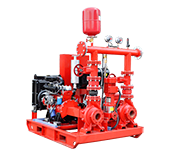
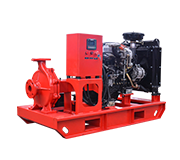
Port fire protection engineering construction environments are complex, and construction schedules are often tight in some areas, making equipment installation efficiency crucial. Vertical deep well fire pumps typically employ a modular or skid-mounted design, integrating the pump body, motor, control cabinet, and piping system onto a unified platform, effectively reducing on-site installation workload. This modular structure not only shortens the construction cycle but also improves equipment transportation and on-site deployment efficiency, making it particularly suitable for large-scale port and marine engineering projects. Furthermore, the unified structural design simplifies subsequent maintenance processes, improves equipment maintenance efficiency, and reduces downtime.
8. Energy-Saving Operation Reduces Port Operating Costs
Large port fire protection systems typically require long-term operational lifespans, so equipment energy consumption directly impacts overall operating costs. Modern vertical deep well fire pumps utilize high-efficiency energy-saving motors and optimized hydraulic designs, effectively reducing operating energy consumption. Some systems also support intelligent variable frequency control technology, automatically adjusting operating status based on actual pressure demands. Compared to traditional high-energy-consuming fire protection equipment, energy-efficient vertical deep well fire pumps significantly reduce long-term power consumption while also reducing mechanical wear and maintenance costs. With the continuous advancement of green port and low-carbon infrastructure construction, energy-saving fire protection equipment is becoming an important development trend in modern port engineering.
9. Widely Applicable to Various Port Firefighting Scenarios
Vertical deep-well fire pumps have strong adaptability to various scenarios and can be widely used in oil terminals, container ports, ship repair bases, offshore platforms, coastal industrial parks, and large logistics centers. In oil terminal projects, they can provide a stable water supply for foam extinguishing systems and fire monitors; in container yards, they can meet the needs of large-scale sprinkler fire suppression; and in offshore platform projects, their deep-water intake capability ensures the continuous operation of the fire protection system. As the scale of port infrastructure continues to expand, the application scope of vertical deep-well fire pumps in modern port fire protection engineering is also continuously growing.
10. Smart Firefighting Drives Future Port Fire Protection Upgrades
With the continuous development of smart ports and digital fire protection technologies, future port fire protection systems will be more intelligent, automated, and remote. Vertical deep-well fire pumps will further integrate IoT, big data, and cloud platform technologies to achieve functions such as remote monitoring, predictive maintenance, and intelligent fault diagnosis. Managers can monitor the real-time operational status of fire-fighting equipment through an intelligent platform, improving the overall efficiency and safety level of port fire management. In the future, more efficient, intelligent, and energy-saving vertical deep-well fire pump systems will continue to drive modern port fire protection engineering towards higher standards.
Vertical deep-well fire pumps, with their advantages of deep-water intake, high-flow-rate supply, high-lift output, corrosion resistance, and continuous stable operation, have become key core equipment in modern port terminal fire protection engineering. They not only meet the fire water supply needs of complex marine environments but also improve the overall operational efficiency and reliability of the fire protection system through intelligent control and energy-saving design. With the continuous upgrading of global port infrastructure and the ongoing development of smart fire protection technology, vertical deep-well fire pumps will play an increasingly important role in port logistics, marine engineering, oil terminals, and coastal industrial projects, providing a more stable and reliable fire water supply guarantee for modern port fire safety construction.
 WhatsApp me