

With the rapid development of smart cities, industrial digitalization, and modern building technologies, fire protection systems are gradually moving from traditional mechanized operation to intelligent, automated, and digital management. In modern fire protection engineering, the fire pressure stabilizing pump system, as a crucial core device for maintaining stable pressure in the fire protection pipeline network, directly impacts the safety performance of the entire fire protection system through its operational efficiency, intelligent control capabilities, and system reliability. Traditional fire pressure stabilizing equipment often suffers from low manual management efficiency, limited equipment monitoring capabilities, high energy consumption, and insufficient fault early warning, making it difficult to meet the higher fire safety requirements of modern large-scale commercial buildings, industrial parks, data centers, rail transit, and smart infrastructure projects. New fire pressure stabilizing pump systems in the era of smart fire protection are providing more stable, efficient, and safe fire water supply for modern fire protection engineering through technological upgrades such as intelligent control, remote monitoring, automated operation, and energy-saving optimization. In the future, fire pressure stabilizing systems will not only be fire water supply equipment but also an important component of the smart fire protection management system. The following will analyze in detail the development trends and product application value of fire pressure stabilizing pump systems in the era of smart fire protection from multiple perspectives.
1. Intelligent Control Technology Drives the Upgrade of Fire Pressure Stabilizing Systems
Traditional fire pressure stabilizing pumps typically rely on manual operation or simple control logic, while modern intelligent fire protection systems place greater emphasis on automated and intelligent control capabilities. New-generation fire pressure stabilizing pump systems are generally equipped with intelligent control cabinets, enabling automatic start/stop, pressure monitoring, fault alarms, remote communication, and data logging. When the pressure in the fire pipeline fluctuates, the system can automatically determine operational needs and quickly adjust the equipment's operating status. Intelligent control technology also reduces human error and improves the overall response speed of the fire protection system. In the event of a fire, the system can automatically link the sprinkler system, fire alarm system, and main fire pump to achieve rapid fire water supply. With the continuous maturation of artificial intelligence and automatic control technologies, future fire pressure stabilizing systems will possess even higher levels of intelligent decision-making capabilities.
2. IoT Technology Enables Remote Real-Time Monitoring
One of the core elements of intelligent fire protection is the networked management of fire equipment. Modern fire pressure stabilizing pump systems are fully integrating IoT technology to achieve real-time remote monitoring of equipment operating status. Through sensors and data acquisition modules, the system can monitor pressure, current, voltage, operating temperature, equipment status, and fault information in real time, and transmit this data to the fire control center or cloud platform via network. Management personnel can view equipment operation in real time via computer, tablet, or mobile terminal without being on-site, significantly improving fire management efficiency. For large industrial parks, commercial complexes, and multi-area fire protection projects, remote monitoring can effectively reduce manual inspection workload and improve the speed of equipment fault detection. In the future, IoT-based fire pressure stabilization systems will become an important component of modern smart buildings and smart parks.
3. Energy-saving variable frequency technology reduces system operating costs
Modern fire protection systems not only need to be safe and reliable, but also more energy-efficient and environmentally friendly. Traditional fixed-frequency voltage stabilization equipment is prone to energy waste during long-term operation. Smart fire pressure stabilization pump systems typically use variable frequency control technology, which can automatically adjust the equipment speed according to the actual pressure changes in the fire pipeline network to achieve on-demand water supply. When the system pressure is low, the equipment automatically increases the operating frequency; when the pressure recovers and stabilizes, it automatically reduces the operating power, thereby effectively reducing energy consumption. This intelligent variable frequency operation mode not only reduces long-term operating costs but also minimizes mechanical wear caused by frequent start-ups and shutdowns, extending the overall lifespan of the equipment. With the continuous development of green buildings and low-carbon industries, energy-saving fire-fighting pressure stabilization systems will have even broader development prospects.
4. Modular Design Improves Engineering Deployment Efficiency
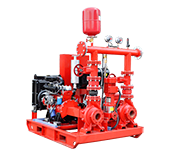
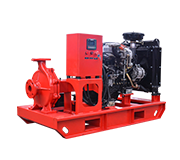
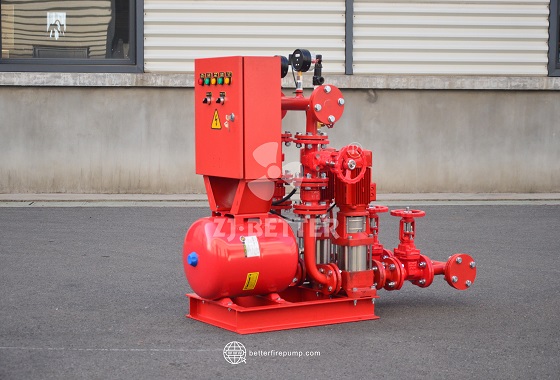
Modern fire protection engineering places higher demands on equipment installation efficiency and system integration capabilities. Therefore, modular design is becoming an important development direction for fire-fighting pressure stabilization pump systems. Modular fire-fighting pressure stabilization systems typically integrate fire pumps, control cabinets, pressure tanks, valves, and piping components onto a unified base platform, achieving integrated supply and rapid installation. This structure significantly reduces on-site construction workload and improves engineering deployment efficiency, making it particularly suitable for large commercial buildings, industrial parks, and infrastructure projects. Furthermore, modular design improves the convenience of later maintenance. A more rational equipment layout allows maintenance personnel to quickly access key components, reducing maintenance difficulty and downtime. In the future, highly integrated, unified, and modular fire-fighting pressure stabilization equipment will become the mainstream trend in the industry.
5. Digital Management Enhances Fire Protection System Safety
In the era of smart fire protection, digital management capabilities have become a crucial competitive advantage for fire protection systems. Modern fire-fighting pressure-stabilizing pump systems automatically record operational data, including pressure changes, equipment start-up and shutdown frequency, runtime, and fault history, generating data analysis reports. Through a digital management platform, managers can more intuitively grasp the equipment's operating status and promptly identify potential hazards. For example, when abnormal pressure fluctuations or equipment malfunctions occur, the platform can automatically send alarm information, improving fault handling efficiency. Data-driven management not only enhances the safety of fire protection systems but also provides crucial reference data for subsequent equipment maintenance and system optimization.
6. Predictive Maintenance Reduces Equipment Failure Risk
Traditional fire-fighting equipment maintenance typically employs a periodic inspection model. However, this method cannot accurately determine the actual operating status of the equipment, easily leading to over-maintenance or missed faults. Intelligent fire-fighting pressure-stabilizing pump systems are gradually introducing predictive maintenance technology. The system analyzes equipment operating trends by monitoring data such as vibration, temperature, current, and pressure changes in real time. When abnormal changes occur, the system can issue early warnings, reminding maintenance personnel to conduct inspections and repairs, thereby preventing sudden failures. This predictive maintenance method not only improves equipment reliability but also reduces unnecessary downtime and maintenance costs. In the future, intelligent maintenance systems based on big data analytics and artificial intelligence algorithms will further improve the management level of fire protection equipment.
7. Deep Integration of Fire Protection Pressure Stabilization Systems with Smart Buildings
With the rapid development of smart buildings, fire protection systems are no longer independent operating devices, but rather an important component of the entire intelligent building management system. Modern fire-fighting pressure-stabilizing pump systems can be linked and controlled with building automation systems, security systems, energy management systems, and fire alarm systems. For example, when a fire alarm system is activated, the pressure stabilization pump system can automatically adjust the pressure state and coordinate with the main fire pump to improve fire response efficiency. In large commercial complexes, hospitals, airports, and rail transit projects, this system linkage capability is of great significance for improving the overall building safety. In the future, fire protection pressure stabilization systems will be more deeply integrated into the smart building ecosystem.
8. High Reliability Design Ensures 24/7 Firefighting Standby
The most important characteristic of fire protection systems is that they must maintain absolutely reliable operation in emergency situations. Therefore, high reliability has always been an important development direction for fire protection pressure stabilization pump systems. Modern intelligent fire protection pressure stabilization equipment typically adopts industrial-grade motors, high-quality bearings, wear-resistant sealing structures, and multiple protection designs, which can effectively improve the long-term stable operation capability of the equipment. Some systems also feature dual power supply switching, automatic backup pump switching, and automatic fault protection functions, ensuring the normal operation of the fire protection system even under complex conditions. Highly reliable fire protection equipment is particularly important for data centers, power facilities, petrochemical plants, and large industrial projects. In the future, fire protection pressure stabilization systems will place greater emphasis on stable operation under extreme conditions.
9. Green and Environmentally Friendly Development Becomes a Future Focus
With the increasing global trend towards green and low-carbon development, the fire protection equipment industry is also upgrading towards environmental friendliness. Modern fire protection pressure stabilization pump systems are reducing energy consumption and environmental impact through high-efficiency energy-saving motors, low-noise designs, and intelligent operation control. Some equipment also uses environmentally friendly materials and recyclable structural designs to improve the green manufacturing level of the equipment. In large-scale green building and low-carbon industrial park projects, environmentally friendly fire protection equipment has gradually become an important procurement standard. In the future, more efficient, lower-energy-consumption, and more environmentally friendly fire protection pressure stabilization systems will become the market mainstream.
10. Smart Fire Protection Drives the Globalization of Fire Protection Pressure Stabilization Systems
With the continuous advancement of global smart city construction, modern fire protection system standards are also gradually becoming internationalized. Intelligent fire-fighting pressure-stabilizing pump systems, with their advantages of intelligent control, remote management, high efficiency and energy saving, and stable reliability, are being widely used in commercial buildings, industrial facilities, and infrastructure projects worldwide. The demand for intelligent fire-fighting pressure-stabilizing systems is particularly strong in large industrial parks, data centers, logistics warehouses, and urban complexes. In the future, with the further development of artificial intelligence, cloud computing, and digital twin technologies, fire-fighting pressure-stabilizing systems will continue to upgrade towards greater intelligence, networking, and globalization.
The arrival of the era of intelligent fire protection is comprehensively driving the rapid development of fire-fighting pressure-stabilizing pump systems towards intelligence, digitalization, energy saving, and high reliability. Modern fire-fighting pressure-stabilizing equipment not only achieves stable and efficient fire-fighting water supply but also improves the overall operational efficiency and safety level of the fire protection system through the Internet of Things, intelligent control, and data management technologies. In the future, with the continuous development of smart buildings, smart cities, and green and low-carbon projects, fire-fighting pressure-stabilizing pump systems will play an even more important role in commercial buildings, industrial parks, data centers, rail transit, and large-scale infrastructure projects, providing more reliable, efficient, and intelligent fire-fighting water supply guarantees for modern fire safety construction.
 WhatsApp me