

1. Independent Diesel Power for Reliable Water Supply
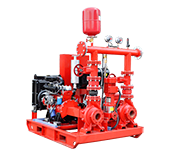
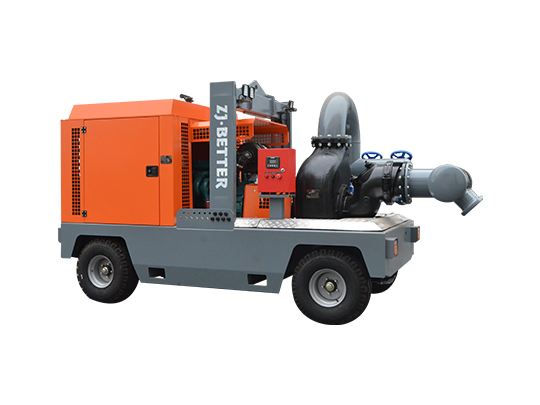
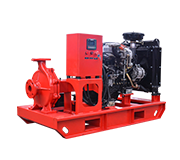
This pump set utilizes a diesel engine to provide independent power to the main fire pump. Compared to systems relying solely on electricity, the diesel-powered solution is better suited for fire protection systems with limited backup power or those requiring an extra layer of power security; configurations can be tailored to specific project requirements regarding flow rate and head.
2. Compact Skid-Mounted Design Saves Installation Space
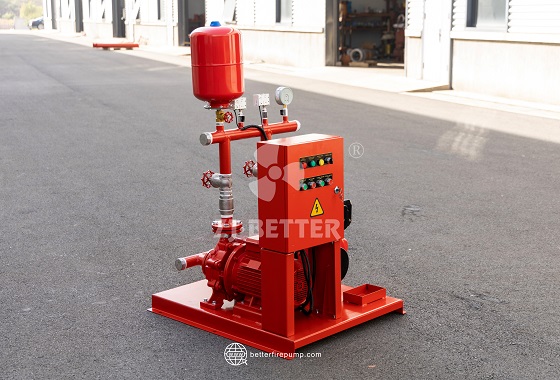
The product features an integrated skid-mounted layout, consolidating the main pump set, control components, and accessories onto a common base. This compact arrangement minimizes the equipment's footprint and simplifies transportation, installation, and piping connections, making it suitable for mechanical rooms and space-constrained fire pump rooms.
3. Diesel Fire Pump as the Core Power Unit
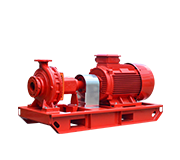
The diesel fire pump serves as the system's primary water supply unit. Pump types—such as single-stage, end-suction, horizontal split-case, or multi-stage—can be selected based on specific system requirements. By matching flow rate, head, and power parameters, the system meets the actual pressure and volume demands of various fire-fighting piping networks.
4. Jockey Pump Maintains Network Pressure
The system can be equipped with a jockey pump to handle minor pressure fluctuations within the fire-fighting network. Typically characterized by low flow and relatively high head, the jockey pump maintains network pressure within the optimal range during routine operation, thereby preventing unnecessary starts of the main fire pump.
5. Centralized Management via Control Cabinet
The accompanying control cabinet enables centralized control and automated operation management for both the diesel fire pump and the jockey pump. Depending on the configuration, the system supports operational status monitoring and protective functions, making pump operation intuitive and facilitating the daily management and maintenance of the fire-fighting equipment.
6. Enhanced System Monitoring via Pressure Detection Components
6. Enhanced System Monitoring via Pressure Detection Components
The pump unit can integrate accessories such as pressure gauges, pressure sensors, and pressure tanks to monitor and assist in regulating the pressure of the fire water supply system. Pressure tank specifications can be selected based on the pump unit's head and system pressure requirements, ensuring the equipment configuration aligns with actual engineering needs.
7. Integrated Piping and Valve Configuration
The complete equipment package can be configured with accessories—such as check valves, gate valves, pressure detection components, flanges, and flexible joints—based on project requirements, with the associated piping arranged logically. This integrated design reduces on-site installation work for scattered components while facilitating future inspections and maintenance.
8. Flexible Selection of Flow Rate and Head
Diesel fire pump units offer a wide range of specifications; product data indicates flow rates ranging from 30 to 9,000 GPM and heads of approximately 3 to 20 bar, with actual parameters determined by the specific pump model and engineering requirements. Selection should comprehensively consider fire water demand, piping network resistance, and required pressure.
9. Suitable for Various Fire Water Supply Scenarios
Compact diesel fire pump units are suitable for fire water supply systems in warehouses, industrial facilities, docks, airports, energy facilities, and commercial buildings. For projects requiring independent power support, these units serve as critical fire water supply equipment, operating in conjunction with fire water reservoirs, piping networks, and terminal fire-fighting systems.
10. Balancing Reliable Operation with Ease of Maintenance
In terms of structure, the diesel fire pump unit features a centralized layout of the power source, pump body, control system, and auxiliary pressure components; this ensures functional integrity while simplifying equipment inspection. Through optimal pump selection, power matching, and accessory configuration, the unit provides continuous, stable power support for fixed fire-fighting systems.
Characterized by independent diesel power, a skid-mounted structure, auxiliary pressure stabilization, centralized control, and pressure detection capabilities, the compact diesel fire pump unit logically integrates the various functional units required for fire water supply. Its compact layout adapts to diverse installation spaces, and it can be configured to meet specific flow, head, and pressure requirements, making it suitable for fire water supply applications in buildings, warehouses, and industrial facilities.
 WhatsApp me