
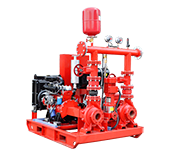

1. Integrated Structural Design, Creating a Complete Fire Protection Pressure Stabilizing Unit
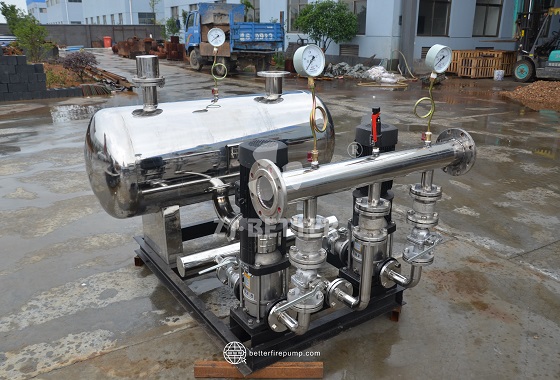
One of the biggest features of automatic fire-fighting booster and pressure stabilizing equipment is the integration of multiple functional components into a complete pump system. Depending on different fire-fighting water supply needs, the equipment typically consists of a pressure-stabilizing pump, pressure tank, control cabinet, pressure detection device, piping, and valve accessories. These components are not simply combined, but rather systematically configured around the core function of stabilizing the fire-fighting network pressure. The pressure-stabilizing pump provides continuous pressure compensation, the pressure tank stores fire-fighting water at a certain pressure and buffers system pressure changes, the pressure detection device senses the network pressure in real time, and the control system automatically executes start-up and stop operations based on detected pressure changes. Through this integrated structure, the equipment forms a relatively complete automatic pressure-stabilizing unit. For building fire protection systems, integrated design not only makes the equipment structure more compact but also facilitates on-site installation, piping connections, and subsequent maintenance, making it particularly suitable for fire protection projects with requirements for equipment space, installation efficiency, and system integrity.
2. Pressure-stabilizing pump design: providing continuous pressure support for the fire-fighting network
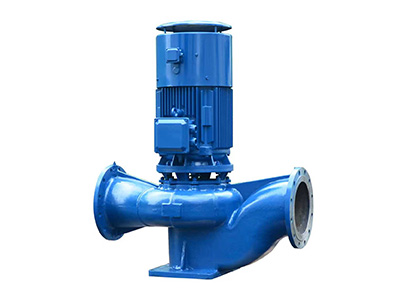
The pressure-stabilizing pump is the core power component in automatic fire-fighting booster and pressure-stabilizing equipment. Its main function is to promptly replenish pressure when the fire-fighting network pressure drops, restoring the system pressure to the set range. When a building's fire protection system is in standby mode for extended periods, the internal pressure of the pipe network does not remain constant and may be affected by factors such as minor leaks, valve operation, ambient temperature changes, and small amounts of water usage. When the pressure falls below the set value, the control system can activate a pressure-stabilizing pump based on the pressure detection signal, replenishing the pressure in the pipe network through pump operation. Compared to relying solely on water storage devices to maintain pressure, configuring a dedicated pressure-stabilizing pump further enhances the system's pressure maintenance capability. Pressure-stabilizing pumps are typically selected based on the required flow rate, pressure, and pipe network characteristics of the fire protection system, ensuring they meet daily pressure stabilization needs while avoiding frequent start-stop cycles due to mismatched equipment parameters. For building and industrial fire protection systems that require long-term maintenance of fire pipe network pressure, a stable and reliable pressure-stabilizing pump is crucial for the continuous operation of the entire system.
3. Pressure Tank Configuration to Reduce Frequent Pump Start-Stops
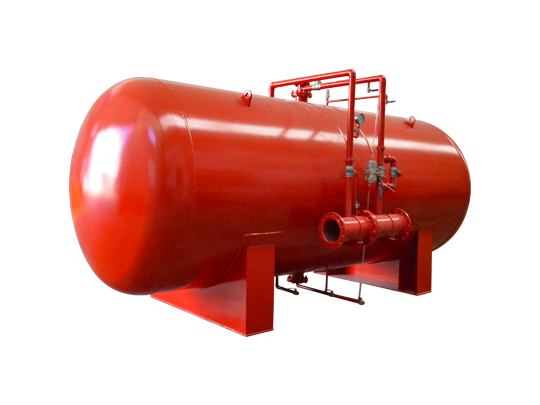
Pressure tanks are an important component of automatic fire protection pressurization and stabilization equipment, playing a role in pressure storage, buffering, and reducing the frequency of pump start-stop cycles during system operation. When the fire protection network pressure is within the normal range, the pressure tank maintains a certain pressure state, providing a pressure buffer when small pressure changes occur, eliminating the need to immediately activate the pressure-stabilizing pump for every slight pressure drop. This effectively reduces the mechanical shock and electrical load caused by frequent pump starts, making the entire pressure-stabilizing system operate more smoothly. Simultaneously, the pressure tank can also provide a certain pressure compensation capability for a short period, making network pressure changes smoother. For building fire protection systems, a larger pressure tank capacity is not necessarily better; it needs to be rationally configured based on the performance of the pressure-stabilizing pump, system volume, network pressure requirements, and actual water usage. Through the coordinated work of the pressure tank and the pressure-stabilizing pump, the stability and efficiency of equipment operation can be improved while meeting the fire protection network pressure requirements.
4. Pressure Detection System: Real-time Monitoring of Fire Protection Network Status
Automatic fire protection booster and pressure-stabilizing equipment operates automatically and is closely related to the pressure detection system. During equipment operation, the pressure detection device continuously senses pressure changes in the fire protection network and transmits relevant signals to the control system. When the system pressure reaches the normal set range, the equipment remains in standby mode. When the pressure drops to the start-up set value, the control system can start the pressure-stabilizing pump to replenish the pressure based on the detection signal. When the pressure recovers to the stop set value, the system controls the pump to stop running. This automatic control logic reduces manual operation and makes the pressure maintenance process of the fire-fighting pipeline network more timely. The stability of the pressure detection device and the reasonable setting of control parameters directly affect the overall operating effect of the equipment. Therefore, in the design of automatic fire-fighting booster and pressure-stabilizing equipment, it is necessary to reasonably set the pressure detection and control range according to the actual pressure requirements of the fire-fighting pipeline network, so that the equipment can accurately identify pressure changes and reduce unnecessary frequent start-ups and shutdowns, thereby improving the overall reliability of the fire-fighting water supply system.
5. Automatic Control Cabinet, Realizing Intelligent Operation of Equipment
The control cabinet is equivalent to the control center of the automatic fire-fighting booster and pressure-stabilizing equipment, responsible for coordinating pressure detection, pump start-up and shutdown, and related operating logic. Traditional fire-fighting pressure-stabilizing equipment, if relying on frequent manual observation and operation, not only has a large management workload, but it is also difficult to ensure timely response after pressure changes occur. The automatic control cabinet can execute corresponding controls based on the signals fed back by the pressure detection device, enabling the equipment to operate automatically according to preset logic. Under normal circumstances, the system remains in stable standby mode. When the pressure drops, the control system activates the pressure-stabilizing pump; once the pressure returns to the set range, the pump stops. Automated control makes the fire-fighting pressure stabilization process more continuous and standardized. Simultaneously, the control cabinet can display and control the operating status according to the equipment configuration, allowing managers to more intuitively understand the equipment's operation. For buildings, warehouses, and industrial facilities with a high degree of unattended operation, the automatic control system significantly improves the ease of use of the fire-fighting pressure-stabilizing equipment.
6. Automatic Pressure Replenishment Function, Keeping the Fire-Fighting System Ready at All Times
Fire-fighting systems differ from ordinary water supply systems in that they need to be in a reliable standby state for extended periods. Even without a fire for a long time, the fire-fighting pipeline network must maintain the required pressure. Automatic fire-fighting pressure boosting and stabilizing equipment is designed to meet this need. Through automatic detection and pressure replenishment mechanisms, it maintains a relatively stable pressure in the fire-fighting pipeline network under normal conditions. When the pressure in the pipeline drops due to minor leaks or other normal factors, the equipment can activate the pressure-stabilizing pump to replenish the pressure without manual intervention. After pressure is restored, the equipment re-enters standby mode, thus forming a work cycle of automatic detection, automatic start-up, automatic pressure replenishment, and automatic shutdown. This operating mode reduces the burden of manual maintenance and prevents the fire protection network from being affected by prolonged insufficient pressure, thus maintaining the system's standby status. For projects with complex fire protection networks, such as high-rise buildings, large warehouses, and industrial plants, the automatic pressure replenishment function can further enhance the continuous operation capability of the fire water supply system.
7. Multi-component collaborative work improves the overall equipment operating efficiency
Automatic fire-fighting pressurization and stabilization equipment does not rely on a single component to complete its work. Instead, it is a complete system composed of a water pump, pressure tank, control cabinet, pressure detection device, and pipeline accessories. The pressure-stabilizing pump provides pressure power, the pressure tank performs pressure storage and buffering functions, the pressure detection device collects changes in pipeline pressure, the control cabinet analyzes signals and executes water pump start-up and shutdown control, and various pipelines, valves, and connecting components are responsible for water flow delivery and system regulation. The cooperation between different components enables the equipment to form a complete automatic workflow. For example, when the pressure in the fire protection pipeline decreases, the pressure detection device first senses the change. Then, the control system issues a start command based on preset parameters, and the pressure-stabilizing pump begins operation, replenishing the pipeline with fire-fighting water. Once the pressure gradually recovers, the control system issues a stop command. The entire process requires no frequent manual intervention. This systematic design avoids the functional limitations caused by operating a single device, making the fire-fighting pressure stabilization function more complete.
8. Compact Pump Set Structure, Adapting to Different Fire Protection Engineering Installation Needs
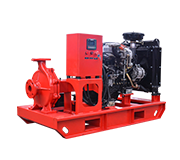
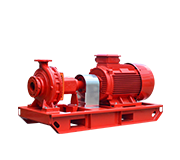
From an equipment structure perspective, automatic fire-fighting booster and pressure-stabilizing equipment typically adopts a complete pump set form, installing the main equipment on a unified foundation or base, making the overall structure more compact. For building fire protection engineering, the space for pump rooms and equipment rooms is often limited; therefore, the equipment footprint, pipeline layout, and installation method are key factors to consider when selecting equipment for a project. With a complete set structure, the connection between the pressure-stabilizing pump, pressure tank, and control system is clearer, reducing complex on-site equipment assembly work. At the same time, the unified structural layout also facilitates subsequent inspection and maintenance. Depending on different engineering conditions, the equipment can be configured according to the required flow rate, pressure, pipe diameter, and installation space of the fire protection system, thereby meeting the usage needs of different building and industrial projects. The compact structure is not only for saving space, but more importantly, it ensures that all functional components of the equipment form a unified whole, reducing potential connection and debugging problems during on-site installation and improving the efficiency of fire protection equipment engineering implementation.
9. Applicable to Building and Industrial Fire Water Supply Systems
Automatic fire-fighting pressure boosting and stabilizing equipment has strong engineering adaptability and can be applied to various locations requiring the maintenance of fire pipe network pressure. In building fire protection systems, it can be used in high-rise buildings, commercial buildings, residential buildings, office buildings, and other fire water supply facilities; in the industrial field, it can be used in industrial plants, warehouses, production bases, and other locations requiring fire water supply systems. For large-scale fire protection projects, fire pipe networks typically have long pipelines and large system volumes, requiring stable pressure management during daily operation. By configuring automatic fire-fighting pressure boosting and stabilizing equipment, system pressure can be continuously monitored, and pressure can be replenished in a timely manner when pressure drops, thus keeping the fire pipe network in a normal standby state. Simultaneously, this equipment can also be used in conjunction with the main fire pump system, providing the necessary pressure conditions for the main fire pump to start. Therefore, in a complete fire water supply system, the automatic booster and pressure stabilizing equipment not only undertakes daily pressure stabilization but also serves as an important auxiliary device for the main fire pump system.
10. Product Selection and System Configuration Determine Actual Operating Results
Although the automatic fire booster and pressure stabilizing equipment adopts a complete set design, the pipe network conditions and operational requirements of different fire protection projects are not entirely the same. Therefore, product selection needs to be rationally configured based on actual engineering parameters. First, the required working pressure and pressure stabilization range of the fire protection system need to be determined. Then, the flow rate and head of the pressure stabilizing pump are determined based on the pipe network volume, pressure loss, and operating environment. At the same time, the pressure tank capacity also needs to match the pressure stabilizing pump and the fire pipe network to achieve good buffering and pressure storage effects. The control system needs to set the corresponding start and stop pressures according to the operating logic of the fire protection system, enabling the pump to operate automatically within a reasonable range. In addition, the equipment installation space, pipe interface size, operating environment, and subsequent maintenance conditions also need to be considered. Proper equipment selection not only affects whether the equipment can meet the pressure requirements of the fire protection network, but also influences the pump start-up and shutdown frequency, system operational stability, and long-term operating costs. Therefore, in practical engineering applications, parameters should be configured specifically for the fire protection water supply system to ensure that the automatic fire protection booster and pressure stabilizing equipment truly fulfills its functions of stabilizing pressure, automatically replenishing pressure, and assisting in fire protection water supply.
Automatic fire protection booster and pressure stabilizing equipment is a complete set of fire protection water supply equipment designed around stabilizing the pressure of the fire protection network. Through the coordinated operation of multiple core components such as a pressure stabilizing pump, pressure tank, control cabinet, and pressure detection device, it achieves automatic monitoring and replenishment of the fire protection network pressure. Its compact structure reduces the complexity of on-site installation, and the automatic control method reduces the need for manual operation. The coordination between the pressure tank and the pressure stabilizing pump reduces unnecessary frequent start-ups and shutdowns, ensuring the fire protection system maintains stable pressure under normal conditions. For fire protection water supply projects in buildings, industrial plants, warehouses, etc., the proper configuration of automatic fire protection booster and pressure stabilizing equipment not only improves the pressure maintenance capacity of the fire protection network but also provides crucial support for the normal start-up of the main fire pump and the reliable operation of the entire fire protection water supply system.
 WhatsApp me