

1. Vertical Structure Design to Meet Special Fire-Fighting Water Intake Needs
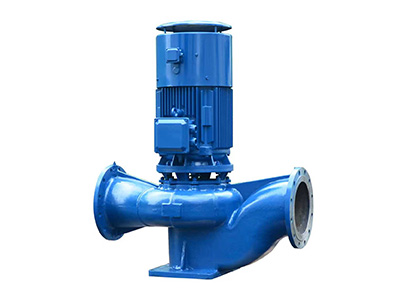
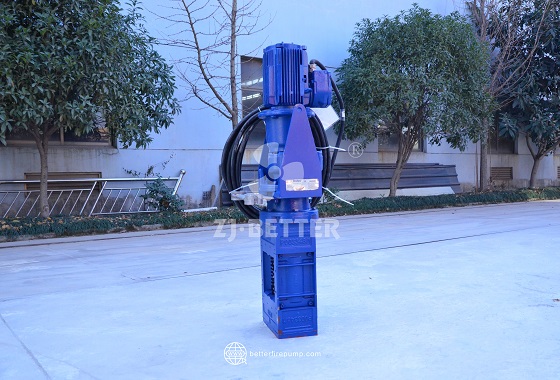
The most obvious feature of vertical turbine fire pumps is their vertical structure. Unlike common horizontal fire pumps, this product's pump body and impeller assembly can be installed vertically to deeper water sources, while the drive unit is positioned above the water surface or ground level, connecting the upper and lower components via a pump shaft. This structure fully utilizes vertical space, allowing the pump's suction components to be closer to the actual water level, thus meeting the fire-fighting water intake needs of deep wells, deep pools, and large water storage facilities. For deep water sources that ordinary fire pumps cannot directly handle, the vertical turbine fire pump can be specifically configured by adjusting the pump column length, impeller stage number, and installation depth. Its overall structure is designed around "stable water intake and continuous water delivery," making it suitable not only for conventional fire-fighting water supply systems but also providing more flexible equipment options for large industrial facilities, warehousing bases, and energy projects.
2. Long Shaft Drive Structure for Stable Deep Water Intake
The long shaft drive is one of the important structural features of the vertical turbine fire pump. The product connects the ground drive unit to the underwater pump body via a vertically installed pump shaft. Mechanical energy generated by the motor or other power unit is transmitted through the long shaft to the lower impeller, ensuring stable impeller rotation and continuous water intake and pressurization. The core advantage of this design is its ability to overcome the installation depth limitations of ordinary pump sets, allowing the pump's working components to extend downwards according to the actual water source depth. For deep well fire-fighting water sources, underground water storage facilities, and large water sources with significant water level fluctuations, the long shaft structure can determine the appropriate installation depth based on engineering conditions. Simultaneously, the long shaft system, combined with appropriate bearings and support structures, improves shaft stability during operation, reduces vibration and misalignment that may occur during long-distance transmission, and provides a structural foundation for the long-term operation of fire-fighting water supply equipment.
3. Underwater Impeller Design for Continuous Fire-Fighting Water Supply
The impeller is the core hydraulic component of the vertical turbine fire pump, responsible for energy conversion. During operation, the drive unit drives the underwater impeller to rotate at high speed via the long shaft. Water enters the impeller, gains energy, and is then transported upwards along the pump body and outlet pipeline with the assistance of the flow guiding structure. Because the impeller can be installed close to the water source, the equipment can more effectively adapt to deep-water intake conditions. A well-designed impeller and guide vane improve the flow state of water passing through the pump body, ensuring stable flow and pressure for fire-fighting water. For fire protection systems, stable hydraulic output directly affects the water supply capacity of fire hydrants, automatic sprinkler systems, and other terminal fire-fighting facilities. Therefore, the vertical turbine fire pump is not simply a device that "pumps water," but rather, through the coordinated work of the impeller, guide vanes, pump shaft, and outlet system, it transforms the water source into a continuous pressurized flow that meets the requirements of the fire protection network.
4. Multi-stage impeller structure to adapt to different head requirements
To meet the head requirements of different fire protection projects, vertical turbine fire pumps can adopt impeller structures with different numbers of stages. When the fire protection system requires higher pressure or needs to deliver water to higher positions, multi-stage impellers can achieve higher pressure output by progressively increasing the energy of the water flow. The water gains energy after passing through the first-stage impeller and then enters subsequent impellers for further pressurization, thus forming a continuous multi-stage pressurization process. This structure is particularly suitable for applications requiring high head, such as large buildings, industrial installations, elevated fire protection facilities, and long-distance fire pipelines. The product is not designed to meet all projects with a single specification; instead, it can be selected based on the fire protection system's design flow rate, required head, water source depth, and installation conditions, ensuring a better match between the pump set's actual operating parameters and project needs. By rationally configuring the impeller stages, the compatibility between the equipment and the fire protection system can be improved while maintaining water supply capacity.
5. Ground-driven design facilitates equipment inspection and routine maintenance.
The vertical turbine fire pump places the main drive unit above ground, offering significant advantages for equipment operation, inspection, and maintenance. The underwater section primarily handles water intake and hydraulic transport, while the motor, transmission mechanism, and other power equipment are located on the ground. Personnel can inspect the main drive components without entering deep wells or water tanks. During long-term operation of fire protection equipment, the motor's operating status, transmission system, and connecting components all require regular inspection; the ground-driven structure provides maintenance personnel with more direct operating conditions. Meanwhile, depending on the power requirements of different projects, vertical turbine fire pumps can be configured with various forms such as vertical hollow shaft motors, belt drives, and gearbox drives. Some structures can also be combined with diesel engine power, thus adapting to the power supply conditions and installation environment of different fire protection projects.
6. Applicable to various water sources such as deep wells, rivers, and lakes
Water source conditions are one of the most important factors in the selection of fire pumps. Vertical turbine fire pumps have strong adaptability to water sources and can be applied to deep wells, pools, rivers, lakes, and some special water source conditions. For fixed fire pools, the pump installation position can be determined according to the pool depth and minimum water level; for deep wells, the impeller can be inserted to a suitable water intake depth by adjusting the pump column and pump body structure. For natural water sources such as rivers and lakes, the appropriate pump body and flow-through component materials need to be selected based on water quality, impurity content, water level changes, and corrosive environment. Different water sources do not mean using the same product configuration, but rather require targeted design based on actual working conditions. Because of this structural flexibility, vertical turbine fire pumps are particularly suitable for large-scale industrial fire fighting, energy facilities, warehousing bases, and fire water supply projects with complex water source conditions.
7. Stable Shaft System and Support Structure, Improving Operational Reliability
For vertical turbine fire pumps, the pump shaft typically bears the burden of power transmission over long distances; therefore, shaft system stability directly affects the equipment's operating status. The product incorporates appropriate support and bearing structures in the long shaft system to maintain a reasonable positional relationship during operation and reduce potential swaying and friction during long-distance transmission. Some structures utilize rubber bearings and other support methods, and appropriate lubrication or cooling methods are configured according to the specific equipment design to improve the bearing's working environment. For equipment like fire pumps, which bear the important responsibility of safe water supply, the stability of the mechanical structure cannot only focus on short-term operational performance but also needs to consider wear, vibration, and maintenance requirements during long-term operation. Therefore, rational design of components from the pump shaft, bearings, and column pipe to the impeller can create a stable working structure for the entire transmission system, providing a reliable foundation for the continuous operation of the fire water supply equipment.
8. Flexible Flow and Head Configuration to Adapt to Different Fire Protection Systems
Different fire protection projects have significantly different requirements for flow and head. Small facilities and large industrial fire protection systems require different water volumes and pressures; therefore, fire pumps cannot be configured using a single parameter. Vertical turbine fire pumps can be selected based on the fire protection system's design flow rate, required head, water source depth, piping conditions, and drive power. Related product information shows that their flow range can cover different operating conditions from tens of GPM to thousands of GPM, with some products reaching 5000 GPM. Specific parameters need to be determined based on the actual model and project conditions. By rationally combining the number of impeller stages, pump column length, drive power, and pump body dimensions, the equipment can be better suited to the actual needs of the project. For engineering procurement, this parameter configuration method can avoid insufficient water supply due to undersized equipment and reduce resource waste caused by oversized equipment, thus forming a more reasonable fire pump selection solution.
9. Suitable for Large-Scale Industrial and Fixed Fire Water Supply Projects
The structural characteristics of vertical turbine fire pumps make them more suitable for projects with high requirements for fire water supply capacity and water source conditions. For example, large industrial plants, warehousing and logistics centers, energy facilities, petrochemical-related sites, large public facilities, and projects requiring deep wells or large water tanks as fire water sources may all use this type of fire pump. In these scenarios, fire protection systems often require not only a large instantaneous water supply but also proper matching of the equipment with fire water tanks, pipe networks, fire hydrants, and automatic sprinkler systems. Vertical turbine fire pumps can utilize vertical space for pump body placement and draw water from deeper water levels via a long shaft, thus exhibiting good engineering adaptability when water source location and pump room layout are limited. By rationally selecting flow rate, head, drive method, and installation depth, the product can become an important power device in large-scale fixed fire water supply systems.
10. From Product Structure to System Application: Balancing Performance and Engineering Adaptability
The value of a high-quality vertical turbine fire pump lies not only in its single flow rate or head parameters, but also in its comprehensive performance encompassing structural design, power transmission, hydraulic performance, installation methods, and engineering adaptability. From the underwater impeller to the guide vanes, from the long shaft drive to the bearing support, and finally to the ground drive equipment, every component affects the overall operational performance of the fire pump. Products can be tailored to different projects by selecting appropriate pump body structures, impeller stages, shaft lengths, and drive methods, and by considering factors such as water source depth, flow rate, head, and fire pipeline network conditions. For projects requiring long-term fire water supply capabilities, this product design based on actual operating conditions is even more crucial. Through proper selection and standardized installation, vertical turbine fire pumps can continuously perform deep-water intake, pressurization, and transportation tasks, providing stable hydraulic support to the fire pipeline network while simultaneously considering equipment maintenance, space utilization, and long-term operational needs.
Vertical turbine fire pumps, with their vertical structure, long shaft drive, underwater impeller, multi-stage pressurization, ground drive, and flexible parameter configuration, can effectively solve the water intake problems of special fire-fighting water sources such as deep wells, deep pools, rivers, lakes, and large water storage facilities. Their core advantage is not limited to pumping capacity alone, but rather achieves stable water intake and continuous fire-fighting water supply through the overall coordination of the pump body, impeller, long shaft, column pipe, bearings, and drive system. For different industrial plants, storage facilities, energy projects, and large-scale fire protection projects, appropriate configurations can be selected based on actual flow rate, head, water source depth, installation conditions, and power source, resulting in a more rational match between the equipment and the fire protection system. For projects requiring a continuous supply of fire-fighting water from deeper water sources, vertical turbine fire pumps are a professional fire-fighting water supply equipment that balances water intake capacity, structural adaptability, operational stability, and engineering configuration flexibility.
 WhatsApp me