

1. Parallel Dual-Pump Configuration
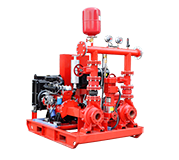
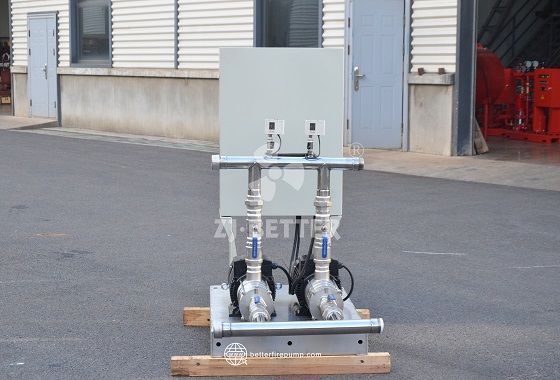
The system employs a parallel arrangement of two water pumps, which can be designated as a primary (duty) pump and a standby (backup) pump based on project design requirements. If the primary pump fails or specific conditions for activating the standby pump are met, the control logic facilitates an automatic switchover, enhancing the flexibility of the fire-fighting water supply system.
2. Centralized Management via Automatic Control Cabinet
The integrated control cabinet manages the starting, stopping, and operational status of the pumps. Depending on the specific control scheme, the system can be configured for both automatic and manual operation, with indicator lights and electrical components providing real-time feedback on the equipment's status.
3. Coordinated Operation of Primary and Standby Pumps
The dual-pump system typically operates in a "duty/standby" mode. The primary pump handles the main water supply, while the standby pump is activated under defined conditions. Properly configuring the start-up logic for both pumps prevents operational conflicts and ensures compliance with system design specifications.
4. Optimized Pump Parameter Matching
Pump selection must be based on calculations involving the required flow rate, head, operating pressure, and pipeline resistance of the fire-fighting network. The performance parameters of both pumps should be carefully matched to the duty/standby operational strategy, ensuring the equipment consistently meets the project's water supply requirements.
5. Compact, Integrated Base Design
By mounting both pumps and the control cabinet on a single common base, the system achieves a streamlined, space-efficient design that simplifies equipment positioning and site planning. This centralized layout also reduces the need for individual on-site installation tasks and clarifies the interconnections between components.
6. Motor-Driven Operation for Stable Water Supply
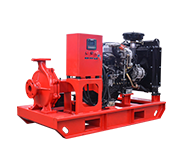
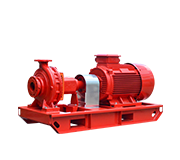
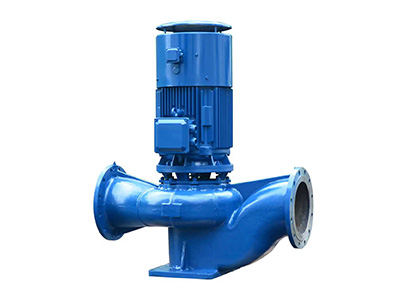
The electric fire-fighting pumps utilize motors to drive the rotation of the impellers, thereby pressurizing and transporting the water. Depending on specific operating conditions, various centrifugal pump configurations can be selected, with motor power, rotational speed, and pump performance parameters optimally matched to meet the requirements of different fire-fighting piping networks.
7. Electrical Protection and Fault Monitoring
The control system can be configured to provide electrical protection—such as overload and overcurrent protection—along with corresponding operational status indicators. A robust electrical design facilitates the timely detection of equipment anomalies, simplifying routine management and troubleshooting.
8. Flexible Adaptation to Various Pump Types
Based on flow rate, head, and installation space requirements, the dual-pump system can incorporate end-suction pumps, multistage pumps, or other types of fire-fighting pumps. Since different pump types offer distinct hydraulic performance characteristics and installation requirements, the selection should be tailored to the specific conditions of the project.
9. Suitable for Diverse Fire-Fighting Applications
Automated dual-pump fire-fighting units can be deployed in projects such as commercial buildings, industrial facilities, logistics warehouses, and public infrastructure, in accordance with specific design requirements. By adjusting pump parameters, control modes, and auxiliary components, the equipment configuration can be customized to meet the needs of various projects.
10. Installation, Commissioning, and Periodic Maintenance
Before the equipment is put into service, all components—including pumps, motors, control cabinets, cabling, and piping connections—must be inspected, and necessary operational tests must be performed. Routine maintenance should focus on bearings, seals, electrical wiring, and control functions. Additionally, the switching logic between the primary and backup pumps should be tested periodically to ensure the equipment remains in the required standby state.
By utilizing a parallel dual-pump configuration, centralized control, and a compact base design, automated dual-pump fire-fighting units offer a flexible solution for fire-fighting water supply projects. Properly matched pump parameters, clear primary/backup operating logic, and comprehensive electrical protection are essential for ensuring optimal equipment performance. Selecting, installing, and maintaining the system in accordance with specific fire-safety design requirements helps enhance the standardization and reliability of system operation and management.
 WhatsApp me