

1. High-Head Design Meets the Water Supply Needs of High-Rise Buildings
The biggest challenge in fire water supply for high-rise buildings lies in the pressure loss caused by the building's height. Ordinary fire pumps often struggle to meet the fire water supply requirements of buildings with dozens or even hundreds of floors, while the vertical multistage fire pump, through a multi-stage impeller series pressurization design, can achieve high-head output within a limited space. Each impeller stage pressurizes the water flow, progressively increasing the pressure to meet the long-distance and high-floor fire-fighting water supply needs of high-rise buildings. Even in the event of a fire at the top of the building, the system maintains sufficient pressure to ensure the normal operation of the sprinkler and fire hydrant systems, buying valuable time for fire rescue.
2. High-efficiency hydraulic structure improves water supply efficiency
The equipment adopts advanced fluid dynamics design concepts, optimizing the impeller, hydraulic flow channels, and guide vane structure. By reducing internal water flow resistance and improving energy conversion efficiency, the fire pump maintains high-efficiency output during operation. Compared to traditional water supply equipment, vertical multi-stage fire pumps can provide greater pressure and flow output under the same power conditions, while reducing energy consumption. For fire protection systems that are constantly on standby and undergo regular testing, the high-efficiency design not only improves fire-fighting capabilities but also reduces overall operating costs.
3. Vertical structure saves machine room installation space
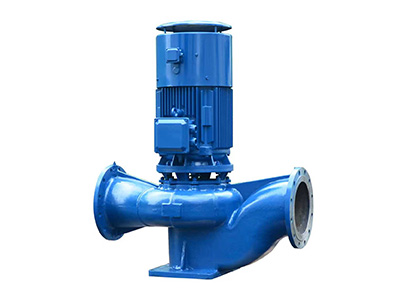
Modern high-rise building machine room space is extremely valuable; equipment layout must fully consider space utilization. Vertical multistage fire pumps, with their vertical installation, occupy less space compared to traditional horizontal fire pumps. The pump body, motor, and piping system are rationally arranged vertically, significantly improving the utilization of the machine room space. For underground fire pump rooms or building projects with limited equipment space, the vertical structure not only facilitates installation but also allows for more maintenance access, improving later management convenience. Its compact design also makes it one of the preferred water supply equipment options for modern building fire protection engineering.
4. Stable Pressure Ensures Continuous Standby of the Fire Protection System
Fire protection systems are in a standby state most of the time, therefore maintaining stable pressure in the fire protection network is crucial. Vertical multistage fire pump systems use intelligent pressure monitoring technology to detect changes in network pressure in real time. When system pressure drops, the equipment can quickly start to replenish pressure; when the pressure returns to normal, it automatically stops operating. Stable pressure management ensures that automatic sprinkler systems, fire hydrant systems, and other fire protection terminals are always in optimal working condition, preventing fire extinguishing equipment failure due to insufficient pressure, thereby improving the overall fire safety level.
5. Rapid Start-up Capability Enhances Emergency Response Speed
The initial stage after a fire breaks out is a critical period for controlling its spread; therefore, fire-fighting equipment must possess rapid response capabilities. The vertical multi-stage fire pump system utilizes advanced control technology and a high-performance drive system, enabling it to quickly commence operation upon receiving a start signal. The equipment can establish stable pressure within a short time and deliver fire-fighting water to the fire hydrant network, providing a continuous water supply for automatic sprinkler systems and fire hoses. This rapid start-up characteristic not only meets modern fire safety standards but also significantly improves the efficiency of emergency response to building fires.
6. Intelligent Control System Enables Automated Management
Modern fire protection engineering increasingly emphasizes intelligent management capabilities. This fire pump system is equipped with an advanced control cabinet and intelligent monitoring system, enabling automatic start-up, automatic shutdown, fault alarms, operation recording, and remote monitoring. Operators can view system pressure, motor status, operating time, and alarm information in real time. Through the intelligent management platform, it can also be linked with the building's fire control center, improving equipment reliability and management efficiency. Automation not only reduces manual intervention but also helps to promptly identify potential problems and reduce the risk of equipment failure.
7. Low-Noise Operation Enhances Building Environment Quality
Hospitals, hotels, office buildings, and residential buildings have strict requirements regarding equipment operating noise. Vertical multistage fire pumps utilize high-precision dynamically balanced impellers and optimized flow channel design, effectively reducing vibration and noise during operation. The motor and pump body employ a rational connection structure and are equipped with vibration damping measures, making the equipment operate more smoothly. This low-noise characteristic not only improves building comfort but also meets the development needs of modern green building and high-quality building projects, creating a quieter operating environment for users.
8. High-Reliability Design Ensures Long-Term Stable Operation
Fire-fighting equipment must be able to start reliably in critical moments, making product reliability paramount. Vertical multistage fire pumps are manufactured using high-strength materials, and key components undergo rigorous testing and quality control. The pump shaft, impeller, bearings, and mechanical seals are all made of wear-resistant and corrosion-resistant materials, capable of withstanding long standby times and frequent testing environments. The motor employs a high-grade insulation design and an efficient heat dissipation structure, improving equipment durability and operational stability. Manufactured to industrial-grade standards, it ensures the equipment remains in a reliable operating state even in emergencies.
9. Convenient Maintenance Reduces Total Life Cycle Costs
The equipment adopts a modular design concept with a scientifically sound structural layout, facilitating daily inspection and maintenance. Technicians can quickly complete equipment inspections, lubrication, replacement of vulnerable parts, and troubleshooting. Standardized components improve maintenance efficiency and reduce downtime. Lower maintenance requirements not only reduce operating costs but also increase equipment availability. For large-scale construction projects, convenient maintenance translates to lower total life cycle management costs and higher return on investment.
10. Widely Applicable to Fire Protection Engineering in Various High-Rise Buildings
Vertical multistage fire pump systems are widely used in high-rise residential buildings, super high-rise office buildings, commercial complexes, hotels, hospitals, schools, airports, convention centers, subway stations, and data centers. Whether for new projects or upgrades to existing building fire protection systems, the equipment can be customized to meet specific needs. Its superior water supply performance and reliable operation make it an essential component of modern high-rise building fire water supply systems, providing comprehensive and reliable fire safety protection for various types of buildings.
Vertical multistage fire pump systems, specifically designed for high-rise building fire water supply, have become one of the core components of modern high-rise building fire protection systems due to their high head output, efficient water supply capacity, intelligent control technology, stable pressure management, and superior reliability. They not only meet the complex fire water supply needs of high-rise buildings but also improve the overall operational efficiency and safety level of the fire protection system. As urban buildings continue to develop towards higher and larger scales, vertical multistage fire pump systems will play an even more important role in future fire protection engineering construction, providing a continuous and stable water supply guarantee for building fire safety and protecting the lives and property of people.
 WhatsApp me