
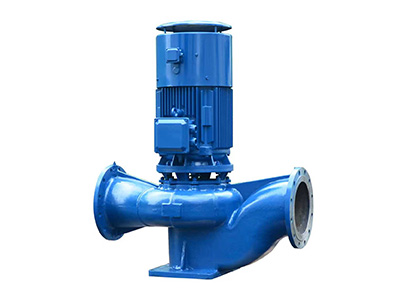

1. Vertical Pipeline Structure Design Achieves Compact and Efficient Layout
The vertical pipeline fire pump adopts a coaxial vertical installation structure with the motor and pump body, and the inlet and outlet are located on the same center line, allowing direct installation into the fire-fighting pipeline network system. Compared to traditional horizontal fire pumps, the vertical structure significantly reduces the equipment's footprint, making it particularly suitable for projects with limited equipment room space. For high-rise buildings, commercial complexes, and urban infrastructure projects, space savings translate to higher building utilization and more flexible system layouts. The compact structure also reduces the length of connecting pipes and the number of bends, thereby reducing pipe resistance losses and improving overall water delivery efficiency. Simultaneously, the simple and rational overall structure facilitates equipment installation, commissioning, and subsequent maintenance, leading to higher project construction efficiency.
2. High-Efficiency Hydraulic Model Ensures Continuous Water Supply
Fire protection systems require the rapid delivery of large quantities of fire-fighting water during a fire; therefore, the hydraulic performance of the fire pump is crucial. Vertical in-line fire pumps employ advanced fluid dynamics design concepts, optimizing impeller structure, guide components, and pump chamber flow channels to improve water flow efficiency. The high-efficiency hydraulic model effectively reduces energy loss, enabling the equipment to achieve stable high-flow output under rated operating conditions. Whether it's an automatic sprinkler system requiring continuous water supply or a fire hydrant system requiring stable pressure support, the equipment maintains excellent performance. High-efficiency operation not only meets fire protection needs but also reduces energy consumption and improves the overall economic efficiency of the system.
3. Continuous Operation Capability Meets Stringent Fire Protection Requirements
A key difference between fire pumps and ordinary water pumps is their ability to operate continuously for extended periods. Firefighting operations can last for hours or even longer, therefore, the equipment must possess excellent continuous working capacity. Vertical inline fire pumps adopt industrial-grade design standards, and key components undergo rigorous durability testing. The motor employs a high-level insulation system and enhanced heat dissipation design, enabling long-term stable operation under high load conditions. Key internal components of the pump body undergo precision machining and dynamic balancing correction, effectively reducing vibration and noise, and minimizing mechanical wear caused by long-term operation, thereby ensuring the fire protection system maintains reliable water supply capacity at critical moments.
4. Stable Pressure Output Improves Firefighting Efficiency
The effectiveness of a fire protection system depends not only on the water flow rate but also on the water pressure. Vertical inline fire pumps achieve the optimal balance between flow rate and pressure through precise parameter matching and optimized design. The equipment maintains stable pressure output under various operating conditions, ensuring the sprinkler system's nozzle coverage meets design requirements while guaranteeing sufficient range and extinguishing capability for the fire hydrant system. Stable pressure is particularly crucial for high-rise buildings and large industrial parks, as long-distance water transport and complex pipe networks can easily cause pressure fluctuations. Reliable pressure control improves the overall fire-fighting efficiency of the fire protection system, buying valuable time for personnel evacuation and fire control.
5. High-Quality Motor Drive Ensures Long-Term Reliable Operation
The motor is a vital power source for vertical pipeline fire pumps, and its performance directly impacts equipment reliability. The product utilizes a high-efficiency industrial motor design, featuring excellent starting performance, stable operation, and low energy consumption. The motor can quickly respond to fire system activation commands, reaching rated speed and establishing working pressure in a very short time. A high-quality bearing system and precision rotor structure effectively reduce vibration and mechanical losses, extending equipment lifespan. For fire protection systems requiring long service life and frequent testing, a reliable motor not only improves equipment stability but also reduces maintenance costs and downtime risks.
6. Intelligent Control System Enables Automated Management
Modern fire protection engineering increasingly emphasizes automated and intelligent equipment management. Vertical pipeline fire pumps can be equipped with intelligent control cabinets to achieve functions such as automatic start-up, automatic monitoring, automatic alarm, and remote communication. When the fire pipeline pressure drops to the set value, the system can automatically start the fire pump and quickly establish water supply pressure. The control system can monitor current, voltage, operating status, and fault information in real time, and promptly issue alarm signals in abnormal situations. Through the intelligent monitoring platform, managers can keep track of equipment operation at any time, improving management efficiency and reducing the workload of manual inspections.
7. Low Vibration and Low Noise Enhance Operational Quality
During long-term equipment operation, vibration and noise not only affect the operating environment but may also lead to accelerated wear of mechanical parts. Vertical pipeline fire pumps adopt a high-precision dynamically balanced impeller and coaxial direct-drive structure design, effectively reducing transmission losses and vibration sources. The optimized flow channel design reduces water flow impact and turbulence, thereby reducing operating noise. Low-vibration operation improves equipment stability, extends the service life of bearings and seals, and improves the equipment room environment. This advantage is particularly important for places with high noise control requirements, such as hospitals, schools, data centers, and office buildings.
8. Convenient Maintenance Reduces Total Life Cycle Costs
Fire protection equipment needs to be in a standby state for extended periods, making regular maintenance and inspection crucial. Vertical inline fire pumps feature a modular design with a rational layout of key components, facilitating inspection and maintenance by personnel. Ample space is reserved for maintenance of the motor, mechanical seal, bearings, and control components, enabling quick maintenance. Standardized component design facilitates spare parts management and replacement, shortening repair time. Convenient maintenance not only improves equipment availability but also reduces the system's total life cycle operating costs, creating greater value for users.
9. Widely Used in Various Fire Water Supply Projects
With its superior performance and reliable operation, vertical inline fire pumps are widely used in high-rise residential buildings, commercial complexes, hotels, hospitals, schools, industrial plants, data centers, airports, subway stations, and warehousing and logistics centers. They play a vital role in automatic sprinkler systems, fire hydrant systems, fire pressure stabilization systems, and fire booster water supply systems. Their compact structure and high efficiency are particularly suitable for the comprehensive requirements of modern building projects regarding energy conservation, space utilization, and system reliability, meeting the needs of fire protection projects of varying scales.
10. Compliance with International Fire Safety Standards Enhances Project Competitiveness
Modern fire protection engineering increasingly emphasizes the standardization and normalization of equipment construction. High-quality vertical inline fire pumps are designed, manufactured, and tested in strict accordance with relevant fire safety standards to ensure product performance meets engineering application requirements. From flow rate testing and pressure testing to continuous operation testing, every process undergoes rigorous quality control. Equipment that meets international standards not only helps projects pass acceptance smoothly but also enhances the overall safety level and market competitiveness of the project. For export projects and international construction projects, adopting fire protection equipment that meets standards is of great significance.
Vertical inline fire pumps, designed for continuous operational reliability, have become an important component of modern fire water supply systems due to their compact structure, high-efficiency water delivery capacity, stable pressure output, excellent continuous operation performance, and intelligent control advantages. They can respond quickly and provide a continuous and stable water supply during a fire, providing reliable power support for automatic sprinkler systems, fire hydrant systems, and other fire protection facilities. As building scale continues to expand and fire safety standards continue to rise, vertical inline fire pumps will play an increasingly important role in commercial buildings, industrial facilities, and public infrastructure projects, providing a solid and reliable fire water supply guarantee for the safety of people and property.
 WhatsApp me