
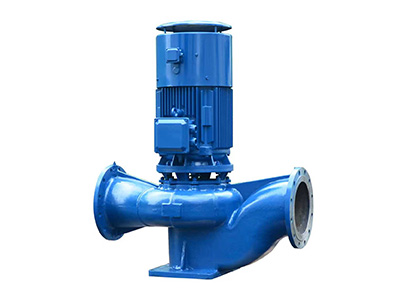

1. Systematic Design Concept for the Needs of Commercial and Industrial Buildings From the initial design stage, vertical fire pumps for commercial and industrial buildings fully consider the differentiated fire water supply needs of different building types. Commercial buildings are typically densely populated and have complex spaces, requiring extremely high startup response speed and water supply stability; while industrial buildings often have large areas, long pipe networks, and dispersed fire water points, placing higher demands on the pump set's head, flow rate, and continuous operating capacity. Vertical fire pumps, with their vertical arrangement, allow the pump shaft and motor to be coaxially connected, reducing transmission losses and improving overall efficiency. Furthermore, at the system configuration level, single-pump or multi-pump parallel systems can be flexibly combined according to building height, pipe network resistance, and water usage zones, ensuring sufficient and stable water pressure and flow under any fire-fighting conditions.
2. Space and Installation Values of Vertical Structures
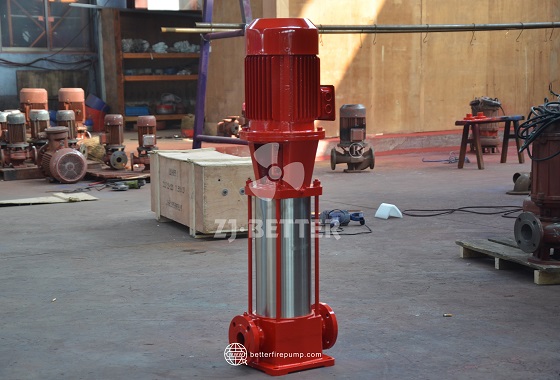
In commercial and industrial buildings, machine room space is often limited, especially in underground pump rooms or equipment concentration areas, where strict requirements on equipment footprint are imposed. Vertical fire pumps, with their vertical installation, occupy less space and are easier to install in confined spaces compared to traditional horizontal pumps. The vertical arrangement of the pump body, piping, and motor results in a compact overall structure, facilitating direct connection to the fire protection pipe network and reducing bends and additional resistance. In addition, vertical installation simplifies foundation construction and leveling, reducing installation difficulty and improving construction efficiency, which is particularly important for commercial projects and large industrial projects with tight schedules.
3. Versatility and Flexibility for Adapting to Multiple Fire Protection Systems
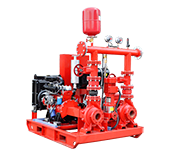
Vertical fire pump system configurations for commercial and industrial buildings offer high system compatibility and can be widely applied to indoor fire hydrant systems, automatic sprinkler systems, foam extinguishing systems, and other fixed fire protection facilities. By appropriately selecting pump parameters, a single pump unit can serve multiple fire protection systems, or multiple pumps can be combined to meet the independent operational needs of different systems. In practical configurations, vertical fire pumps can be combined with pressure stabilizing devices, control cabinets, pipeline valves, etc., to form a complete fire pump unit system, ensuring that regulatory requirements are met during the initial, middle, and continuous water supply phases of a fire, thereby improving the overall reliability and flexibility of the fire protection system.
4. High-Efficiency Hydraulic Design Ensures Stable Water Supply Performance
The most critical requirement for the operation of fire protection systems in commercial and industrial buildings is stable water supply. Vertical fire pumps employ optimized impeller and flow channel structures in their hydraulic design to reduce hydraulic losses and improve pump efficiency and cavitation resistance. Even under high-head conditions, they maintain a stable flow output, avoiding pressure fluctuations that could impact the pipeline network and terminal equipment. Meanwhile, its multi-stage structural design enables it to achieve higher head without increasing equipment size, making it particularly suitable for the fire water supply needs of high-rise commercial buildings and large industrial plants.
5. Reliable Materials and Structure Ensure Long-Term Operational Safety
In industrial environments, fire-fighting equipment often faces complex conditions such as high temperatures, humidity, dust, or mild corrosion. Vertical fire pumps prioritize wear resistance, pressure resistance, and corrosion resistance in the selection of key components. The pump body and main flow-through components possess excellent mechanical strength and service life. The optimized shaft seal structure effectively prevents leakage and reduces maintenance frequency. The overall structural rigidity is high, maintaining good mechanical stability even under long-term operation and frequent start-stop conditions, providing reliable fire protection for commercial and industrial buildings.
6. Intelligent System Configuration Enhances Emergency Response Capabilities
For modern commercial and industrial buildings, vertical fire pump systems can be configured with intelligent control schemes to achieve functions such as automatic start-stop, status monitoring, and fault alarms. When a fire occurs, the system can automatically activate the pump unit based on pressure changes to quickly establish a fire water supply. During daily operation, operating parameters can be monitored in real time to promptly detect anomalies and prevent the accumulation of hidden dangers. Through intelligent configuration, the fire pump is no longer just a single piece of equipment, but becomes a manageable and monitorable key node in the building's fire protection system, significantly improving the overall safety level.
7. Meeting the Dual Requirements of Standards and Engineering Applications Commercial and industrial building fire protection engineering must strictly adhere to relevant fire protection codes and engineering standards during the design and acceptance process. The vertical fire pump system configuration scheme, in terms of parameter selection, structural form, and system integration, is based on meeting engineering standards while also considering actual usage needs. Reasonable flow and head configurations not only meet design conditions but also reserve margins for future changes in building functions, giving the fire protection system a longer service life and avoiding frequent equipment replacements due to renovations.
8. Convenient Maintenance Design Reduces Total Life Cycle Costs For commercial and industrial projects, the maintenance costs of fire protection equipment are equally important. The vertical fire pump's structural design fully considers ease of maintenance; key components are easy to disassemble and assemble, maintenance space is reasonable, and daily inspections and periodic maintenance are simple. By reducing maintenance time and labor costs, and lowering the overall investment throughout the equipment's lifecycle, fire protection systems achieve both safety and good economic efficiency and sustainability.
9. System Expansion Capabilities for Multi-Scenario Applications
As commercial and industrial buildings expand in scale or undergo functional adjustments, fire protection systems often require upgrades or expansions. Vertical fire pump systems offer excellent scalability, allowing for capacity enhancement through increasing the number of pump units, adjusting control strategies, or upgrading piping configurations, without requiring large-scale replacement of existing equipment. This flexibility ensures future building development, avoids redundant investment, and guarantees the fire protection system remains reliably operational.
10. Building a Reliable Core Power Source for Fire Protection in Commercial and Industrial Buildings
In summary, vertical fire pump systems for commercial and industrial buildings are not merely equipment choices, but a systematic approach to safety assurance. Through efficient vertical structural design, stable hydraulic performance, reliable materials, and intelligent configuration, these fire pumps play a core power role in various building fire protection projects, providing solid support for personnel safety, property protection, and long-term building operation.
Vertical fire pump system configuration solutions for commercial and industrial buildings fully integrate multiple advantages such as space utilization, efficient operation, system compatibility, and long-term reliability, making them an indispensable and important component of modern building fire protection systems. Through scientific selection and reasonable configuration, vertical fire pumps can respond rapidly in critical moments and maintain stability in long-term operation, thus building a safe, reliable, and sustainable fire water supply system for commercial and industrial buildings.
 WhatsApp me