

1. The High Mobility Advantage of the Towable Structure
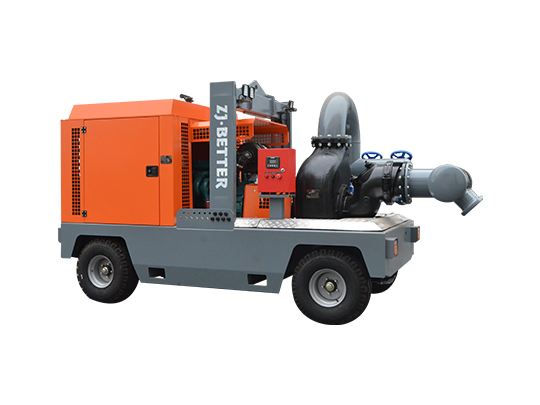
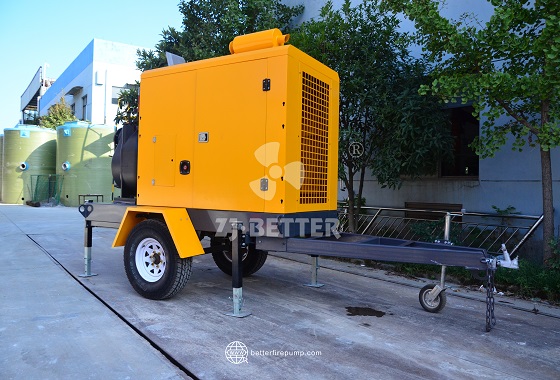
Towable fire pump units utilize a dedicated trailer chassis design, allowing for transport by pickup trucks, off-road vehicles, or light trucks. They can flexibly navigate highways, rural roads, and some unpaved surfaces. Compared to fixed-installation fire pump equipment, this device eliminates the need for pump stations or complex foundations; it can be put into use simply by towing the equipment to the designated location, significantly reducing initial construction costs and deployment time. Trailer chassis are typically equipped with independent suspension systems and high-load-bearing axles, effectively absorbing the impact of road bumps and ensuring the structural stability of the pump unit and engine during transportation. In areas with complex terrain or dispersed fire points, this type of equipment can be moved to different locations as needed based on changes in the fire situation, achieving a "supply water on the go, use as soon as possible" operational mode, significantly improving the spatial adaptability of the fire water supply system.
2. Independent Power System Meets the Needs of Operation in Environments Without Electricity
In areas without a fixed water source, insufficient electricity is often a problem. Towable fire pump units are typically equipped with independent power systems, using diesel engines as the primary drive source, allowing for independent operation without mains power. The engine is connected to the fire pump via direct coupling or flexible coupling, reducing energy loss and improving mechanical transmission efficiency. A reasonable power matching design ensures stable output of the required speed and torque under rated operating conditions, enabling the pump to operate continuously under high head and high flow conditions. Some models also feature multi-stage start-up and operation protection mechanisms, enabling reliable start-up in low-temperature, high-humidity, or dusty environments. This provides a reliable power foundation for field and emergency applications, avoiding the risk of water supply system failure due to power outages.
3. Adaptability to Various Water Source Conditions: Firefighting operations in areas without fixed water sources typically rely on rivers, ponds, canals, pools, or temporary storage tanks as water intake points. The towable fire pump unit's water intake system design fully considers these complex water source conditions. By configuring self-priming devices or vacuum-assisted devices, the pump can quickly draw water without pre-priming. The inlet pipeline is typically made of wear-resistant and corrosion-resistant materials to adapt to different water quality conditions and prevent damage to the pump body from silt or impurities. Simultaneously, the filter screen and foot valve structure effectively prevent large particles from entering the pump chamber, ensuring operational safety. The multi-specification inlet and outlet interface design allows the equipment to be quickly connected to fire hoses or pipeline systems of different diameters, enabling flexible networking and providing a stable and continuous water supply for firefighting operations.
4. High Flow Rate and Stable Pressure Output Ensure Firefighting Efficiency
In long-distance water supply or large-area fire suppression, higher demands are placed on the flow rate and pressure stability of fire pumps. Towable fire pump units typically utilize high-efficiency centrifugal pump structures, improving water delivery capacity per unit power through optimized impeller and pump casing flow channel design. While maintaining a large flow rate output, the system also achieves stable output pressure control through pressure regulating valves and pressure stabilizing components, avoiding the impact of pressure fluctuations on spraying effectiveness. Stable water pressure helps fire hoses form continuous, concentrated water jets or mist-like water curtains, thereby improving fire suppression coverage and cooling efficiency. Even when multiple hoses are used simultaneously, this type of equipment can maintain reliable water supply capacity, providing technical support for multi-point operations.
5. Integrated Design Reduces On-Site Operation Complexity
Towable fire pump units integrate the engine, pump set, piping system, and control unit into a single, more compact structure. Operators do not need to perform complex equipment assembly on-site; they only need to complete the water intake pipe connection, outlet pipe laying, and basic inspection to start the system and put it into operation. The control panel is centrally located on one side of the equipment, displaying real-time operating parameters such as speed, pressure, and working indicator signals, allowing operators to easily monitor the equipment's status. Through reasonable ergonomic design, the probability of misoperation is reduced, enabling non-professionals to master basic operating methods after simple training, improving response speed and execution efficiency in emergency scenarios.
6. All-Weather Protective Structure Adapts to Outdoor Environments
In field and temporary operating environments, equipment is often exposed to various adverse factors such as rain, dust, high temperatures, and low temperatures. Towable fire pump units are typically equipped with a closed or semi-closed protective enclosure made of corrosion-resistant metal materials with an anti-rust coating, effectively resisting the erosion of internal components by humid environments. Ventilation openings feature rainproof louvers, ensuring engine cooling while preventing rainwater from directly entering the equipment. Some models also incorporate sound and heat insulation layers in critical areas to reduce operating noise and heat buildup, improving equipment reliability under continuous operating conditions. This all-weather protection capability allows the equipment to be deployed outdoors in a standby state for extended periods, ready for emergency use at any time.
7. Modular Systems Facilitate Maintenance and Upgrades
From a long-term usage perspective, the ease of equipment maintenance significantly impacts overall operating costs. Towable fire pump units are typically designed with a modular approach, arranging the power module, pump body module, and control module relatively independently. This allows for repair or replacement of specific modules in case of failure, without requiring complete system disassembly. Commonly worn components such as filters, belts, and seals are placed in easily accessible locations, reducing maintenance time. As application needs change, some systems can be upgraded by replacing pump sets with different performance levels or adding auxiliary devices, extending the equipment's lifespan and improving return on investment.
8. Applicable to Multiple Industries and Firefighting Scenarios
Towable fire pump units not only serve traditional firefighting and rescue applications but are also widely used in forestry fire prevention, temporary protection in petrochemical plants, mining operations, construction sites, and large-scale event venues. These locations generally feature dispersed water sources, limited power supply, and frequently changing site layouts. Moving the fire water supply system to the nearest water source via trailer effectively shortens the water supply distance and reduces water pressure loss. Its flexible deployment makes it an important component of temporary fire protection systems, playing a rapid response and support role in sudden fires and compensating for the insufficient coverage of fixed fire protection facilities.
9. A System Solution for Reduced Infrastructure Costs
Compared to building fixed fire pump rooms and pipeline systems, towable fire pump units have a significant advantage in terms of investment. Users do not need to carry out complex civil construction or lay long-term fixed pipelines; they only need to prepare temporary water intake points and water supply lines according to site conditions before putting it into use. This "equipment as a system" model allows initial investment to be more focused on the core equipment itself, reducing hidden construction costs. At the same time, when the area of use changes, the equipment can be moved with the project and continue to be used, avoiding repeated investment and improving resource utilization efficiency. This solution is particularly economical and flexible for seasonal fire protection areas or temporary engineering projects.
10. Enhancing Overall Emergency Response Capabilities and Safety Assurance Levels
In areas without fixed water sources, time is often the key factor determining success or failure in the event of a fire. Towable fire pump units, through their rapid transportation, rapid water intake, and rapid water supply capabilities, effectively shorten the time from fire detection to the formation of fire-fighting water flow. A stable and reliable water supply system allows firefighters to focus on tactical operations without worrying about water outages. In the long term, the application of this type of equipment helps build a more comprehensive regional emergency response system, enabling areas with weak fire protection facilities to possess basic firefighting capabilities, thereby improving overall public safety.
Towable fire pump units, with their high mobility, independent power system, and adaptability to various water source conditions, provide a reliable and efficient firefighting water supply solution for areas without fixed water sources. Through integrated design and all-weather protective structure, this equipment not only meets emergency rescue needs but also has the advantages of long-term deployment and reusability. In forest fire prevention, temporary industrial protection, and the construction of fire protection systems in remote areas, this type of device is gradually becoming an indispensable piece of equipment. With the development of fire protection technology and the increasing demands of emergency management, towable fire pump units will play an even more critical role in ensuring water supply in the future, providing solid support for firefighting operations in complex environments.
 WhatsApp me