

1. Multi-Pump Parallel Structure Enhances Water Supply Capacity and System Redundancy
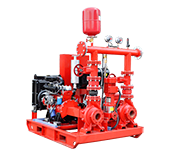
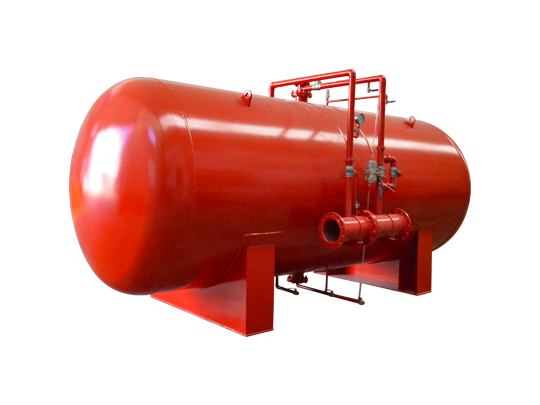
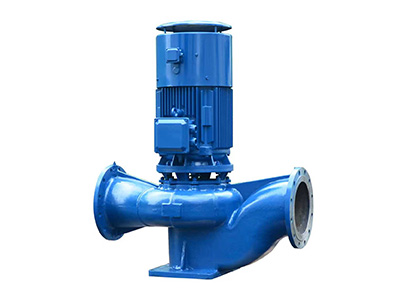
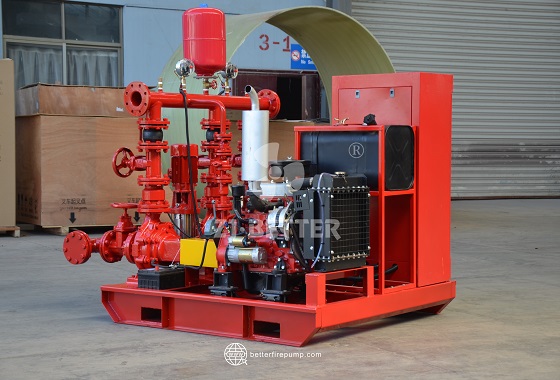
This system employs a multi-pump parallel operation structure. In practical operation, different pump sets can be started simultaneously or in batches according to demand, thereby achieving a large flow output capacity to meet the high water supply requirements of large-scale fire-fighting systems. Simultaneously, the multi-pump structure possesses inherent redundancy advantages; when one pump fails, the remaining pump sets can continue to operate, ensuring uninterrupted water supply and significantly improving the overall system reliability and safety.
2. Intelligent Control System Enables Precise Pressure Regulation
The core of the system lies in its advanced intelligent control unit. By collecting real-time data on pipeline pressure, flow rate, and equipment operating status, it automatically adjusts the number and sequence of pumps in operation, ensuring the system pressure remains within a set range. This precise regulation effectively avoids system shocks caused by excessive pressure fluctuations, while simultaneously improving water supply stability.
3. Staged Start-up Technology Reduces Power Grid Impact and Equipment Wear
The multi-pump system employs a staged start-up method, gradually activating pumps according to actual needs. This avoids the impact of instantaneous high currents on the power grid and reduces mechanical shock damage to equipment. This technology not only extends equipment lifespan but also improves overall operational stability.
4. Automated Operation Reduces Human Intervention
Through a highly integrated control system, the equipment achieves fully automated operation management. It automatically starts upon detecting a pressure drop or fire signal and automatically stops after returning to normal operation. This automation significantly reduces manual operation, improving system response speed and operational efficiency.
5. Pressure Balancing Technology Optimizes Pipeline Network Operation
The system utilizes intelligent algorithms to coordinate the operation of each pump unit, ensuring a uniform distribution of water supply pressure throughout the pipeline network. This avoids problems such as excessively high or low local pressure, thereby improving the overall stability and safety of the fire protection system.
6. High-Efficiency Hydraulic Design Enhances Overall Water Supply Efficiency
Each pump employs an optimized hydraulic model design to ensure high-efficiency output during operation. Multiple pumps working in tandem further enhance the overall system efficiency, meeting high flow demands while reducing energy loss.
7. Modular Design Facilitates Expansion and Maintenance
The system adopts a modular structure design, allowing for flexible configuration and expansion of each pump unit and control unit according to project needs, suitable for fire protection projects of varying scales. The modular design also facilitates equipment maintenance and reduces downtime.
8. Multiple Protection Mechanisms Ensure Safe System Operation
The equipment is equipped with comprehensive protection functions, including overload protection, phase loss protection, and abnormal pressure protection. In abnormal situations, timely measures can be taken to prevent equipment damage and ensure system safety.
9. Widely Applicable to Complex Firefighting Scenarios
This system is suitable for various scenarios such as large commercial complexes, industrial parks, high-rise buildings, and municipal fire protection projects. It provides stable and reliable water supply support in these complex environments, making it an important component of modern fire protection systems.
10. Energy-Saving Operation Mode Reduces Long-Term Costs
By intelligently adjusting the number of operating pump sets, the system can dynamically adjust its operating status according to actual needs, avoiding unnecessary energy consumption. This significantly reduces energy costs and improves economic efficiency in the long run.
In summary, the intelligent control multi-pump fire protection system, through the combination of multi-pump collaborative operation and advanced control technology, achieves efficient water supply, pressure balance, and system redundancy. It not only meets the demands of modern fire protection engineering for high-performance equipment but also demonstrates significant advantages in energy saving and automation, representing an important development direction for future fire water supply systems.
 WhatsApp me