
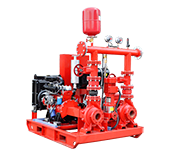
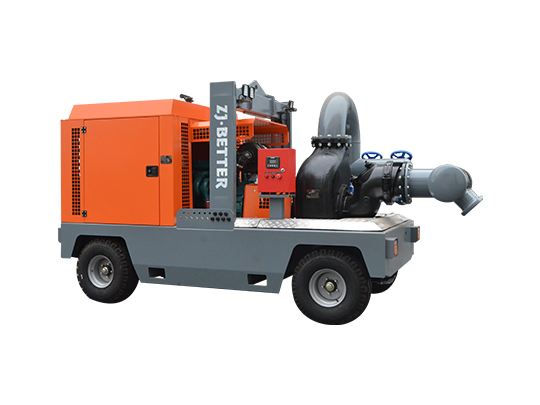
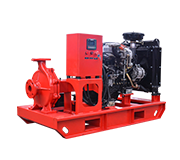
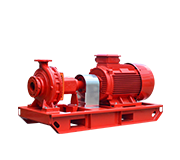
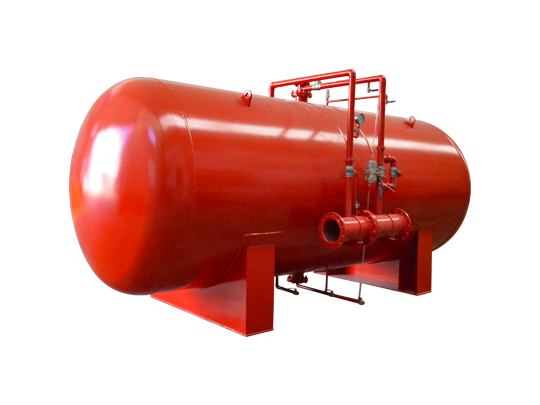

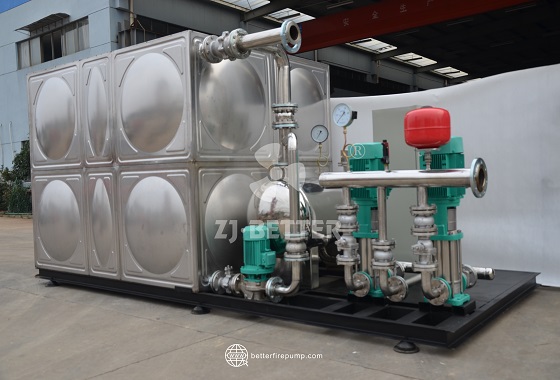
1. Improved Overall Reliability Brought by System Integration Design This type of fire pump product adopts a highly integrated system design concept, unifying the fire pump, power unit, control system, piping components, and safety protection devices on an integrated base or modular platform. Compared to traditional decentralized installation methods, this integrated structure allows for complete machine commissioning and linkage testing before leaving the factory, significantly reducing on-site installation errors. The scientifically and rationally routed internal piping effectively reduces local hydraulic losses and improves overall delivery efficiency. Meanwhile, the unified structural design facilitates overall stress analysis and seismic reinforcement, ensuring stable operation even under high-speed operation or sudden loading conditions, providing a continuous and reliable power supply for fire-fighting water supply.
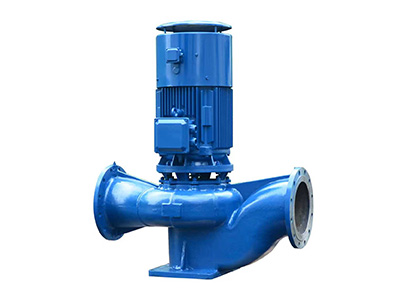
2. High-performance fire pump body ensures stable water output. The core configuration of the product is a high-performance centrifugal pump or vertical multistage pump specifically designed for fire-fighting applications. The pump body structure fully considers the special requirements of high flow rate, high head, and long service life. The impeller adopts an optimized hydraulic model design to ensure good efficiency curve and cavitation resistance under rated operating conditions. The pump shaft and sealing structure are made of wear-resistant and high-temperature resistant materials, maintaining stability under frequent start-stop or sudden full-load operation conditions. Through precise hydraulic matching design, this fire pump can quickly build up pressure after system startup, ensuring that the sprinkler heads at the end of the fire pipeline network receive effective water in the shortest possible time.
3. Power system configuration meets emergency and continuous operation needs. The power system is a key guarantee for the reliable operation of the fire pump system. This type of product is typically configured with either electric motor drive or internal combustion engine drive schemes depending on the operating environment, fully meeting the power supply requirements of different locations. Electric drive systems offer advantages such as rapid start-up, stable operation, and low maintenance costs, making them suitable for buildings or industrial parks with reliable power supply. Internal combustion engine drive systems, on the other hand, can operate independently even during power outages, ensuring uninterrupted fire water supply in critical situations. A high-precision coupling connects the power unit and pump body, effectively reducing vibration and energy loss and extending system lifespan.
4. Intelligent Control System Enhances Response Speed and Safety Modern fire pump systems are no longer limited to simple manual start-stop modes but achieve automated management through intelligent control systems. This product is equipped with a professional fire control cabinet, integrating functions such as pressure monitoring, operational status feedback, fault alarms, and remote linkage interfaces. When the pipeline pressure drops abnormally or a fire signal is triggered, the system can automatically start the fire pump to quickly restore pipeline pressure. Simultaneously, the control system has multiple logic protection mechanisms, which can automatically switch operating modes or issue alarm information under abnormal conditions, effectively reducing the risk of misoperation and equipment damage.
5. Modular Piping Design Improves System Maintenance Ease In the long-term operation of fire protection projects, ease of maintenance directly affects system reliability. This type of fire pump adopts a modular design in its piping, clearly defining the inlet, outlet, bypass, and test pipelines. Key valves, pressure gauges, and test interfaces are centrally located for convenient daily inspections and functional testing. The modular structure not only shortens maintenance time but also reduces the risk of system-wide downtime due to partial failures. During annual fire inspections or system upgrades, relevant components can be quickly disassembled and reassembled, significantly improving operational efficiency.
6. Pressure Stabilization and Water Replenishment Functions Ensure Long-Term System Utilization Fire protection systems typically operate under long-term utilization conditions during non-fire situations, making pipeline pressure stability crucial. This type of product can work in conjunction with pressure-stabilizing pumps or water replenishment devices to automatically compensate for minor leaks or pressure fluctuations in the pipeline network. Through reasonable pressure control logic, the system can maintain pipeline pressure without starting the main fire pump, reducing mechanical wear caused by frequent start-stop cycles of the main pump. This design not only extends the service life of the main pump but also ensures that the main pump can operate in optimal condition during a fire.
7. Structural Protection Design Adapts to Complex Installation Environments
Fire pumps are often installed in pump rooms, basements, or outdoor environments, placing high demands on equipment protection. This type of product's structural design fully considers dustproofing, moisture-proofing, and corrosion resistance, with key components employing protective coatings or sealed structures. The base structure possesses excellent load-bearing and shock-resistant capabilities, adaptable to various foundation conditions. For outdoor or semi-open environment installations, the system can be equipped with protective covers or enclosure structures to effectively resist rainwater, high temperatures, and dust erosion, ensuring stable operation in harsh environments.
8. Compliant with Multiple Fire Protection Codes and Engineering Application Standards
In the field of fire protection engineering, product compliance is a crucial selection criterion. This type of fire pump system strictly adheres to relevant fire protection technical specifications and engineering standards during design and manufacturing, systematically verifying flow rate, head, start-stop performance, and durability. Through standardized interface design, the system can be easily connected to various fire protection pipe networks and alarm systems, meeting the engineering needs of different projects. Standardized design not only enhances the product's competitiveness in engineering bidding but also provides reliable guarantees for later acceptance and long-term operation.
9. Widely Applicable to Various Firefighting Applications
With its flexible configuration options and stable performance, this type of fire pump can be widely used in various scenarios such as high-rise buildings, industrial plants, warehousing and logistics centers, municipal infrastructure, and energy projects. In high-rise buildings, its high-lift characteristic effectively solves the problem of vertical water supply; in industrial sites, it can meet the needs of large flow rates and long-term water supply. Through parameter optimization for different projects, this fire pump system can play a stable and reliable role in fire extinguishing under various complex working conditions.
10. Long-Term Investment Advantages Based on Life Cycle Value
From a project construction perspective, a fire pump system is not just a one-time purchase of equipment, but also a crucial infrastructure for long-term operation. This type of product fully considers equipment lifespan, maintenance costs, and operational stability during the design phase, achieving a low life cycle cost through high-quality components and reasonable system configuration. Stable and reliable operation reduces the number of sudden failures and emergency repairs, lowering operational risks. For owners and contractors, this long-term value makes the fire pump system a preferred solution that combines safety and economy.
In summary, the fire pump products corresponding to the tenth heading, with their integrated structure, high-performance pump body, reliable power configuration, and intelligent control system, fully meet the high standards of safety, stability, and intelligence required by modern fire protection engineering. Whether in high-rise buildings or complex industrial settings, this type of fire pump system can provide continuous and reliable fire water supply. Through scientific design and standardized manufacturing, it not only improves fire response efficiency but also lays a solid foundation for the long-term stable operation of fire protection systems, making it an indispensable core piece of equipment in modern fire protection engineering.
 WhatsApp me