

1. Vertical Structure Design Improves Space Utilization Efficiency
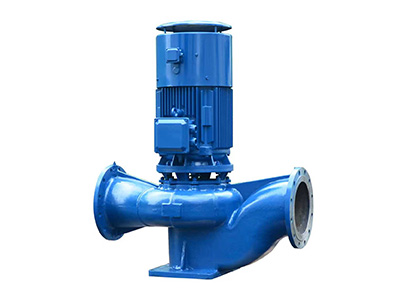
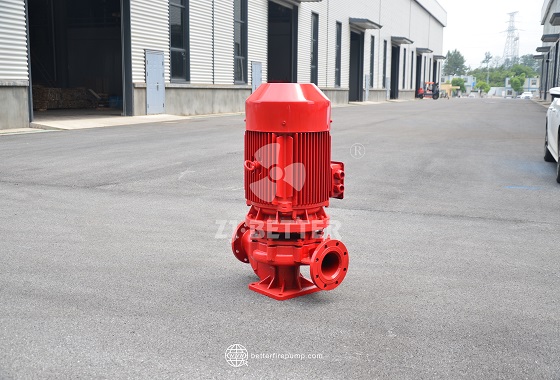
Industrial fire protection machine rooms typically house numerous devices, especially in large factories, commercial complexes, and underground facilities where installation space is often very limited. Vertical fire pumps, with their vertical structure design, occupy less space compared to traditional horizontal fire pumps, effectively improving the space utilization of the fire protection machine room. Because the motor and pump body are arranged vertically, the equipment installation is more compact, allowing for the deployment of an efficient fire water supply system within limited spaces. This structural advantage is particularly evident in underground machine rooms of high-rise buildings, underground parking lots, and space-constrained industrial plants. Furthermore, the vertical structure effectively reduces complex piping turns, improving the efficiency of the fire protection network layout. The overall equipment layout is neater, facilitating future maintenance and system expansion. As modern buildings increasingly demand higher space utilization, the compact structure of vertical fire pumps has become one of the important development directions in modern fire protection engineering.
2. High-Efficiency Water Supply Performance Meets Industrial Fire Protection Needs
Industrial fire protection systems typically require the provision of high-flow, high-pressure fire water supply within a short period to meet the operational needs of sprinkler systems, fire hydrant systems, and special fire extinguishing devices. Vertical fire pumps employ optimized hydraulic models and high-efficiency impeller structures, enabling stable and efficient water supply even under complex operating conditions. They can provide different flow rate and head configurations to meet the application needs of various industrial fire protection scenarios, tailored to different project requirements. In large warehousing and logistics centers, chemical plants, and manufacturing plants, fire protection pipe networks cover a wide area, with some areas requiring long water supply distances. Vertical fire pumps maintain stable pressure output, ensuring rapid delivery of fire water to critical areas. High-efficiency water supply not only improves fire suppression efficiency but also effectively reduces the risk of fire spread, providing a more reliable water supply guarantee for modern industrial fire protection systems.
3. Stable and Continuous Operation Enhances Fire Protection Reliability
The most important characteristic of fire protection equipment is its ability to operate stably and reliably during critical moments. Industrial fire protection systems often require equipment to remain operational for extended periods and operate under continuous high loads after a fire breaks out; therefore, equipment stability is crucial. Vertical fire pumps typically utilize industrial-grade motors, high-strength pump shafts, and wear-resistant bearing structures, effectively reducing mechanical wear caused by prolonged operation. Optimized dynamic balancing design further reduces equipment vibration and improves overall operational stability. For high-risk locations such as industrial plants, petrochemical plants, and power facilities, the shutdown of fire protection systems can pose serious safety hazards. Therefore, vertical fire pumps are designed with continuous operation and long-term reliability in mind. Some units are also equipped with automatic cooling and temperature protection systems to further enhance continuous operation safety and ensure a stable water supply in emergencies.
4. Automatic Control Systems Enhance Fire Response Speed
Modern industrial fire protection systems increasingly emphasize intelligent and automated management capabilities. Vertical fire pumps are typically equipped with intelligent control cabinets, enabling automatic detection, automatic start/stop, fault alarms, and remote monitoring. When the fire pipeline pressure drops or the fire alarm system issues a start signal, the equipment can quickly and automatically start, achieving a rapid response from the fire protection system. Compared to traditional manual operation, automatic control systems can significantly shorten the initial fire response time. Intelligent control systems can also monitor current, voltage, pressure, and equipment operating status in real time, automatically alarming in case of abnormalities, improving system operational safety. For large industrial parks and multi-building projects, centralized intelligent control can also improve the overall management efficiency of the fire protection system, achieving more efficient fire safety management.
5. Energy-Saving Operation Reduces Long-Term Operating Costs
As modern industrial projects increasingly demand energy conservation and environmental protection, the energy consumption of fire-fighting equipment is receiving growing attention. Vertical fire pumps typically employ high-efficiency energy-saving designs to reduce long-term operating costs. High-efficiency motors and optimized flow channel structures reduce energy loss and improve overall water supply efficiency. Simultaneously, intelligent variable frequency control technology automatically adjusts equipment operation based on changes in fire pipeline pressure, avoiding energy waste caused by frequent start-stop cycles of traditional fixed-speed equipment. In large commercial complexes, industrial parks, and data centers, fire protection systems often require long-term operational lifespans; therefore, energy efficiency is crucial for reducing operating expenses. Energy-saving design not only aligns with modern green building trends but also effectively reduces mechanical wear during equipment operation, improving long-term equipment stability.
6. Modular Design Simplifies Installation and Maintenance
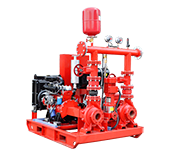
Modern industrial fire protection engineering increasingly emphasizes equipment integration and modular design. Vertical fire pump systems typically utilize skid-mounted or modular structures, integrating the fire pump, motor, control cabinet, and piping components onto a unified base platform. This design significantly reduces on-site installation work and improves project deployment efficiency. For large-scale industrial projects with tight deadlines, modular structures can effectively shorten construction cycles. Simultaneously, a unified structural design simplifies subsequent maintenance processes. A more rational equipment layout allows maintenance personnel to quickly access critical components, improving maintenance efficiency and reducing downtime. Modular fire protection systems also possess strong scalability, allowing for flexible adjustments to equipment configurations to meet the needs of different projects, making them more adaptable to the demands of modern, complex fire protection engineering applications.
7. Corrosion Resistance for Complex Industrial Environments
Industrial fire protection systems typically operate in complex environments with high temperatures, high humidity, dust, and high levels of corrosive media. Therefore, the corrosion resistance of the equipment directly affects its overall service life and safety. Modern vertical fire pumps typically employ anti-corrosion coatings, stainless steel impellers, and corrosion-resistant sealing materials, effectively improving their corrosion resistance. This corrosion resistance is particularly important in coastal areas, petrochemical plants, and underground facilities. High-quality anti-corrosion design not only reduces the rate of equipment aging but also lowers the frequency of subsequent maintenance and the cost of parts replacement. For large-scale industrial projects, long-term stable operation translates to higher economic benefits and lower maintenance costs. As industrial environments become increasingly complex, corrosion resistance has become one of the key indicators for evaluating the quality of fire pumps.
8. High Head Capacity Meets the Needs of Complex Firefighting Networks
In high-rise buildings, large industrial plants, and long-distance firefighting network systems, firefighting equipment must possess a strong high-head water supply capacity. Vertical fire pumps, through multi-stage impellers and optimized hydraulic design, can achieve stable high-head output, meeting the high-pressure water supply requirements of complex firefighting systems. Even when multiple fire zones are activated simultaneously, the equipment can maintain a stable pressure output. For petrochemical, power plant, and large-scale warehousing projects, high-head water supply capacity ensures a stable fire water source for distant areas, thereby improving overall fire extinguishing efficiency. This stable high-pressure water supply capacity is also one of the important reasons why modern industrial firefighting systems choose vertical fire pumps.
9. Widely Applicable to Various Industrial Firefighting Scenarios
Vertical fire pumps have strong adaptability to various scenarios and can be widely used in industrial plants, commercial buildings, warehousing and logistics centers, ports and docks, petrochemical plants, power facilities, and underground engineering projects. In high-rise buildings, equipment can meet the fire water supply needs of high-rise areas; in industrial parks, it can provide a stable water supply for large fire pipe networks; in underground projects, it can achieve efficient space utilization through a compact structure. Furthermore, in critical locations such as data centers, hospitals, and large transportation hubs, where the stability requirements of fire protection systems are extremely high, vertical fire pumps also play a crucial role. With the continuous expansion of modern infrastructure, the application scope of the vertical fire pump market is also continuously growing.
10. Smart Fire Protection Drives Future Upgrades of Vertical Fire Pumps
With the rapid development of smart cities and digital industry, modern fire protection equipment is upgrading towards intelligence. Future vertical fire pump systems will place greater emphasis on digital management and remote monitoring capabilities. The application of IoT, big data, and cloud platform technologies will enable fire pumps to have real-time monitoring, predictive maintenance, and remote diagnostic capabilities. Managers can use intelligent platforms to monitor equipment operating status in real time, improving the overall management efficiency of the fire protection system. At the same time, future equipment will be more energy-efficient, modular, and automated, better adapting to the needs of modern industrial fire protection engineering. The development of smart fire protection will further drive the continuous upgrading of vertical fire pumps towards greater efficiency, safety, and intelligence.
Vertical fire pumps, with their compact structure, efficient water supply, stable operation, and intelligent control, have become core equipment in modern industrial fire protection networks. They not only meet the high-flow, high-lift fire water supply demands of complex industrial scenarios but also improve the overall efficiency and reliability of fire protection systems through automated and energy-saving designs. With the continuous expansion of modern industry and the ongoing development of smart fire protection technologies, vertical fire pumps will play an increasingly important role in industrial plants, commercial complexes, petrochemical plants, power facilities, and large-scale infrastructure projects. In the future, more intelligent, efficient, and energy-saving vertical fire pump systems will continue to drive modern industrial fire protection engineering towards higher safety standards.
 WhatsApp me