
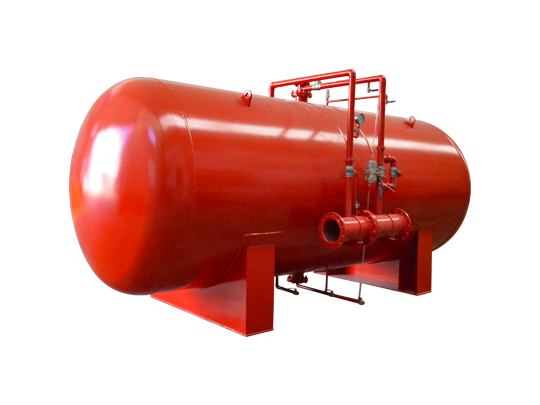
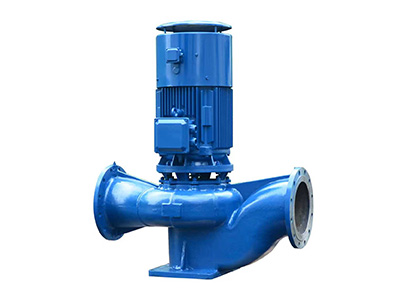

1. Integrated Equipment Structure
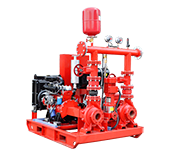
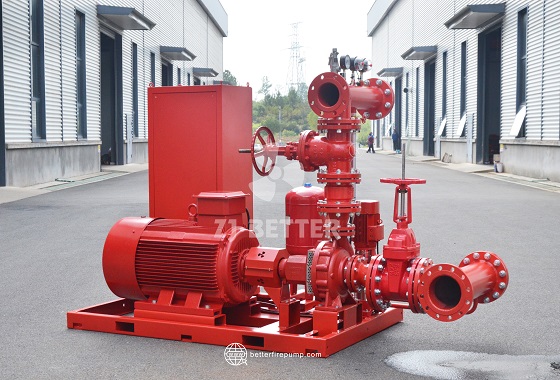
The system features a centralized layout of the fire pump, drive motor, control cabinet, valves, piping, and pressure monitoring components, offering a more streamlined structure compared to the installation of separate, independent units. Functional components are logically arranged according to the fire water supply process, facilitating transportation, positioning, installation, and subsequent commissioning.
2. Stable Electric Motor Drive
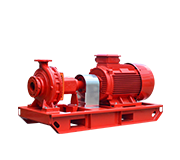
The electric fire pump utilizes a motor to provide continuous mechanical power. Motor power is selected based on design flow rate, head, pressure, and pump type to ensure the drive system matches the pump's performance, thereby meeting the supply requirements of various fire-fighting piping networks.
3. Efficient Fire Pumping
The fire pump pressurizes the water flow via a rotating impeller, delivering water from the source to the fire-fighting network and supplying the necessary volume to facilities such as fire hydrants and sprinkler systems. Depending on project parameters, various pump configurations—such as single-stage, end-suction, horizontal split-case (double-suction), or multi-stage pumps—can be selected to accommodate specific flow and head requirements.
4. Centralized Valve Configuration
Pipeline components such as gate valves and check valves are centrally configured within the unit to control water flow direction and equipment operation. Valves are logically connected to the pump's inlet and outlet piping, creating a clear flow path and facilitating on-site inspection, maintenance, and necessary operational adjustments.
5. Integrated Inlet and Outlet Piping
The system features a centralized layout of suction piping, discharge piping, and associated fittings, establishing a clear connection between the fire pump and the on-site fire-fighting piping network. Proper pipe sizing and layout help minimize unnecessary local resistance and ensure stable flow conditions for the fire-fighting water supply.
6. Centralized Control and Management
The control cabinet is centrally mounted on the unit's base. Depending on the specific system configuration, it enables functions such as fire pump start/stop control, operational status display, and other control operations. It also integrates components like pressure sensors and gauges to monitor equipment status, thereby enhancing the ease of operation and management of the fire water supply system.
7. Real-time Pressure Monitoring
The equipment can be fitted with detection components—such as pressure gauges and sensors—to monitor operating pressures within the fire-fighting piping network and the pump assembly. When system pressure fluctuates, these components transmit signals to the control system, providing the necessary data for automatic operation and pressure management.
8. Centralized Installation on a Common Base
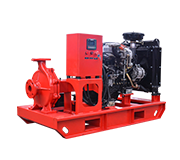
Components such as the electric fire pump, control cabinet, piping, and valves are centrally mounted on a common base, forming a complete skid-mounted unit. Factory-based centralized assembly reduces the workload associated with positioning and connecting multiple independent pieces of equipment on-site, while also facilitating integrated transport, installation, and future maintenance.
9. Flexible Parameter Configuration
Equipment specifications—including flow rate, head, pressure, motor power, pump type, and inlet/outlet dimensions—can be selected to meet specific fire engineering design requirements. Since building heights, fire water demand, and piping network resistance vary across projects, the equipment is matched to actual design parameters to ensure its output aligns with system needs.
10. Suitable for Various Fire Engineering Applications
This complete electric fire water supply system is suitable for a wide range of settings, including industrial plants, warehouses, logistics facilities, commercial and public buildings, airports, terminals, and power facilities. By adjusting pump types, motor power, control methods, and piping configurations, the system can be adapted to projects of varying scales and fire water supply requirements.
By centrally configuring the electric motor, fire pump, control cabinet, valves, and inlet/outlet piping, this complete electric fire water supply system integrates power drive, pumping, piping connections, and operational control into a unified unit. Its integrated structure minimizes the need for on-site installation of scattered components and complex piping connections; centralized control and pressure monitoring enhance operational management efficiency; and flexible configuration options for pump type, flow rate, head, and power ensure the system meets diverse fire engineering requirements. In practical applications, equipment selection should be based on a professional assessment of the fire design flow rate, head, pipeline network pressure, water source conditions, and installation environment to ensure that the equipment's performance is reasonably matched with the overall fire water supply system.
 WhatsApp me