

1. Independent Diesel Power
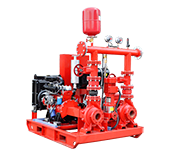
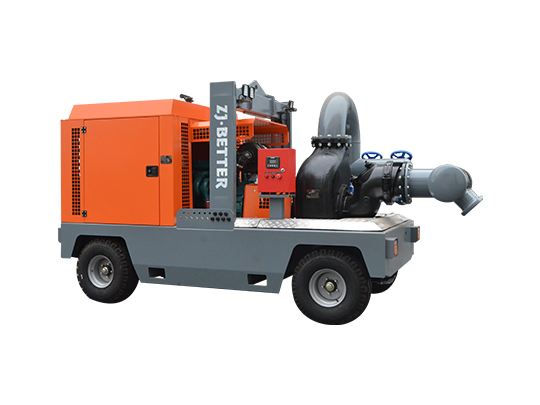
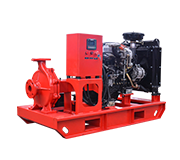
The diesel engine serves as an independent power source for the main fire pump, reducing reliance on fixed on-site power supplies. When a project requires backup power or emergency water supply capabilities, the diesel drive provides the necessary mechanical power; the engine's power rating is matched to the pump unit's performance parameters.
2. Efficient Water Delivery by Main Fire Pump
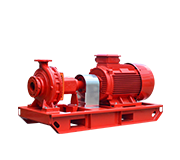
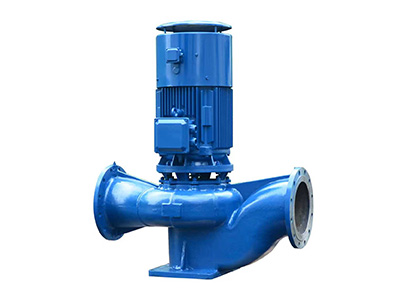
The main fire pump handles the system's primary pressurization and water delivery tasks; the appropriate pump model is selected based on the required flow rate, head, and pressure. Depending on the project, configurations such as end-suction pumps, horizontal split-case (double-suction) pumps, or multistage pumps may be used to align pump performance with the fire network's actual hydraulic requirements.
3. Automatic Control and Operation
Equipped with a control cabinet, the system enables centralized management of the diesel fire pump, pressure-maintaining pump, and auxiliary equipment, allowing for automatic or manual operation based on system configuration. When pressure changes occur in the fire network, signals from pressure sensors are transmitted to the control system, which executes the corresponding start-up sequence based on control logic.
4. Real-Time Pressure Monitoring
The system can be equipped with pressure gauges, pressure sensors, and other detection components to monitor operating pressures within the fire network and pump unit. Pressure data supports automatic control and operational management, while also allowing operators to track the system's current status and promptly detect anomalies such as abnormal pressure fluctuations.
5. Auxiliary Operation via Pressure-Maintaining Pump
In accordance with fire system design requirements, the unit can include a pressure-maintaining pump to handle minor water usage and slight pressure drops during routine operation. When system pressure fluctuates, the pressure-maintaining pump compensates for the pressure loss, thereby preventing the main fire pump from starting frequently due to minor pressure variations.
6. Pressure Tank Stabilization System
6. Pressure Tank Stabilization System
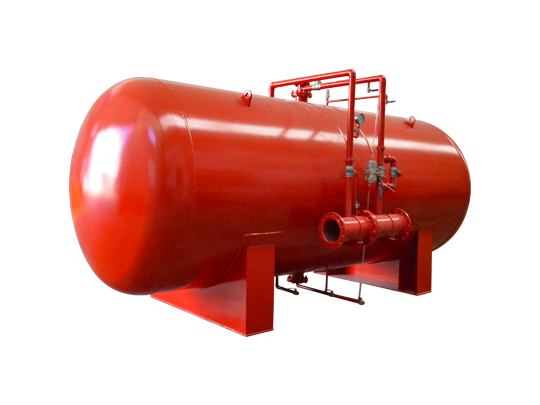
The complete system can be configured with a pressure tank based on specific design requirements. By storing fire-fighting water at a set pressure, the tank acts as a buffer against pressure fluctuations in the piping network and operates in tandem with the pressure-maintenance pump. The tank's capacity and operating pressure are selected based on the fire pump's head and the design pressure of the entire piping network.
7. Collaborative Operation of Multiple Components
The diesel engine provides power output, the main fire pump handles primary water supply, and the pressure-maintenance pump sustains system pressure during normal operation. Pressure sensors provide monitoring signals, while the control cabinet manages equipment operation. These functional components work together according to the system's control logic to form a complete fire-fighting water supply unit.
8. Skid-Mounted Integrated Structure
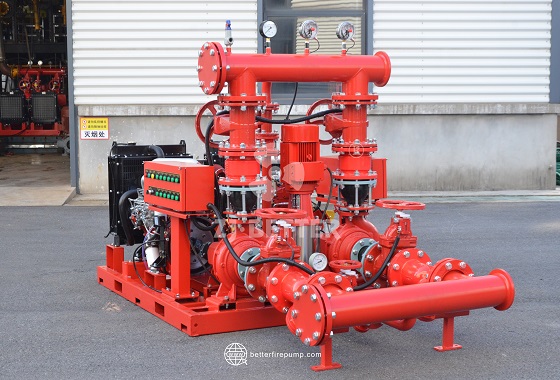
The equipment features an integrated design where the diesel engine, fire pump, control cabinet, pressure components, valves, and associated piping are mounted on a single common base. This structure facilitates transportation, positioning, and on-site installation, while also reducing the amount of on-site connection work required between separate pieces of equipment.
9. Flexible Matching of Engineering Parameters
The diesel-powered fire pump system is not limited to a single, fixed specification; pump models and supporting parameters can be selected based on project-specific requirements such as flow rate, head, pressure, pipe diameter, power needs, and installation environment. The product series covers a wide range of flow rates and heads, with actual configurations determined by the specific design conditions of the fire protection project.
10. Suitable for Various Fire Protection Projects
This type of equipment is suitable for fire-fighting water supply in settings such as industrial plants, warehouses, docks, airports, petrochemical facilities, power plants, marine vessels, and large-scale buildings. The pump assembly structure, diesel engine power, and control configuration can be adjusted to accommodate different water sources, piping networks, and installation environments, ensuring specific project requirements are met.
By combining independent diesel power, a main fire pump, a pressure-maintenance pump, pressure monitoring, and automatic control, the diesel-powered fire pump system integrates power generation, pumping, pressure management, and equipment control into a single, complete unit. Its core advantage lies in the ability to configure the system flexibly based on actual engineering parameters and to minimize on-site installation and connection work through its centralized structure. For industrial, warehousing, and large-scale fire protection projects requiring independent power support and automated water supply management, suitable equipment solutions can be selected based on flow rate, head, pressure, and installation conditions.
 WhatsApp me