

1. Diesel Engine Drive: Providing Independent Power Support
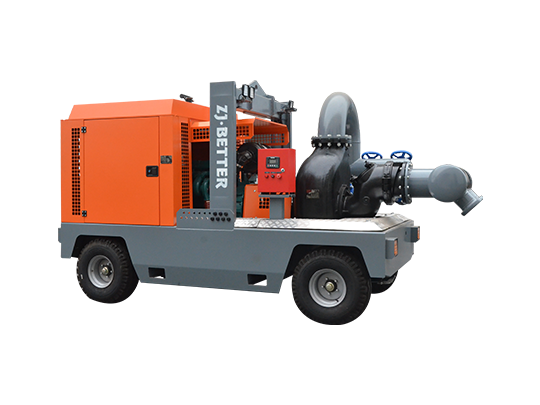
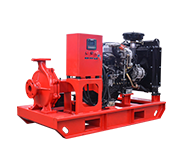
The diesel engine serves as the primary power source for the entire unit, driving the fire pump via a transmission mechanism. By matching the engine’s power output and rotational speed with the pump’s performance characteristics, the system receives the necessary power to meet fire-fighting requirements.
2. Fire Pump Design: Meeting Hydraulic Transport Needs
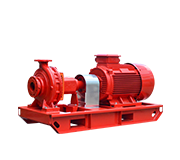
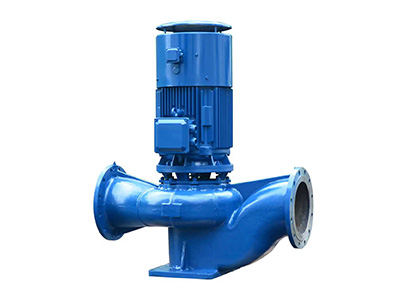
The main fire pump is responsible for delivering water from the source into the fire-fighting piping network. Depending on the project’s flow rate, head, and installation constraints, various centrifugal pump configurations—such as end-suction or horizontal split-case (double-suction) designs—can be selected to satisfy specific hydraulic demands.
3. Multi-Component Integration: Optimizing Overall Equipment Configuration
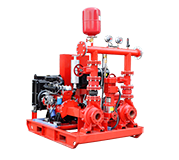
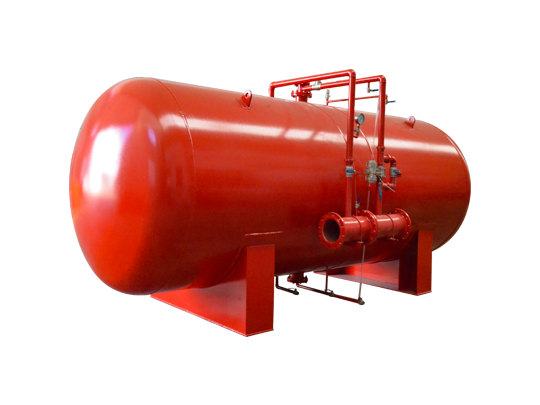
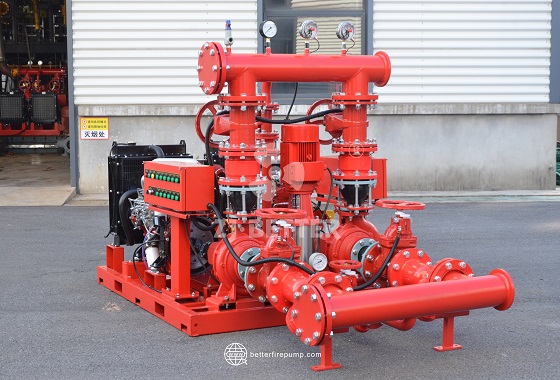
The system can be configured to include a diesel engine, a main fire pump, an auxiliary jockey pump (for pressure maintenance), a pressure tank, a control cabinet, and various piping accessories. These components are arranged logically based on their functions, creating a cohesive and complete fire-fighting water supply unit.
4. Piping System Design: Enhancing Connection Convenience
The unit can be equipped with common suction and discharge piping, flanges, flexible joints, and other essential connection hardware. Proper planning of pipe diameters, routing, and interface positioning ensures seamless integration with the on-site fire-fighting piping network.
5. Valve Configuration: Facilitating Water Flow Management
Components such as check valves, gate valves, and other specialized valves are selected according to the system design. These valves perform essential functions—such as isolating flow, regulating operation, or preventing backflow—thereby enhancing the overall functionality of the pump assembly’s piping network.
6. Pressure Monitoring Components: Tracking System Operational Status
6. Pressure Monitoring Components: Tracking System Operational Status
Pressure gauges and sensors provide essential pressure monitoring data for the system. Operators can use these instruments to observe the equipment's operating pressure, which serves as a key reference for system commissioning, operational checks, and routine maintenance.
7. Control Cabinet Configuration: Enabling Centralized Operation and Management
The control cabinet manages the startup, operation, and various control functions of the fire pump assembly. Depending on the project requirements, the system can be configured for manual or automatic control, with integrated monitoring and protection features tailored to the specific equipment.
8. Auxiliary Pressure-Stabilizing Equipment: Maintaining Pipeline Network Pressure
In accordance with fire protection system designs, the setup may include a pressure-stabilizing pump and a pressure tank. The pressure-stabilizing pump compensates for minor pressure fluctuations within the pipeline network, while the pressure tank provides a buffer, preventing the main fire pump from starting too frequently due to slight pressure variations.
9. Integrated Skid-Mounted Structure: Facilitating Transport and On-Site Installation
The diesel engine, fire pump, and related auxiliary components can be mounted together on a common steel base. This integrated skid-mounted design simplifies transportation, on-site positioning, and installation, while reducing the need for complex field connections between individual components.
10. Flexible Selection: Meeting Diverse Engineering Application Requirements
Different projects have unique requirements regarding flow rate, head, power, pipe diameter, and control methods. Equipment can be selected and configured based on the specific fire protection design parameters for various environments, such as warehouses, ports, airports, power plants, and petrochemical facilities.
The core value of a multi-component diesel fire pump system lies in the effective integration of diesel power, fire pumps, auxiliary pressure-stabilizing equipment, piping, valves, and control components. By optimizing the configuration of the main pump and auxiliary equipment—and refining the piping connections and pressure monitoring capabilities—a more streamlined equipment structure and system layout can be achieved. Professional selection, based on the specific flow rate, head, and installation conditions of a given project, ensures the delivery of an appropriate fire-water supply solution for industrial and large-scale facilities.
 WhatsApp me