

1. Modular Design Improves Fire Protection System Integration Efficiency
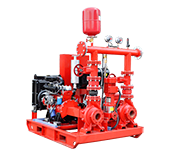
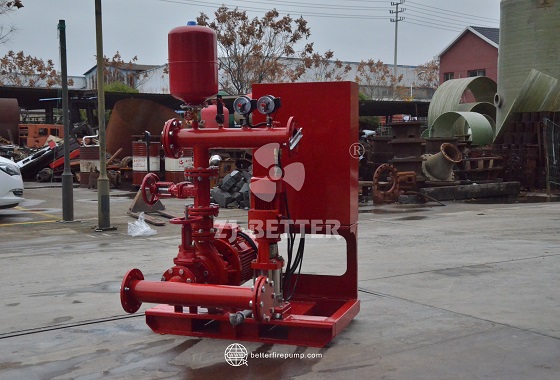
One of the biggest features of modular fire pump systems is their highly integrated design. Traditional fire pump rooms typically require extensive on-site equipment assembly and piping welding, resulting in long construction periods and susceptibility to site environmental limitations. Modular systems, on the other hand, pre-integrate fire pumps, valves, pipes, control systems, and pressure stabilizing devices onto a unified base, forming a complete equipment unit. This design significantly improves project installation efficiency. Once the equipment arrives on site, only foundation fixing, inlet/outlet water connections, and electrical wiring need to be completed before commissioning, greatly reducing construction time. Simultaneously, factory prefabrication effectively reduces on-site installation errors, ensuring the overall stability of the system. For large industrial projects, commercial complexes, and overseas projects, modular design also effectively reduces on-site labor input, improves construction safety, and reduces installation difficulty in complex environments. Therefore, modularization has become an important development direction for modern fire protection equipment.
2. Standardized Production Improves System Reliability
Modular fire pump systems adopt a standardized production model, with all key components undergoing unified processing, assembly, and testing in the factory. This production method effectively ensures consistent product quality. Traditional fire protection systems suffer from complex on-site construction conditions, and differences in processes between different construction teams can easily arise, affecting the overall performance of the equipment. Modular systems, manufactured to unified standards, ensure that each set of equipment remains stable in terms of flow rate, pressure, control logic, and safety performance. Furthermore, standardized design facilitates later component replacement and system upgrades. When a module requires maintenance, it can be directly disassembled and reassembled modularly, significantly shortening maintenance time. This design is particularly suitable for large-scale fire protection projects and long-term operation projects. For the modern fire protection industry, equipment reliability directly affects the stable operation of fire protection systems in emergencies, and modular standardized production is a key factor in improving system reliability.
3. Intelligent Control Becomes the Core Trend of Modular Systems
Modern fire protection engineering increasingly emphasizes intelligent management; therefore, modular fire pump systems are also developing towards intelligent control. Current modular fire protection systems typically integrate PLC control, automatic monitoring, remote communication, and fault alarm functions, enabling automatic start/stop of fire pumps, pressure regulation, data recording, and operational status monitoring.
Intelligent systems can monitor in real time:
* Pipeline pressure changes
* Pump unit operating status
* Current and voltage parameters
* Fault alarm information
* Water source status
In the event of a system anomaly, backup pumps can be automatically activated and alarms issued, improving the response speed of the fire protection system.
Furthermore, remote monitoring technology enables unattended management of fire pump rooms, particularly suitable for large industrial parks, warehousing and logistics bases, and cross-regional projects, further reducing manual maintenance costs.
4. Modular Structure Enhances System Expansion Capabilities
Traditional fire protection systems often require redesigning pipelines and equipment layouts during later expansion, which is not only costly but also complex to construct. Modular fire pump systems offer exceptional scalability.
The system can be flexibly expanded to meet project needs, including: main fire pump modules, standby pump modules, pressure-stabilizing pump modules, foam extinguishing modules, and diesel engine power modules. This flexible expansion allows the fire protection system to adapt to projects of varying sizes.
For example, when adding new factory buildings to a large industrial park, the fire protection system can be upgraded simply by adding the corresponding modules, without the need to completely dismantle the existing equipment, significantly reducing engineering modification costs.
Therefore, modular systems better meet the requirements of modern engineering for flexibility and sustainable development.
5. Saving installation space is a significant advantage.
Modern building space costs are increasingly high, especially in urban commercial buildings, underground pump rooms, and data centers, where fire protection equipment has very strict requirements for floor space control. Modular fire pump systems adopt a compact layout design, effectively reducing the equipment's footprint through optimized piping structure and equipment arrangement. Simultaneously, the integrated design reduces the need for on-site ancillary facilities, resulting in a cleaner and more standardized pump room layout. For projects with limited space, modular equipment not only improves space utilization but also reduces civil engineering construction costs, thereby enhancing the overall economic efficiency of the project.
6. Modular Diesel Engine Systems Enhance Emergency Response Capabilities
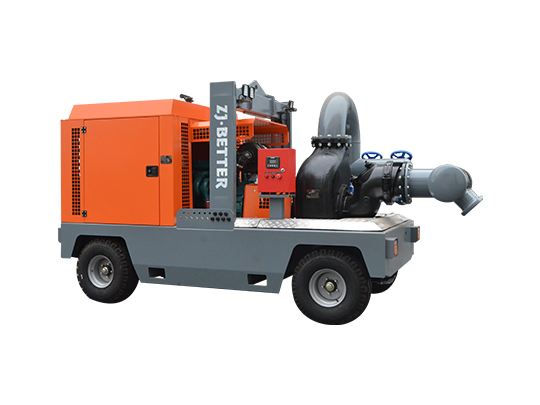
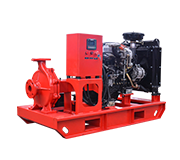
In modern fire protection engineering, diesel engine fire pump systems remain crucial emergency water supply equipment. Modular design gives diesel engine systems higher reliability and stronger independent operation capabilities.
Diesel engine modules typically integrate:
Diesel engine
Cooling system
Fuel system
Battery starting system
Automatic control module
Even in the event of a power outage, they can quickly start and continue operating.
Through modular integration design, diesel engine fire pumps are easier to transport, install, and maintain, while improving overall equipment stability. These systems are widely used in:
Industrial parks
Petrochemical projects
Port terminals
Power facilities
Large warehousing bases
Becoming an important safety guarantee in modern fire protection systems.
7. Modular Fire Protection Systems Are More Suitable for Overseas Projects
With the continuous growth of global infrastructure construction, more and more fire protection equipment is being used in overseas projects. Modular fire pump systems are well-suited for international project needs due to their convenient transportation and simple installation. Modular equipment can be transported in containers, reducing on-site construction work and simplifying installation in overseas projects. For areas with complex construction conditions or insufficient technical personnel, modular systems can significantly improve project delivery efficiency. Furthermore, factory pre-commissioning reduces on-site failure rates and improves overall project stability, giving it a significant advantage in the international fire protection engineering market.
8. Environmental Protection and Energy Conservation Become New Design Directions
Modern fire protection equipment not only focuses on performance but also increasingly emphasizes energy conservation and environmental protection. Modular fire pump systems, through optimized hydraulic structure and control logic, can effectively reduce energy consumption. For example: Variable frequency control technology; Intelligent pressure regulation; High-efficiency impeller design; Low-energy motor systems. These technologies reduce energy waste and improve system operating efficiency.
Simultaneously, modular structures reduce material waste, increase equipment lifecycle utilization, and better meet the requirements of green building and sustainable development.
9. Convenience of Maintenance Enhances Long-Term System Value
Fire protection equipment typically needs to be in a standby state for extended periods, making post-construction maintenance crucial. Modular fire pump systems employ a zoned structural design with clear connections between modules, allowing maintenance personnel to quickly locate problems.
Compared to traditional complex pump rooms, modular systems are easier to implement: Rapid component replacement; Independent module maintenance; System operation testing; Troubleshooting. This design not only reduces downtime but also effectively lowers long-term maintenance costs, increasing the overall value of the equipment.
10. Future Fire Protection Engineering Will Fully Embrace Modularization and Intelligence
10. Future Fire Protection Engineering Will Fully Embrace Modularization and Intelligence
With the continuous development of smart cities, industrial automation, and digital buildings, future fire protection systems will further evolve towards intelligence and modularization.
Future modular fire pump systems will place greater emphasis on:
Remote data management
AI fault diagnosis
Automatic linkage control
Cloud platform monitoring
Intelligent energy-saving management
Fire equipment will no longer be merely water supply devices, but will become an important component of the smart building safety system.
Modular design not only represents an upgrade in equipment structure, but also a transformation in the entire fire protection engineering concept.
Modular fire pump systems, with their advantages of high integration, intelligent control, flexible expansion, energy saving and environmental protection, and convenient maintenance, are becoming an important development trend in modern fire protection engineering. Whether in industrial, commercial, energy, or infrastructure sectors, modular fire protection systems have demonstrated higher efficiency, stronger reliability, and lower overall costs. With the continuous advancement of intelligent technologies, modular fire pump systems will play an even more crucial role in the field of modern fire safety.
 WhatsApp me