
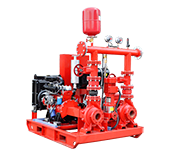
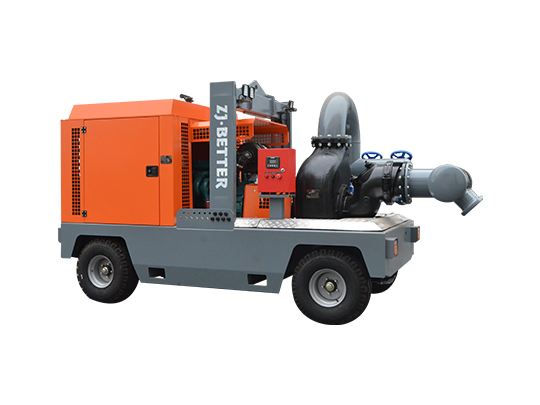
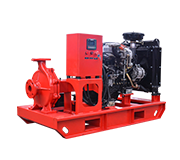
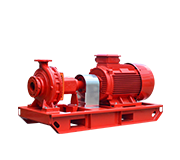

1. Diesel engine provides independent power
The unit utilizes a diesel engine to drive the fire pump, enabling operation via its own mechanical power when the fixed power supply fails or is restricted, thereby ensuring an independent power source for the fire protection system. Engine power is matched to the fire pump's requirements regarding flow rate, head, and operating conditions.
2. Fire pump ensures stable water delivery
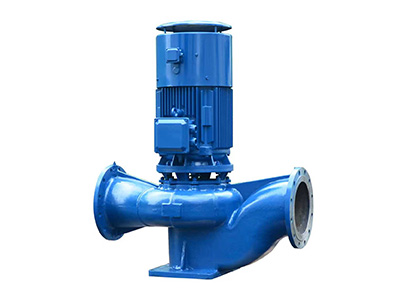
The fire pump serves as the core pumping component of the assembly; it converts mechanical energy into water pressure through impeller rotation, delivering the necessary flow and head to fire hydrants, sprinkler systems, and fire piping networks. Depending on project parameters, the pump configuration may be single-stage, end-suction, horizontal split-case (double-suction), or multi-stage.
3. Optimized matching of power and pump units
The diesel engine and fire pump are not merely combined; their power ratings must be matched based on design flow, head, pressure, and rotational speed. Proper power configuration ensures the engine output aligns with the pump's operational needs, guaranteeing stable performance while meeting fire water supply requirements.
4. Control cabinet for centralized management
The control cabinet centrally manages the diesel fire pump and auxiliary equipment. It supports automatic or manual control based on the specific configuration and manages the system using data such as operating status and pressure signals. Certain configurations include protective features—such as overload and overcurrent protection—to enhance ease of operation.
5. Pressure monitoring supports automatic operation
The unit can be equipped with monitoring components, such as pressure gauges and sensors, to track pressure levels within the fire piping network and the pump assembly. When system pressure fluctuates, detection signals are transmitted to the control system, providing the basis for automatic startup and operational management, thereby enabling the equipment to respond according to preset parameters.
6. Centralized Configuration of Piping and Valves
To meet project requirements, the equipment can integrate accessories such as check valves, gate valves, pressure gauges, pressure sensors, flanges, flexible joints, and inlet/outlet piping. This centralized layout clarifies the pump assembly structure and facilitates connection, commissioning, and pressure testing with the on-site fire protection piping network.
7. Skid-Mounted Base for Easy Installation
The diesel engine, fire pump, control cabinet, and associated piping are mounted on a common base, forming a complete skid-mounted unit. Following factory assembly and commissioning, on-site work is primarily limited to foundation positioning and connecting interfaces such as inlet and outlet piping, thereby reducing on-site assembly labor.
8. Compact Layout Maximizes Space Utilization
The integrated structure consolidates multiple functional components, reducing the installation footprint required for scattered equipment and centralizing the power, pumping, and control sections. This compact layout is highly adaptable for projects with limited fire pump room space or those requiring modular deployment.
9. Support for Various Project Parameter Configurations
Fire protection projects vary in their requirements for flow rate, head, pressure, power, and inlet/outlet dimensions; therefore, equipment can be selected based on specific fire protection designs. The diesel fire pump package offers flow rates ranging from approximately 30 to 9,000 GPM and heads from approximately 3 to 20 bar, with specific parameters determined by project design and actual operating conditions.
10. Suitable for Diverse Fire Water Supply Scenarios
The integrated diesel fire pump unit is suitable for facilities such as industrial plants, warehouses and logistics centers, commercial buildings, airports, terminals, power facilities, and petrochemical plants. For projects requiring independent power, a stable fire water supply, and centralized equipment management, a complete emergency fire water supply solution can be created by appropriately matching the diesel engine, fire pump, control system, and piping components.
By mounting the diesel engine, fire pump, control cabinet, pressure detection components, valves, and piping onto a unified base, the integrated diesel fire pump unit achieves a consolidated configuration for power supply, fire pumping, operational control, and piping connections. Independent diesel power reduces reliance on fixed power sources, while appropriately matched fire pumps meet varying flow rate and head requirements; additionally, control systems and pressure monitoring devices facilitate intuitive operational management. The integrated skid-mounted design minimizes on-site connection and installation work, simplifying transport, positioning, commissioning, and subsequent maintenance. By selecting the right model based on specific fire protection design parameters, the equipment provides reliable emergency water supply support for industrial, warehousing, commercial, and other critical fire protection projects.

 WhatsApp me