
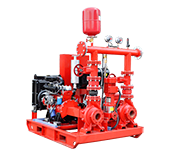
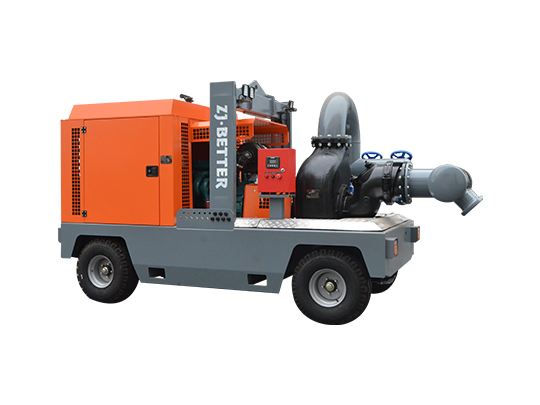
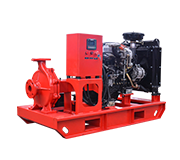
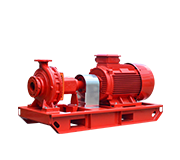
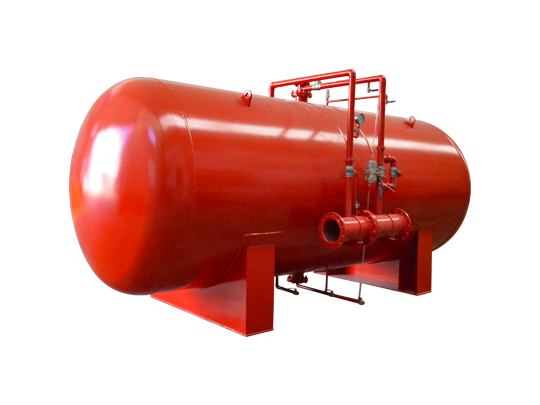
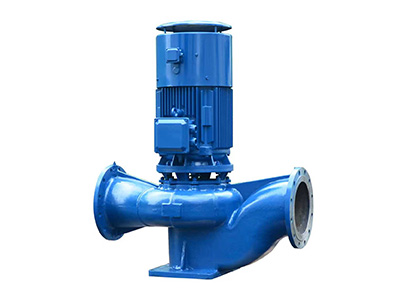

1. Diesel engine drive providing independent power support
Powered by a diesel engine, these fire pumps do not rely on electric motors for direct drive. This configuration is highly practical for projects where the external power supply is unstable or where backup power is required. Operational capabilities depend on factors such as engine power, the fuel system, the starting mechanism, and the overall design configuration of the unit.
2. Integrated structure optimizing equipment layout
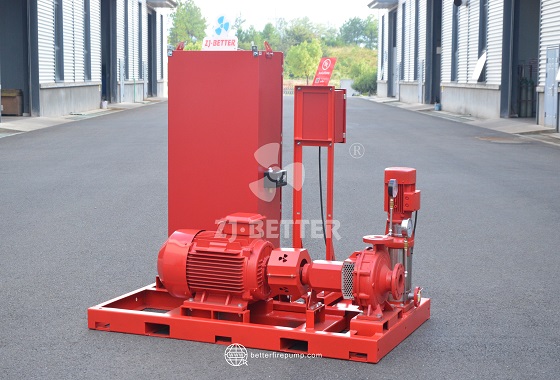
The pump unit features an integrated base design, mounting key components onto a single skid platform, which minimizes the workload associated with scattered on-site installation. This integrated structure facilitates transportation, positioning, and installation, while also simplifying the layout of the pump room. However, adequate space must still be reserved for maintenance access, ventilation, and piping connections during actual installation.
3. Core fire pump components meeting water supply system needs
The fire pump is the core component responsible for pressurizing and delivering water; its performance directly determines the flow rate and pressure of the fire-fighting water supply system. Selection should be based on building height, fire piping network resistance, design water demand, and water source conditions to determine the appropriate flow rate and head. Pump materials, sealing structures, and hydraulic performance must also align with the project's specific operating conditions.
4. Control cabinet configuration supporting operational management
The fire pump package can be equipped with a control cabinet tailored to project needs to coordinate and manage pump unit operations. Control functions must be compatible with the diesel engine, starting system, and overall fire system design. Before procurement, specific control functions, alarm methods, status displays, and interface requirements should be verified to ensure the system meets all operational and monitoring specifications. 5. Optimal Matching of Power Source and Pump for Operational Stability
The output power of the diesel engine must be matched with the fire pump’s flow rate, head, and rotational speed to meet water supply requirements under design operating conditions. A well-configured power system helps mitigate the adverse effects of improper loading on equipment performance. When selecting equipment, factors such as water source elevation, water transport distance, pipeline network pressure, and anticipated operating conditions should be considered holistically, rather than relying solely on engine power as a performance metric.
6. Pipeline and Valve Configuration for a Complete Water Supply System
The integrated equipment package can be configured with the necessary inlet/outlet piping, valves, and connection components—as specified by the project design—to create a seamless water supply path linking the power unit, the pump, and the fire protection piping network. Pipe diameters, valve specifications, and connection types must be determined based on design flow rates and system pressure, with careful attention paid to sealing integrity, structural strength, and ease of future maintenance.
7. Cooling and Fuel Systems to Support Diesel Engine Operation
Since diesel engines generate heat during operation, appropriate cooling systems must be implemented based on the specific engine model. Furthermore, adequate ventilation, exhaust, and fuel supply conditions must be ensured. Routine maintenance should focus on fuel quality, filters, lubricating oil, cooling components, and battery status to guarantee reliable startup and continuous operation.
8. Ease of Installation and Maintenance to Simplify On-Site Integration
Skid-mounted bases consolidate key equipment, facilitating transport, lifting, and on-site positioning while minimizing the need for complex interconnections between individual components. During installation, it is essential to ensure that the foundation’s load-bearing capacity, equipment leveling, and pipeline support meet all requirements. Additionally, sufficient space must be reserved for engine servicing, pump inspections, valve operation, and control cabinet maintenance.
9. Flexible Selection of Flow Rate and Head to Suit Diverse Projects
Different projects have varying requirements for fire-fighting water volume, pressure, and the scope of the piping network. Diesel-powered fire pump systems can be tailored to specific project designs by selecting the appropriate pump model, engine power, piping specifications, and control methods. For large-scale industrial facilities, warehouses, or energy projects, the final configuration should be determined based on hydraulic calculations and applicable fire safety codes, rather than attempting to use a "one-size-fits-all" specification for every scenario.
10. Providing emergency water supply support for various critical facilities
10. Providing emergency water supply support for various critical facilities
Industrial diesel fire pump packages are suitable for fire-fighting water supply applications in settings such as industrial plants, logistics warehouses, ports, airports, power facilities, and petrochemical projects. Their value lies in the systematic integration of independent power sources, pumping equipment, and control components. For specific projects, equipment selection, installation, testing, and routine maintenance must be carried out based on water source conditions, fire-fighting load requirements, the installation environment, and local regulations.
By integrating diesel engines, fire pumps, control components, and associated piping, these industrial diesel fire pump packages offer flexible configuration solutions for the fire-fighting water supply systems of critical facilities. Their skid-mounted design facilitates transportation, installation, and maintenance, while the diesel-driven configuration provides a viable option for projects requiring independent power support. Through the proper matching of flow rate, head, engine power, and control systems—combined with installation and periodic testing in accordance with project requirements—these systems effectively meet the demands for equipment reliability and emergency water supply capability in industrial fire protection projects.
 WhatsApp me