

1. Stable Pipeline Pressure Ensures Fire Protection Systems Are Ready at All Times
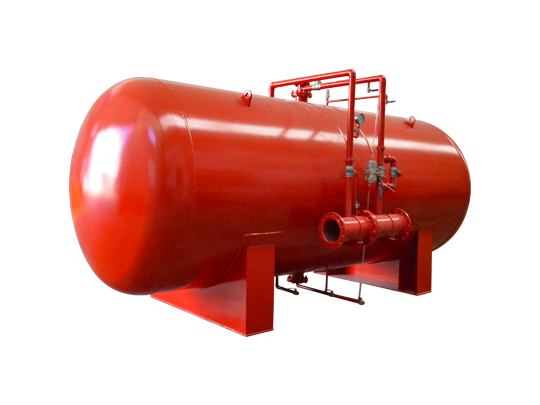
Fire protection systems are constantly on standby, and the stability of the pipeline pressure directly affects whether equipment can be quickly put into operation in the event of a fire. Fire protection pressure-stabilizing water supply equipment automatically detects and regulates pressure to continuously maintain the fire protection pipeline network in a stable operating state. In large-scale building and industrial projects, due to factors such as long pipelines, numerous devices, and environmental changes, fire protection pipeline networks are prone to pressure fluctuations. If the pressure is insufficient, the sprinkler system may not be able to start normally in the event of a fire; while excessive pressure may cause pipelines and valves to bear additional loads for a long time, increasing system losses. Pressure-stabilizing water supply equipment monitors the system's operating status in real time through pressure sensors. When the pressure drops, it automatically activates the pressure replenishment function, and automatically stops operation when the pressure returns to normal. This automatic pressure stabilization mechanism can effectively reduce system fluctuations and improve the overall stability of the fire protection system. For modern fire protection engineering, continuous and stable pipeline pressure not only ensures that equipment is ready at all times but is also an important foundation for improving the efficiency of fire emergency response.
2. Automated Control Systems Shorten Fire Response Time
The first few minutes after a fire breaks out are the critical stage for controlling the spread of the fire; therefore, the activation speed of fire protection equipment is particularly important. Fire-fighting pressure-stabilizing water supply equipment is typically equipped with an intelligent automatic control system, enabling unattended automatic operation. When the sprinkler system or fire hydrant network detects abnormal pressure, the equipment can quickly identify the signal and automatically start the water supply system, avoiding the time delays caused by traditional manual operation. Especially at night, in unattended areas, or in large industrial parks, automated response capabilities can significantly improve fire-fighting efficiency. Modern intelligent control cabinets not only support automatic start/stop but also have functions such as operation monitoring, fault alarms, motor protection, and remote communication. Managers can monitor equipment status in real time through the central control system and promptly address potential problems. Furthermore, the automated control can be linked with fire alarm systems. When a detector sends a fire alarm signal, the pressure-stabilizing water supply equipment can simultaneously enter working mode, achieving a truly rapid fire response. This intelligent control method makes modern fire-fighting systems more efficient and reliable in emergency situations.
3. High-efficiency water supply capacity meets continuous fire-fighting needs
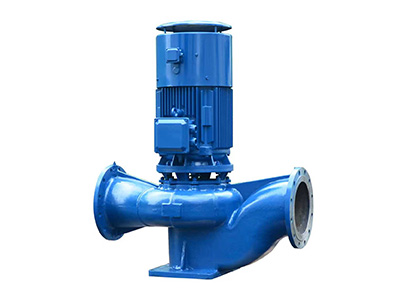
Fire fighting requires not only rapid water supply but also continuous and stable water pressure and flow support. Fire-fighting pressure-stabilizing water supply equipment typically adopts a high-efficiency fire pump structure design, capable of maintaining stable water supply performance under complex operating conditions. In high-rise buildings, large warehouses, and industrial projects, fire protection systems need to rapidly deliver fire water to distant areas or high-rise locations. High-performance pressure-stabilizing equipment, through optimized impeller structure and flow channel design, can achieve high head and large flow rate water supply to meet the fire extinguishing needs of different scenarios. Simultaneously, the multi-stage pump structure can automatically adjust the pressure output according to system requirements, ensuring that the sprinkler system and fire hydrants always maintain optimal operating conditions. Even when multiple fire zones are activated simultaneously, the equipment can still operate stably. For scenarios requiring long-term continuous fire extinguishing, efficient water supply capacity can effectively improve fire extinguishing efficiency and reduce the risk of fire spread.
4. Integrated Structural Design Improves Installation Efficiency
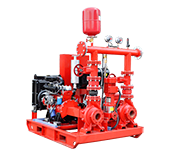
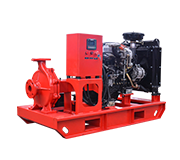
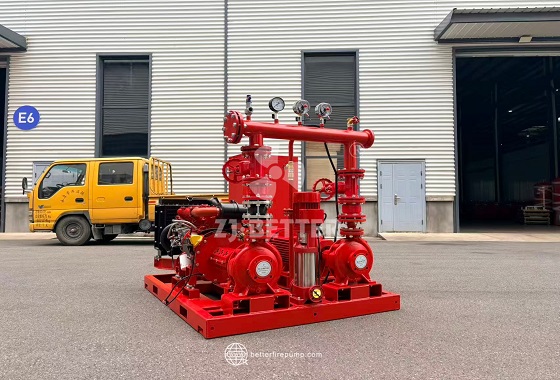
Modern fire protection engineering increasingly emphasizes equipment integration and modular design. Fire pressure-stabilizing water supply equipment typically adopts an integrated skid-mounted structure, integrating the fire pump, motor, control cabinet, pressure tank, and piping components onto a base platform. This design can significantly reduce on-site installation workload, shorten the construction cycle, and reduce the construction risks associated with complex piping connections. For large-scale projects with tight schedules, integrated equipment can significantly improve overall construction efficiency. Meanwhile, the compact structure reduces the equipment's footprint, making it more suitable for underground machine rooms, equipment floors in high-rise buildings, and space-constrained areas. Equipment transportation, hoisting, and subsequent maintenance are also more convenient. The modular design allows for flexible configuration expansion according to different project needs, achieving more efficient fire protection system deployment. As modern buildings increasingly demand higher space utilization, integrated fire protection pressure stabilizing equipment is gradually becoming the mainstream development direction in the industry.
5. Energy-Saving Operation Reduces Long-Term Operating Costs
Although fire protection systems are safety equipment, they often need to be in operation or standby mode for extended periods in many projects, making energy consumption an increasingly important issue. Modern fire protection pressure stabilizing water supply equipment typically employs high-efficiency energy-saving designs to reduce long-term operating costs. High-efficiency motors and optimized hydraulic structures reduce energy loss during operation, improving overall water supply efficiency. Simultaneously, intelligent variable frequency control technology automatically adjusts the operating speed according to changes in pipeline pressure, avoiding energy waste caused by frequent start-stop cycles of traditional fixed-speed equipment. In large commercial complexes, industrial parks, and data centers, fire protection systems typically require 24/7 operation, making energy-saving performance crucial for reducing operating expenses. Furthermore, energy-saving equipment reduces mechanical wear and heat generation, improving long-term operational stability. This design, balancing safety and economy, aligns better with the development needs of modern green buildings and energy-saving projects.
6. Stable and Reliable Continuous Operation Enhances Safety
The most crucial characteristic of fire-fighting equipment is its reliable operation during critical moments. Fire-fighting pressure-stabilized water supply equipment prioritizes continuous operational stability and mechanical reliability during its design. The equipment typically employs industrial-grade motors, high-strength pump shafts, and wear-resistant bearings, effectively reducing mechanical wear from prolonged operation. Simultaneously, optimized dynamic balancing design reduces equipment vibration and noise, improving overall operational stability. Stable operation is particularly important in high-temperature, high-humidity, and dusty industrial environments. Some equipment also features automatic cooling and temperature protection systems to further enhance long-term operational safety. During continuous firefighting operations, equipment often requires prolonged high-load operation; therefore, a stable and reliable continuous water supply is a vital foundation for ensuring the safety of the fire-fighting system.
7. Corrosion-Resistant Materials Extend Equipment Lifespan
Fire-fighting equipment is typically exposed to humid or complex industrial environments; therefore, corrosion resistance directly impacts equipment lifespan and operational reliability. Modern fire-fighting pressure-stabilizing water supply equipment typically employs anti-corrosion coatings, stainless steel impellers, corrosion-resistant seals, and high-strength piping materials to effectively enhance its corrosion resistance. This anti-corrosion design is particularly important in special environments such as coastal areas, chemical industrial parks, and underground machine rooms. High-quality anti-corrosion structures not only reduce the rate of equipment aging but also lower the frequency of maintenance and the cost of parts replacement. For large projects, extending equipment lifespan translates to lower overall operating costs and higher reliability of the fire protection system. With the increasing complexity of modern industrial environments, corrosion resistance has become a crucial indicator of the quality of fire-fighting water supply equipment.
8. Intelligent Monitoring Improves Equipment Management Efficiency
With the continuous development of smart fire protection concepts, fire equipment management is upgrading towards digitalization and intelligence. Modern fire-fighting pressure-stabilizing water supply equipment typically supports remote monitoring and data management functions. Managers can view the equipment's operating status in real time through a monitoring platform, including pressure parameters, motor status, operating time, and fault records. Once an abnormality occurs, the system can automatically issue an alarm notification, reminding maintenance personnel to handle it promptly. This intelligent monitoring mode not only improves equipment management efficiency but also reduces the workload of manual inspections. For large industrial parks, commercial complexes, and multi-building projects, centralized management can significantly improve the efficiency of fire protection system maintenance. Furthermore, data analysis capabilities can help managers identify potential fault risks in advance, enabling predictive maintenance and improving the long-term reliability of the system.
9. Widely Applicable to Various Fire Protection Applications
Fire protection pressure stabilization equipment has strong adaptability and can be widely used in different types of fire protection projects. In high-rise buildings, the equipment can ensure stable fire protection water pressure in high-rise areas; in warehousing and logistics centers, it can meet the continuous water supply needs of large-area sprinkler systems; in industrial plants and petrochemical projects, it can provide reliable fire protection for high-risk areas. In addition, projects such as hospitals, airports, subway stations, data centers, and large commercial complexes have extremely high requirements for the stability of fire protection systems, and fire protection pressure stabilization equipment also plays an important role. With the continuous advancement of urbanization and industrialization, the demand for high-performance pressure stabilization equipment in modern fire protection engineering is also continuously growing.
10. A Clear Trend Towards Intelligent and Integrated Development in the Future
The future development direction of fire protection water supply equipment will place greater emphasis on intelligence, energy saving, and system integration capabilities. The application of IoT technology and remote monitoring platforms will enable fire-fighting pressure-stabilized water supply equipment to possess more comprehensive data analysis and predictive maintenance capabilities. Through intelligent management systems, the equipment can achieve automatic diagnosis and operational optimization, improving overall operational efficiency. Simultaneously, modular and skid-mounted designs will further enhance equipment deployment efficiency and engineering adaptability. Future fire protection systems will not only require stable water supply but also deep integration with smart buildings, industrial automation, and urban safety management platforms. This trend towards intelligent development will propel modern fire protection engineering into a new stage of greater efficiency, safety, and digitalization.
Fire-fighting pressure-stabilized water supply equipment, with its advantages of stable pressure control, rapid automatic response, efficient and continuous water supply, and intelligent management, has become a key core device in modern fire protection systems. It not only effectively improves fire emergency response efficiency but also provides long-term safety assurance for buildings and industrial facilities through stable and reliable operation. With continuously improving fire protection standards and the rapid development of smart fire protection technologies, fire-fighting pressure-stabilized water supply equipment will play an increasingly important role in high-rise buildings, industrial parks, warehousing and logistics, and infrastructure projects. In the future, more efficient, intelligent, and energy-saving fire-fighting water supply equipment will continue to drive modern fire protection engineering towards higher safety levels.
 WhatsApp me