
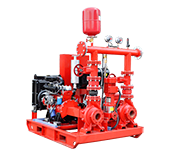
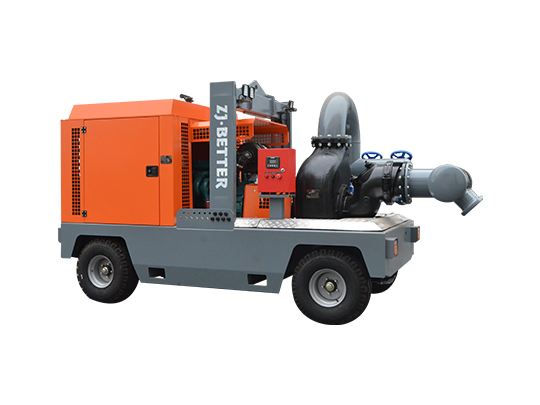
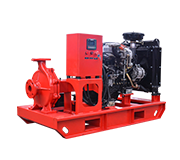
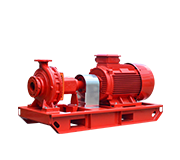

1. High-Reliability Hydraulic Model Design, Ensuring Stable Output under Fire Protection Conditions
This type of fire pump is designed with fire protection-specific operating conditions as its core starting point. By optimizing the impeller profile, flow channel cross-section, and volute structure, it achieves stable operation under high flow and high head conditions. Unlike ordinary industrial pumps that pursue a wide efficiency range, this product focuses on the rated fire protection operating conditions, enabling the pump to quickly build pressure upon startup and maintain a high degree of consistency between flow and pressure during continuous operation. In actual fire conditions, hydraulic system fluctuations and pipe network resistance changes frequently. A stable hydraulic model can effectively reduce the risk of cavitation and avoid water supply interruptions due to unstable pressure, providing a continuous and reliable water source for the fire extinguishing system.
2. Robust Pump Body Structure Design to Meet Long-Term Standby and Sudden Operation Needs
Fire pumps spend most of their time in standby mode, but once started, they need to operate at full load, which places extremely high demands on the strength of the pump body structure. This product adopts a high-strength cast pump body structure, with good overall rigidity and strong vibration resistance, capable of withstanding the impact of high-pressure water flow and the mechanical stress brought about by long-term operation. At the same time, key stress-bearing parts have been thickened and structurally optimized to effectively extend service life. In complex environments, such as high temperature, high humidity, or vibration conditions, the robust structural design can significantly reduce the risk of equipment deformation and seal failure, ensuring "on-call and stable output" in critical moments.
3. High-Performance Shaft System and Bearing Configuration to Improve Continuous Operation Reliability
The shaft system is one of the core components for the long-term reliable operation of a fire pump. This type of product effectively reduces axial and radial vibration during operation through reasonable shaft diameter design and dynamic balance control. The heavy-duty bearing configuration ensures stable operation even under high speed and high load conditions. For firefighting applications, pump sets often need to operate continuously for extended periods after a fire breaks out. The high-performance shaft system design not only reduces bearing heat and wear but also prevents unexpected shutdowns due to mechanical failures, ensuring the fire water supply system remains effective throughout the entire firefighting process.
4. Optimized Sealing System Design Reduces Leakage and Maintenance Risks
In firefighting systems, the reliability of the pump's seals directly affects equipment operational safety and the safety of the on-site environment. This fire pump employs a sealing scheme optimized for firefighting conditions, maintaining excellent sealing performance under high pressure and frequent start-stop conditions. The sealing structure design fully considers media cleanliness, pressure fluctuations, and temperature changes, reducing the probability of leakage. A stable sealing system not only helps extend the pump's service life but also reduces daily inspection and maintenance workload, ensuring the long-term stable operation of the firefighting system.
5. Highly Adaptable Drive Modes to Meet Diverse Firefighting System Configuration Requirements
This type of fire pump can flexibly adapt to various drive modes, meeting the power system configuration requirements of different projects. Whether in a fixed fire pump room or a special location requiring independent power supply, the product's design fully considers the compatibility between the drive system and the pump body. Through reasonable power configuration and speed matching, it ensures stable operation of the pump under rated conditions, avoiding overload or insufficient efficiency. This highly adaptable design allows the fire pump to be flexibly applied to various fire protection system architectures, improving the overall system's compatibility and reliability.
6. Modular Structure Design for Easy Installation and System Integration
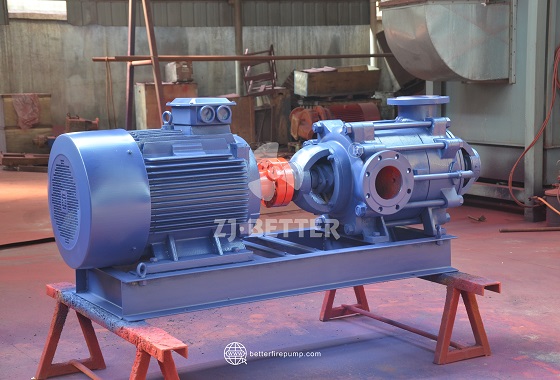
In practical engineering applications, complex installation conditions and tight construction schedules are common characteristics of fire protection projects. This fire pump adopts a modular structure design, with a reasonable layout of the pump body, drive unit, and auxiliary components, resulting in a compact overall structure that facilitates rapid on-site installation and commissioning. The modular design not only reduces installation difficulty but also facilitates later system expansion and maintenance. In situations where pump room space is limited or integration with other fire protection equipment is required, this product effectively saves space and improves the overall system layout.
7. Comprehensive Design Concept Balancing Energy Efficiency and Emergency Performance
While the primary task of a fire pump is emergency water supply, reasonable energy efficiency design is equally important. This product, while ensuring reliability in fire-fighting operations, reduces energy consumption during standby testing and periodic operation by optimizing hydraulic and mechanical transmission efficiency. This design philosophy, which balances energy efficiency and emergency performance, helps reduce the long-term operating costs of fire protection systems and aligns with the modern building development trend that prioritizes both energy conservation and safety.
8. Adaptable to Various Media and Water Sources, Enhancing Application Flexibility
The water source conditions required by fire pumps vary significantly across different application scenarios. This type of fire pump is designed to fully consider the characteristics of various media, adapting to municipal water supply, water tank storage, and other common fire-fighting water sources. Through reasonable flow channel design and material selection, the pump's adaptability to changes in water quality is enhanced, reducing the impact of impurities on internal components. This high degree of adaptability allows the product to be widely used in industrial parks, public buildings, and municipal fire protection systems.
9. Conforms to Mainstream Fire Protection System Operating Logic, Ensuring System Coordination and Stability
Modern fire protection systems emphasize the coordinated operation of multiple devices. This fire pump is designed to fully consider its compatibility with pipe networks, valves, and control systems. Stable start-stop performance and clear operating logic enable it to coordinate well with other key equipment in the fire protection system, reducing system impact and operational fluctuations. In complex fire protection systems, this collaborative stability is crucial for improving overall fire extinguishing efficiency and system safety.
10. Reliability and Maintenance-Friendly Design for Long-Term Use
Fire pumps are typical long-term used equipment, and their design must be considered from a full life-cycle perspective. This product's structural layout, component selection, and maintenance access design fully consider daily inspection and subsequent maintenance needs. Key components are easy to inspect and replace, and ample maintenance space effectively reduces maintenance difficulty and downtime risk. Reliability design for long-term use ensures that the fire pump maintains stable performance over many years of operation, providing a durable and reliable water supply for the fire protection system.
In summary, the fire pump product corresponding to the eighth heading, with stability and reliability as its core design goal, constructs a high-performance solution suitable for various fire protection application scenarios by optimizing the hydraulic model, strengthening structural design, and improving system adaptability and maintenance-friendliness. Whether in large industrial facilities or complex building fire protection systems, this type of fire pump can play a stable and efficient role in water supply at critical moments, and is an indispensable and important piece of equipment in modern fire protection systems.
 WhatsApp me