

1. High-Efficiency Operation Advantages of Energy-Saving Motor Drive Design
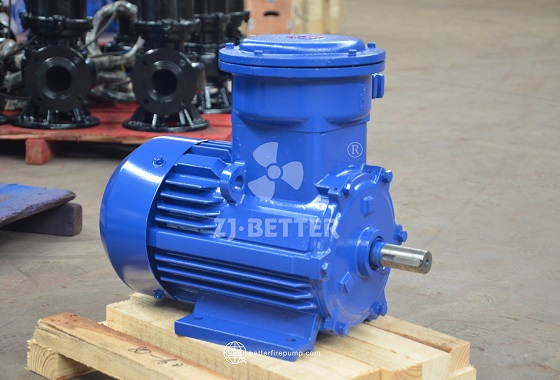
Energy-saving motor-driven fire pumps are designed from the outset with the goal of "high efficiency and low energy consumption." By selecting high-efficiency motors and specifically matching them to the characteristics of fire pump operating conditions, the motor maintains a stable and efficient operating state within its rated speed and load range. Compared to ordinary motor configurations, this type of fire pump performs better in terms of starting current control, operating power loss, and long-term standby energy consumption. When the fire protection system is in standby mode, the motor-driven system maintains low-energy operation. However, when immediate activation is required in the event of a fire, it can rapidly output sufficient power to ensure the pump unit reaches its design flow rate and pressure within a short time. This high-efficiency operation not only aligns with the development trends of energy-efficient buildings and green factories but also effectively reduces overall electricity costs in the long term.
2. Highly Matched Motor and Pump Body, Reducing Energy Loss
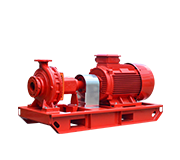
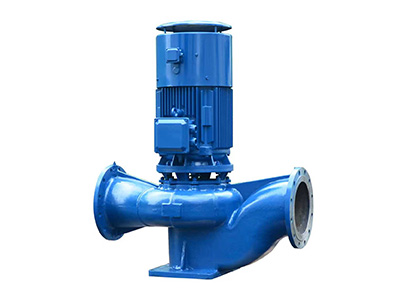
Energy-saving motor-driven fire pumps minimize energy loss during transmission and operation by precisely matching the motor's output characteristics with the pump's hydraulic performance. The motor shaft and pump shaft are connected via direct coupling or high-precision alignment, avoiding mechanical losses and efficiency degradation caused by excessive transmission components. Simultaneously, the optimized internal flow channels of the pump body ensure smoother water flow, reducing eddies, impacts, and friction losses, thereby improving overall hydraulic efficiency. Every unit of energy output by the motor is more effectively converted into stable water pressure and flow output, enabling the fire protection system to have higher reliability and response speed in critical moments.
3. Stable and Reliable Power Output Ensures Fire Protection System Safety
The primary function of a fire pump is reliability. Energy-efficient motor-driven fire pumps improve efficiency without sacrificing safety and stability. The motors used possess excellent overload capacity and temperature rise control performance, enabling continuous and stable operation under sudden high-load conditions, avoiding the risk of shutdown due to motor overheating or insufficient power. Combined with a dedicated fire protection control system, the pump unit responds quickly and smoothly upon receiving a start signal, ensuring the fire protection network establishes the required pressure in the shortest possible time. This stable and reliable power output is a crucial guarantee for fire safety in high-rise buildings, underground spaces, and industrial plants.
4. Energy-Saving Operation Reduces Long-Term Use and Maintenance Costs
From a life-cycle cost perspective, energy-efficient motor-driven fire pumps offer significant advantages during use. High-efficiency motors reduce unnecessary energy consumption, significantly lowering electricity costs during long-term standby and periodic trial runs of the fire protection system. Simultaneously, due to the more stable operation of the motor and pump body, the probability of mechanical wear and electrical faults is relatively low, reducing the workload of daily maintenance. This not only reduces the workload of maintenance personnel but also decreases the consumption of spare parts and the indirect losses caused by downtime for maintenance, providing users with a more economical and sustainable fire protection solution.
5. Compact Structural Design Improves Overall System Efficiency
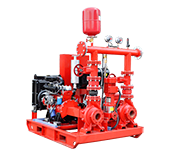
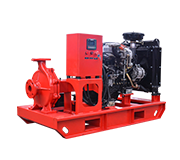
Energy-efficient motor-driven fire pumps typically employ a compact structural design, rationally integrating the motor, pump body, and necessary auxiliary components within a limited space. This design reduces the footprint while shortening the power transmission path, making the system operate more efficiently and stably. For buildings or equipment renovation projects with limited pump room space, the compact structure significantly improves space utilization, simplifies installation procedures, and reduces on-site construction difficulties. A compact structure also means a more rational system layout, which helps improve the pump unit's heat dissipation and operational reliability, thereby further enhancing overall operating efficiency.
6. Excellent Starting Performance Meets Fire Emergency Needs
In fire protection applications, starting performance is often more critical than continuous operation. Energy-efficient motor-driven fire pumps are designed with the special characteristics of fire protection conditions in mind, optimizing motor starting characteristics and control methods to enable the pump unit to start quickly and smoothly in emergency situations. Whether started directly or automatically with a control cabinet, it effectively avoids the impact of excessive starting current on the power grid and equipment. Its rapid response and stable output ensure a stable water supply to the fire protection system in the early stages of a fire, buying valuable time for firefighting and evacuation.
7. Adaptable to Various Fire Protection System Configurations
Energy-efficient motor-driven fire pumps have excellent system adaptability and can be widely used in fire hydrant systems, automatic sprinkler systems, foam fire protection systems, and other fixed fire water supply devices. Through proper selection and configuration, this type of fire pump can meet the requirements of fire protection systems of different building sizes, pressure levels, and flow rates. In actual projects, it can be flexibly combined according to project characteristics to achieve a balance between efficient water supply and energy-saving operation, providing reliable power support for various fire protection projects.
8. Materials and Manufacturing Processes Ensure Long-Term High-Efficiency Operation
To ensure that the energy-saving effect does not diminish during long-term use, the motor-driven fire pump is meticulously selected in terms of materials and manufacturing processes. Key load-bearing and flow-through components are made of wear-resistant and corrosion-resistant materials, ensuring good performance even under long-term operation and complex water quality conditions. Precision machining and rigorous assembly processes ensure excellent coaxiality and operational balance between the motor and pump body, reducing vibration and noise, thereby further minimizing energy loss and extending equipment lifespan.
9. Meeting Modern Fire Protection and Energy Conservation Trends
As countries increasingly demand higher standards for building safety and energy efficiency, fire protection equipment is gradually evolving towards high efficiency, energy saving, and intelligence. Energy-saving motor-driven fire pumps are a key product in line with this trend. While meeting fire safety regulations, they achieve energy efficiency improvements through technological upgrades, providing strong support for green buildings, smart cities, and sustainable industrial development. Choosing an energy-saving fire pump is not only a responsible approach to fire safety but also a positive practice of rational energy resource utilization.
10. Creating Higher Overall Value for Users
In summary, energy-saving motor-driven fire pumps are not merely water supply equipment but a system solution that balances safety, efficiency, and economy. Through high-efficiency power output, stable operating performance, and lower long-term operating costs, they create higher overall value for users. Whether in new projects or upgrades to existing systems, energy-saving fire pumps help users optimize both operating costs and energy consumption while meeting fire safety requirements.
Energy-efficient motor-driven fire pumps demonstrate significant advantages in modern fire protection systems due to their high-efficiency motor configuration, optimized pump body structure, and stable and reliable operation. They not only improve the overall efficiency and safety of fire water supply systems but also effectively reduce long-term operation and maintenance costs, meeting the dual demands of current fire protection engineering and energy-saving development. For fire protection projects pursuing high reliability, high efficiency, and sustainable development, energy-efficient motor-driven fire pumps are undoubtedly a core equipment choice worthy of priority consideration.
Energy-efficient motor-driven fire pumps demonstrate significant advantages in modern fire protection systems due to their high-efficiency motor configuration, optimized pump body structure, and stable and reliable operation. They not only improve the overall efficiency and safety of fire water supply systems but also effectively reduce long-term operation and maintenance costs, meeting the dual demands of current fire protection engineering and energy-saving development. For fire protection projects pursuing high reliability, high efficiency, and sustainable development, energy-efficient motor-driven fire pumps are undoubtedly a core equipment choice worthy of priority consideration.
 WhatsApp me