
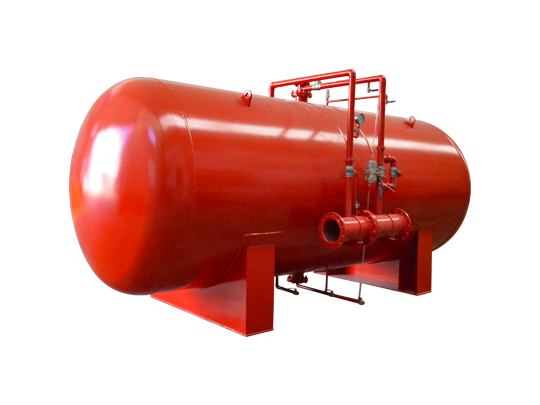
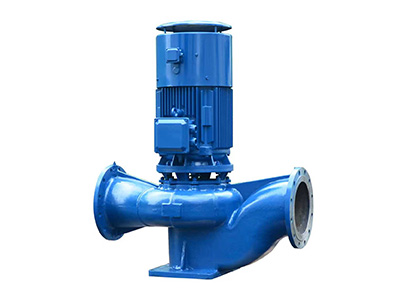

1. High Suction Head Design Meets the Needs of Complex Natural Water Sources
High suction head performance is one of the product's core advantages. For complex water intake environments such as rivers, reservoirs, lakes, and deep wells, the equipment employs an optimized hydraulic structure design, significantly improving water intake capacity. Traditional pump sets often experience difficulties in water intake, reduced flow, and even failure to establish a vacuum at high suction lifts. High-suction-lift fire pumps, however, through optimized impeller structure, pump chamber design, and vacuum assistance systems, can quickly complete priming under greater vertical suction lift conditions. Even if water levels drop due to seasonal changes, the equipment can maintain stable operation, ensuring uninterrupted fire water supply. This capability is particularly important for forest fire fighting, fire protection projects around reservoirs, and emergency water supply projects in remote areas.
2. Rapid Self-Priming Technology Improves Emergency Response Efficiency
Fire rescue emphasizes "every second counts," and the speed of equipment startup directly affects firefighting effectiveness. This product utilizes advanced self-priming technology, quickly establishing water intake capacity without complex foot valves or lengthy manual priming. After startup, it can quickly create a stable vacuum environment, achieving rapid priming and continuous water supply. Compared to traditional centrifugal pumps that require manual water injection, self-priming fire pumps significantly shorten preparation time and improve on-site operational efficiency. In the event of a fire, quickly establishing a water supply system means earlier firefighting efforts can be initiated, effectively controlling the spread of the fire.
3. High-Efficiency Impeller Structure Enables High-Flow Water Delivery
To meet the high-flow-rate water supply demands of firefighting, the equipment employs a high-efficiency impeller and optimized flow channel design. Through advanced fluid dynamics analysis, internal hydraulic losses are reduced, and energy conversion efficiency is improved, enabling the equipment to achieve higher flow output with lower energy consumption. The high-efficiency impeller not only enhances water delivery capacity but also reduces operational vibration and noise, improving overall stability. Whether supplying water to fire trucks, fire monitors, or large sprinkler systems, it maintains stable flow and pressure output, providing ample water support for firefighting operations.
4. Long-Distance Water Delivery Capability Meets Large-Scale Rescue Needs
In many real-world firefighting scenarios, natural water sources are often located a considerable distance from the fire scene. This high-suction-lift fire pump possesses excellent long-distance water delivery capability. Through a rational head design and stable power output, it can achieve long-distance pipeline water supply. The equipment can overcome terrain elevation differences and water delivery resistance, delivering large quantities of firefighting water to designated areas. Long-distance water supply capability is crucial for forest fire fighting in mountainous areas, mine fire protection projects, oil tank area fire fighting, and fire protection systems in large industrial parks.
5. Stable Power System Ensures Continuous Operation
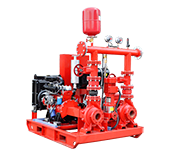
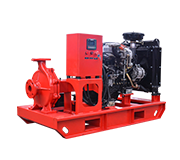
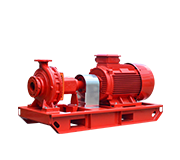
Firefighting operations typically require continuous water supply for extended periods, making the reliability of the equipment's power system paramount. This product can be configured with either a diesel engine or an electric drive system to meet different project needs. The diesel-powered version offers the advantage of independent operation, not relying on an external power grid; the electric version features low operating costs and easy maintenance. Regardless of the drive method, the equipment maintains stable performance under prolonged high-load conditions, ensuring a continuous fire water supply and providing reliable support for firefighting and rescue operations.
6. Wear-Resistant and Corrosion-Resistant Structure Extends Equipment Lifespan
Natural water sources often contain silt, impurities, and corrosive substances, making ordinary pump sets prone to wear and performance degradation over long-term operation. This high-suction-lift fire pump uses wear-resistant and corrosion-resistant materials to manufacture key flow components, effectively improving erosion resistance and corrosion resistance. The pump body, impeller, and shaft sleeve undergo special processing to adapt to complex water quality environments. Even when used long-term in rivers, reservoirs, and areas with high sediment content, it maintains stable performance and extends service life, thereby reducing maintenance costs.
7. Intelligent Monitoring System Enhances Operational Safety
Modern fire-fighting equipment not only requires powerful performance but also intelligent management capabilities. This product can be configured with an intelligent control system to monitor pressure, flow rate, speed, temperature, and operating status in real time. The system can automatically record operating data and issue alarm signals in abnormal situations, helping managers to promptly identify potential problems. Some projects can also achieve remote monitoring and network management, making equipment operation safer and more reliable, and improving the overall intelligence level of the fire-fighting system.
8. Modular Structure Design Facilitates Transportation and Installation
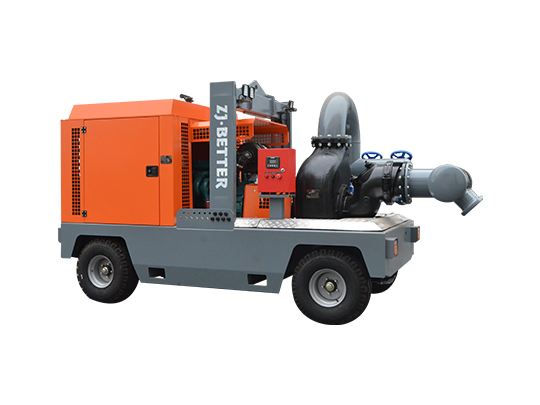
Considering that many projects are located in mountainous areas, around reservoirs, or remote areas, the equipment adopts a modular design concept, with a compact structure and small footprint. Users can choose fixed installation or mobile configuration according to actual needs. The modular design not only facilitates transportation and on-site installation but also improves subsequent maintenance efficiency. For emergency rescue teams, mobile high-suction-lift fire pumps can quickly reach the scene and be put into use, significantly improving emergency response capabilities.
9. Widely Applicable to Various Firefighting and Emergency Scenarios
This equipment is not only suitable for river and reservoir water intake firefighting projects, but also widely used in forest fire prevention, municipal emergency drainage, mine rescue, agricultural irrigation, water conservancy projects, and industrial water supply systems. During forest fire fighting, it can directly draw water from natural water sources; in urban flood control and disaster relief, it can handle large-flow water delivery tasks; and in industrial projects, it can serve as a backup firefighting water supply system with long-term standby capability. Its multi-functional application characteristics make it an important choice for many industry users.
10. Reduced Construction and Operating Costs of Firefighting Systems
For areas far from municipal water supply networks, constructing large-scale fixed firefighting water supply systems often requires high investment. High-suction fire pumps can fully utilize natural water resources, reducing the need for water storage facilities and thus lowering overall project costs. At the same time, the equipment has high operating efficiency, low maintenance requirements, and a long service life, further reducing long-term operating costs. This economic advantage is of significant value for enterprise and government projects.
High-suction fire pumps, specifically designed for river and reservoir water intake, have become an essential component of modern fire-fighting water supply systems due to their superior high suction head performance, rapid self-priming capability, large flow rate, long-distance water supply capacity, and stable and reliable operation. They can fully utilize natural water resources, providing efficient solutions for forest fire fighting, industrial fire fighting, municipal emergency response, water conservancy projects, and water supply projects in remote areas. As fire safety requirements continue to rise, high-suction fire pumps will play an even more crucial role in future fire engineering construction and emergency rescue systems, building a safer and more reliable water supply guarantee system for various projects.
 WhatsApp me