

1. High-lift output meets the fire water supply needs of high-rise buildings
The biggest characteristic of high-rise building fire protection systems is the large water supply height and high pressure requirements. As building floors increase, ordinary fire pumps are prone to insufficient pressure during water delivery, leading to unstable water supply in high-rise areas. High-lift fire pump units, through high-performance impellers and multi-stage pressurization structures, can continuously and stably deliver water under higher pressure conditions. The equipment can quickly establish pressure in the fire protection network and stably deliver water to high-rise areas, ensuring the normal operation of sprinkler and fire hydrant systems during a fire. For super high-rise office buildings, hotels, large commercial complexes, and residential projects, high-lift water supply capacity is a crucial core condition for ensuring fire safety.
2. High-Efficiency Hydraulic Structure Enhances Long-Distance Water Delivery Performance
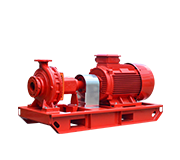
To meet the needs of long-distance fire water delivery projects, high-lift fire pump units adopt an advanced centrifugal pump hydraulic structure design. By optimizing the impeller flow channel, flow guiding system, and internal pump structure, water flow is smoother and more stable. This high-efficiency hydraulic structure effectively reduces energy loss during water delivery and improves overall water delivery efficiency. Even in long-distance pipe networks or complex terrain environments, the equipment can maintain stable flow and pressure output. For large industrial parks, oil storage tank areas, and municipal fire protection projects, high-efficiency long-range water delivery capabilities can effectively improve the overall fire-fighting efficiency of the fire protection system.
3. Diesel Power System Ensures Stable Operation in Power Outage Environments
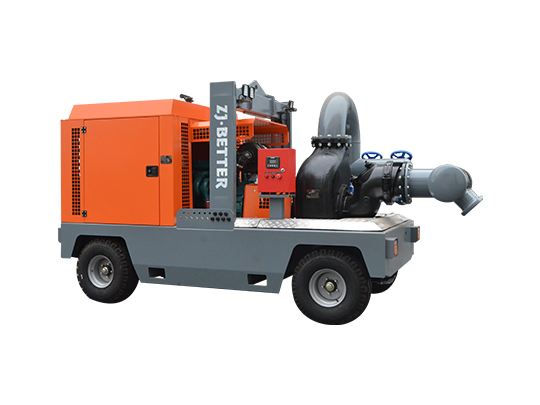
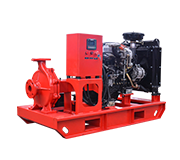
In large fires or emergencies, the power system may be interrupted due to high temperatures, line damage, or natural disasters. Therefore, fire-fighting water supply equipment must have independent operating capabilities. High-lift fire pump units typically use high-performance diesel engines as their core power source, enabling rapid start-up and continuous operation even in power outage environments. Diesel power systems do not rely on external power grids, effectively ensuring uninterrupted fire-fighting water supply during a fire. For petrochemical, power facilities, mining projects, and projects in remote areas, independent diesel power significantly improves the overall reliability and safety of the fire protection system.
4. Rapid Start-up Capability Improves Initial Fire Response Efficiency
The initial stage of a fire is crucial for controlling its spread; therefore, the startup speed of fire-fighting equipment is paramount. High-lift fire pump units are equipped with intelligent automatic start-up systems that can quickly commence operation after a drop in fire pipeline pressure or the triggering of a fire alarm signal, establishing a stable high-pressure water supply capability within a short time. Compared to traditional manual equipment, this system effectively shortens start-up time and improves the initial fire suppression efficiency of the fire protection system. Some units also support automatic preheating and low-temperature start-up functions, ensuring rapid and stable operation even in cold environments.
5. Continuous 24/7 Operation to Meet the Needs of Large-Scale Firefighting Missions
Large-scale fire suppression typically requires a continuous water supply for extended periods; therefore, fire pump equipment must possess high reliability and durability. The high-lift fire pump unit adopts an industrial-grade heavy-duty structural design, with core components including a high-strength pump shaft, wear-resistant impeller, and high-performance bearings, enabling continuous operation under high load conditions for extended periods. The equipment is equipped with a high-efficiency cooling and lubrication system, effectively controlling operating temperature and reducing mechanical wear, thereby ensuring long-term stable output capacity. For high-risk fire scenarios such as large factories, ports, and chemical industrial parks, the ability to operate stably around the clock significantly improves fire safety.
6. Intelligent Control System Enables Automated Fire Management
Modern fire protection engineering increasingly emphasizes intelligent equipment management capabilities. The high-lift fire pump unit is equipped with an advanced automatic control system that can monitor pressure, flow rate, speed, temperature, and equipment operating status in real time. When the system detects an anomaly, it can automatically trigger an alarm and take protective measures to prevent equipment damage and the escalation of system failures. Some high-end equipment also supports remote network monitoring, allowing managers to view equipment operating data in real time via smart terminals, improving the efficiency of daily fire protection system management. Intelligent control technology not only reduces manual operation but also enhances equipment operational stability and safety.
7. Low Vibration and Low Noise Design Improves Equipment Stability
Since high-lift fire pumps typically operate under high pressure and high speed conditions, operational stability is paramount. High-lift fire pump units employ high-precision dynamic balancing, flexible couplings, and vibration-damping bases, effectively reducing mechanical vibration and noise. Stable operation not only reduces the impact of equipment on building structures and piping systems but also extends the service life of mechanical components. For hospitals, high-rise office buildings, and large commercial projects, low-noise operation also effectively improves the overall operating environment.
8. Corrosion-Resistant Materials Enhance Adaptability to Complex Environments
To adapt to complex industrial environments and long-term high-load operation, key components of the high-lift fire pump unit are manufactured using high-strength, corrosion-resistant materials, including stainless steel impellers, high-temperature resistant mechanical seals, and high-strength pump casing structures. These materials effectively resist corrosion in humid, high-temperature, and complex water quality environments, maintaining stable performance even in coastal areas, mining projects, or chemical industrial parks. The corrosion-resistant structure not only improves the long-term reliability of the equipment but also reduces the frequency of subsequent maintenance and operating costs.
9. Modular Structural Design Improves Installation and Maintenance Efficiency
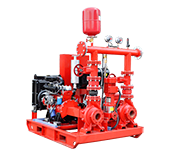
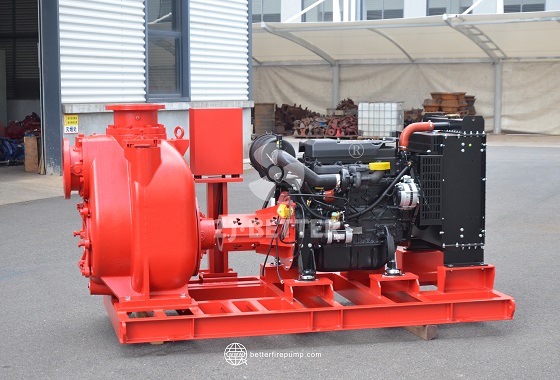
The high-lift fire pump unit adopts a modular, integrated structural design, centrally mounting the diesel engine, fire pump, control cabinet, and auxiliary systems on a unified base. This structure reduces on-site installation workload and improves engineering construction efficiency. Most of the commissioning work can be completed before the equipment leaves the factory, making on-site installation faster and more convenient. Simultaneously, the rationally laid-out structural design facilitates later maintenance and repair, allowing maintenance personnel to quickly complete equipment inspections and maintenance, thereby reducing downtime and improving overall management efficiency.
10. Widely Used in Large-Scale Fire Protection Projects and Long-Distance Water Supply Projects
High-lift fire pump units are widely used in high-rise buildings, petrochemical plants, mining projects, ports and docks, municipal fire protection, large industrial parks, and long-distance fire water supply projects. In these projects, the fire protection system not only requires high-pressure, stable water supply capacity but also must possess long-term reliable operation and adaptability to complex environments. With its powerful water delivery performance, intelligent control technology, and all-weather operation advantages, the high-lift fire pump unit can fully meet the needs of modern large-scale fire protection projects for high-standard fire water supply systems and has become a crucial core equipment in modern fire protection system construction.
Overall, high-lift fire pump units, with their advantages of high-pressure output, long-distance water delivery capacity, independent diesel power, and intelligent automatic control, have become key water supply equipment in modern large-scale fire protection projects. They not only meet the stringent requirements of stable water supply for high-rise buildings and long-distance fire water supply projects but also can operate continuously and stably in power outages and complex environments, providing a more efficient, safe, and reliable water supply guarantee for modern fire protection systems. With the increasing demands of modern urban construction and industrial fire protection, high-lift fire pump units will play a more important role in the future fire protection engineering field and continue to promote the development of fire water supply systems towards intelligence, high efficiency, and high reliability.
 WhatsApp me