
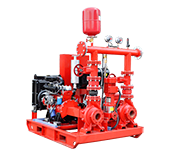
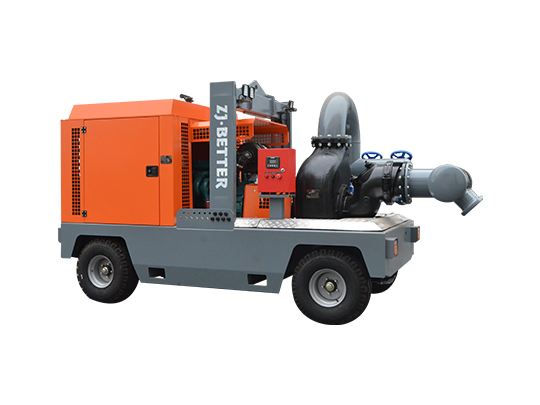
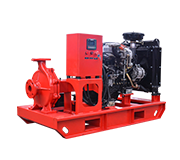
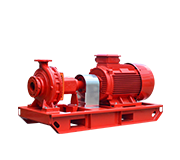
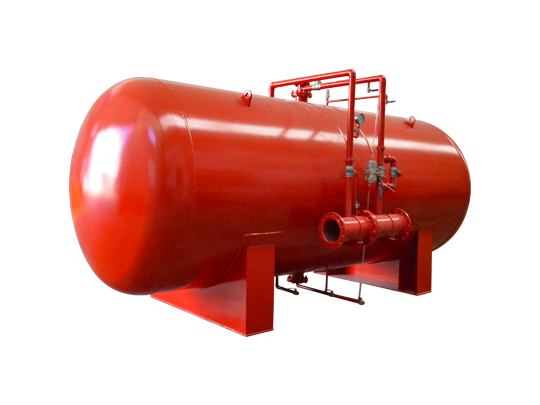
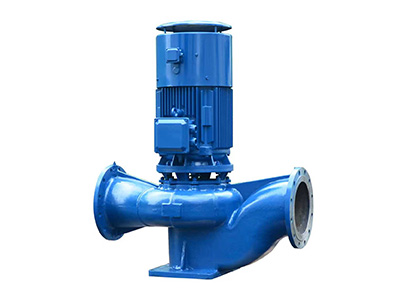

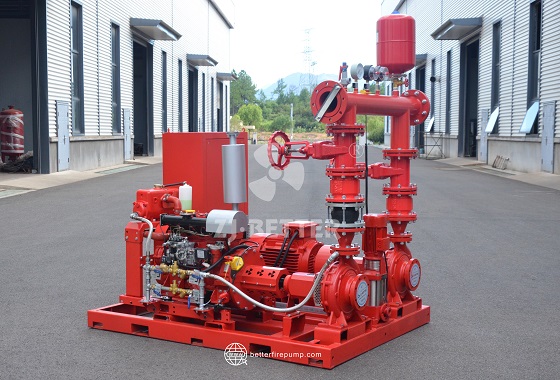
1. Systematic and Modular Advantages of Overall Structural Design This type of fire pump adopts a systematic and modular approach in its overall structural design, rationally arranging the power unit, pump body, hydraulic pipelines, control system, and auxiliary components. The base is constructed from a high-strength steel structure, welded as a whole, ensuring sufficient structural rigidity and stability under long-term operation and high-load conditions. The modular design makes the interfaces between functional units clear, facilitating both production assembly and subsequent maintenance and component replacement. 1. **Scientific Center of Gravity Distribution Design:** Through a scientifically designed center of gravity distribution, vibration and noise during operation are effectively reduced, improving the overall stability of the equipment. This structural concept not only enhances product reliability but also significantly shortens the installation and commissioning cycle.
2. **Precise Matching of Hydraulic Performance for Firefighting:** The fire pump's hydraulic performance design is strictly optimized based on the actual needs of the fire protection system. Precise calculations of flow rate, head, and efficiency curves ensure stable output under rated operating conditions and common variable operating conditions. The pump body's flow channel employs an optimized hydraulic model design, reducing hydraulic losses and improving energy conversion efficiency, thereby rapidly establishing system pressure during emergency startup. For long-distance water transmission or high-rise building water supply scenarios, this type of product can maintain stable flow under high head conditions, avoiding pressure fluctuations that could impact the pipeline network and terminal equipment, ensuring the continuous and reliable operation of the fire protection system.
3. **Reliability and Continuous Output Capability of the Power System:** The power system is the foundation for the stable operation of the fire pump. This type of product uses a mature and reliable power configuration scheme, capable of maintaining stable output under high load and long-term continuous operation conditions. The power unit possesses excellent torque reserve and responsiveness, ensuring rapid attainment of rated speed upon fire activation. Through a rationally designed cooling system and lubrication system configuration, operating temperature rise is effectively controlled, reducing mechanical wear and extending service life. For emergency firefighting scenarios, the stability of the power system directly impacts firefighting effectiveness, and this type of fire pump offers significant advantages in this regard.
4. Intelligent and Redundant Design of the Automatic Control System Modern fire pumps are no longer simply mechanical devices but integrate highly intelligent control systems. These products are equipped with dedicated fire control cabinets, enabling automatic start-up, operation monitoring, fault alarms, and multi-mode switching. The control system can automatically respond to pressure signals, flow signals, or external fire linkage commands, reducing delays caused by human intervention. Simultaneously, the system incorporates multiple safety protection logics, such as overload protection, over-temperature protection, and undervoltage protection, ensuring safe shutdown or switching to standby mode under abnormal operating conditions, providing reliable protection for the fire protection system.
5. Comprehensive Consideration of Material Selection and Durability Fire pumps operate under standby or high-load conditions for extended periods, placing extremely high demands on material durability. These products prioritize corrosion resistance, wear resistance, and fatigue resistance in the selection of materials for key components. The pump body and impeller are made of high-strength materials, adaptable to various water quality conditions, and reducing the risk of scaling and corrosion. Seals and bearings are selected with industrial-grade components suitable for continuous operation, effectively reducing leakage and failure rates. Through a rational material combination design, the equipment's performance remains stable over long-term use, reducing total life-cycle maintenance costs.
6. Installation Adaptability and System Integration Capabilities
These fire pumps are designed with multi-scenario installation needs in mind, allowing for flexible application in pump rooms, equipment rooms, or outdoor independent foundations. Standardized interface design facilitates rapid integration with fire hydrant networks, valve systems, and control systems. The compact overall layout effectively saves installation space, making it particularly suitable for projects with limited space. Strong system integration capabilities allow for integration with pressure stabilizing devices, standby pump sets, or remote monitoring systems to form a complete fire water supply solution, improving the overall system reliability and manageability.
7. Operational Stability and Low-Maintenance Design Concept
Fire pumps are in a standby state for extended periods outside of emergencies; once started, they must operate reliably. These products prioritize operational stability in their design. By optimizing shaft balance, reducing vibration sources, and rationally configuring damping structures, they significantly reduce operating noise and mechanical shock. Simultaneously, the rational layout of key maintenance components simplifies daily inspections and maintenance, reducing maintenance difficulty. This low-maintenance design not only reduces operating costs but also improves equipment availability during critical moments.
8. Environmental Adaptability to Complex Working Conditions
In practical applications, fire pumps often face high-temperature, humid, dusty, or corrosive environments. These products are designed with environmental adaptability in mind, featuring a robust external structure and a reliable protection level for the electrical system, preventing environmental factors from affecting equipment operation. For outdoor or semi-outdoor installations, the equipment can maintain stable operation under various climatic conditions, providing continuous protection for fire safety.
9. Compliance with Fire Protection Codes and Engineering Application Standards
As a core piece of equipment in fire protection systems, fire pumps must be designed and manufactured in accordance with relevant fire protection codes and engineering standards. These products are designed with the actual needs of fire protection engineering in mind in terms of structural design, performance parameters, and control logic, facilitating solution design and acceptance in various fire protection projects. Standardized configurations facilitate rapid selection and system matching for engineering units, reducing technical risks during project implementation and improving overall project delivery efficiency.
10. Comprehensive Value in Multi-Field Firefighting Applications
With stable performance and flexible configuration, this type of fire pump is widely applicable to various scenarios such as industrial plants, commercial complexes, high-rise buildings, warehousing and logistics, and municipal facilities. In different application environments, the product can be customized according to system requirements to meet the requirements of different fire protection levels and water supply scales. Its comprehensive performance not only enhances the response capability of the fire protection system but also provides a solid guarantee for the long-term safe operation of the project.
Overall, this type of fire pump, through systematic structural design, precise hydraulic performance matching, reliable power configuration, and deep integration of intelligent control systems, comprehensively improves the safety and stability of fire water supply systems. In complex and ever-changing application environments, its advantages of high reliability, low maintenance, and strong adaptability are particularly prominent. For engineering projects pursuing high standards of fire safety, this type of fire pump is not only an equipment choice but also a key guarantee for improving the reliability of the overall fire protection system, providing a solid shield for life and property safety.
 WhatsApp me