
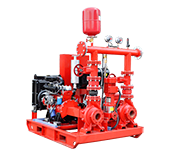
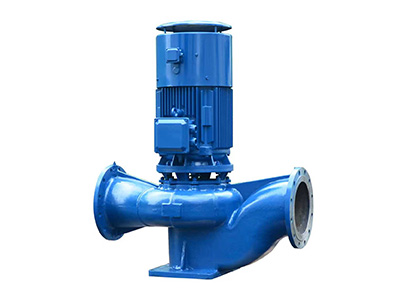

1. Space Utilization Advantages of Vertical Structure Design The biggest feature of vertical pipeline fire pump units is their vertically arranged structure. Compared with traditional horizontal fire pumps, this type of product arranges the pump body, motor, and pipeline interfaces vertically, significantly reducing the overall footprint. This design is particularly important for buildings with limited pump room space, such as underground pump rooms in high-rise residential buildings, equipment floors in commercial complexes, or renovation projects of old buildings. Without altering the existing building structure, replacing the pump unit with a vertical inline fire pump unit effectively frees up pump room space, providing sufficient room for subsequent piping layout, valve installation, and maintenance access. Furthermore, the vertical structure ensures more even stress distribution on the pump shaft, helping to reduce vibration and misalignment during operation and improving the long-term stability of the equipment.
2. Simplified System Layout with Inline Piping Installation: This type of fire pump unit typically uses an inline design with coaxial inlet and outlet pipes, allowing direct installation on the main fire pipeline and seamless connection to the system piping. This installation method reduces the use of elbows and additional connectors, lowering hydraulic losses and simplifying the overall piping layout. For pump room renovation projects, existing piping is often already fixed; significant relocation of the pipeline is costly and time-consuming. Vertical inline fire pump units can be directly installed in the existing pipe locations, significantly shortening construction time. Simultaneously, the inline structure ensures smoother water flow, helping to quickly establish stable pressure upon startup, meeting the stringent requirements of the fire protection system for instantaneous water supply capacity.
3. Complete Unit Configuration Enhances Overall System Reliability
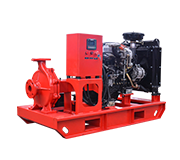
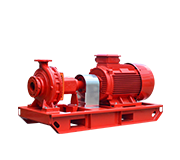
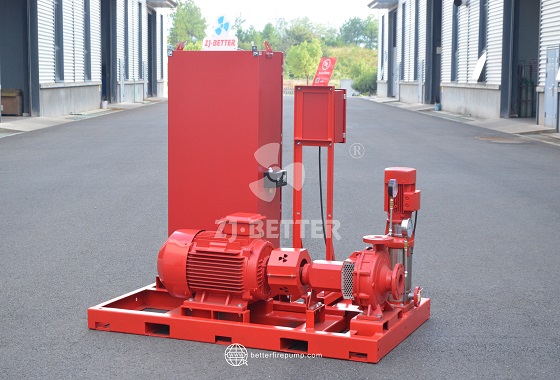
Vertical pipeline fire pump units are typically supplied as complete sets, including the pump body, motor, base, control cabinet, and necessary instruments and accessories. This standardized design avoids compatibility issues that may arise from on-site matching of different equipment, allowing the entire system to complete overall performance matching and testing before leaving the factory. For project owners, complete units not only reduce the complexity of the procurement process but also lower operational risks caused by incompatible components. In fire protection systems, a failure in any component can affect overall functionality, and complete configurations improve system reliability and consistency from the outset.
4. Flexible Adaptability for Pump Room Retrofit Projects
In many existing buildings, fire pump rooms often suffer from aging equipment, low energy efficiency, and difficult maintenance, while the overall space often fails to meet the installation requirements of traditional fire pumps. Vertical pipeline fire pump units, with their compact structure and flexible installation methods, are an ideal choice for pump room retrofit projects. They can be customized to the original pump room dimensions, enabling equipment upgrades without expanding the pump room area. Meanwhile, these products have relatively low foundation requirements, reducing the amount of civil engineering work and helping to control renovation costs and construction time.
5. Guarantee of Operational Stability and Continuous Water Supply Capacity Fire pump equipment is often in a long-term standby state in practical applications. Once a fire occurs, it needs to be started and run stably continuously in a very short time. Vertical pipeline fire pump units are designed with shaft stability and hydraulic performance optimization in mind. Through reasonable impeller design and precision machining, they ensure stable operation even under high head and high pressure conditions. Their vertical axial structure helps reduce bearing load and improve service life. During continuous water supply, stable pressure output ensures the normal operation of fire-fighting terminal equipment such as sprinkler systems and fire hydrant systems.
6. Convenient Maintenance Reduces Long-Term Operating Costs Maintenance costs are also a key concern for users throughout the entire life cycle of a fire protection system. Vertical pipeline fire pump units have a relatively simple structure, with key components centrally located, making daily inspection and maintenance more convenient. Due to their small footprint, maintenance personnel can complete inspection and replacement work within a limited space without the need for large-scale disassembly of surrounding equipment. Furthermore, the in-line piping connection reduces the number of leakage points, helping to lower the maintenance frequency due to seal aging. In the long run, this ease of maintenance effectively reduces system operating costs and improves the overall value of the equipment.
7. Excellent Adaptability to Various Building Fire Protection Systems
This type of fire pump unit can be widely used in fire protection systems of various locations such as high-rise buildings, commercial complexes, industrial plants, and underground parking lots. Whether it's a fire hydrant system, an automatic sprinkler system, or a pressure-stabilizing water supply system, it can be configured according to actual needs. Vertical in-line fire pump units have strong adjustability in flow rate and head range, meeting the requirements of different building sizes and fire protection codes. This wide adaptability makes it one of the commonly used equipment by design and construction units in scheme selection.
8. Energy-Saving Design Concept Meets Modern Engineering Needs
While ensuring fire protection performance, modern buildings also place higher demands on equipment energy efficiency. Vertical in-line fire pump units, through optimized hydraulic models and motor matching, improve overall efficiency while reducing energy loss. Although fire pumps are not continuously operating devices, good energy efficiency still helps reduce energy consumption and operating costs during testing, drills, and actual fire situations. Furthermore, lower temperature rise and vibration during high-efficiency operation contribute to extending equipment lifespan.
9. Standardized Manufacturing Enhances Product Consistency and Reliability
This type of fire pump unit typically employs standardized manufacturing and rigorous quality control processes. From material selection and processing precision to assembly and testing, every step directly impacts the reliability of the final product. Standardized design not only ensures consistent performance across different batches but also facilitates later maintenance and spare parts replacement. In applications like fire protection systems, where reliability is paramount, consistent product quality is crucial.
10. Providing a Reliable Foundation for Overall Fire Protection System Upgrades
With the continuous development of building fire protection technology, system integration and intelligence levels are constantly improving. As a fundamental water supply device, the stable operation of vertical pipeline fire pump units is a prerequisite for system upgrades. Whether integrated with automatic control systems or combined with multi-pump linkage schemes, this type of product provides reliable foundational support. Through proper configuration and expansion, vertical inline fire pump units can meet the upgrade needs of building fire protection systems at different stages.
In summary, vertical inline fire pump units, with their advantages of small footprint, flexible installation, stable operation, and convenient maintenance, are particularly suitable for projects with limited pump room space and renovation projects. Their integrated and standardized design not only enhances the overall reliability of the system but also provides greater convenience for project implementation and subsequent maintenance. In modern building fire protection systems, these products have become an important choice for achieving efficient and safe water supply, providing a solid and reliable guarantee for building fire safety.
 WhatsApp me